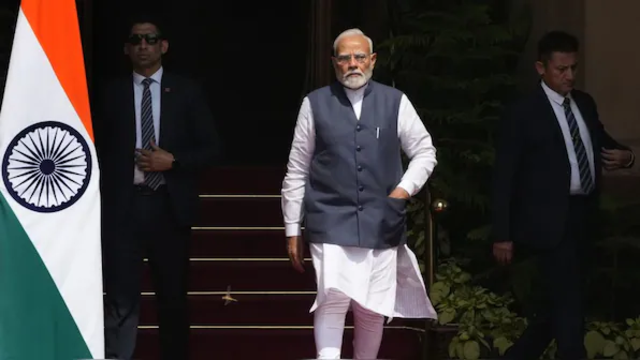
Prime Minister Narendra Modi. AP/File Photo
India’s stance on terrorism has taken a sharp turn. Military retaliation against Pakistan-based terrorists may now become routine. With Operation Sindoor still active, sources indicate that strong counter-terror actions will continue.
India Declares a Shift in Strategy
Sources in the Indian government have revealed a bold message: Operation Sindoor isn’t over. The country's response to terrorism has evolved. Retaliatory military strikes are now the “new normal.” The international community, especially Pakistan, must adapt to this changing landscape. It’s no longer “business as usual.”
No More Tolerance for Terrorism
The government has made its intention clear. Any terrorist attack on Indian soil will be met with force. India’s approach to cross-border terrorism has shifted from restraint to active retaliation. This marks a major strategic change in how India views national security.
PM Modi Gives Armed Forces a Free Hand
Sources confirm that Prime Minister Narendra Modi has empowered the military with full freedom to act. In his words, “Wahan se goli chalegi, yahan se gola chalega.” This direct message translates to: if bullets come from across the border, shells will be the answer from India.
This policy aims to create a strong deterrent. It sends a message that India will no longer wait for provocations to escalate. Instead, action will be swift and decisive.
Act of Terror Will Be Treated as Act of War
Top government sources assert that any future act of terror will be considered an act of war. This powerful shift means India will no longer distinguish between terror attacks and conventional warfare. The new doctrine ensures that perpetrators and their supporters face immediate consequences.
Operation Sindoor: A Continuing Mission
Far from being a one-off mission, Operation Sindoor is now seen as an ongoing campaign. It reflects India’s proactive approach to defending its territory. The government has made it clear: terror acts will be treated as acts of war.
The repeated strikes and the security strategy behind them underline a broader message—India will no longer be passive.
A New Era of National Security
India’s changing policy sets a precedent in the region. It underlines a zero-tolerance approach towards terrorism. The message is loud and clear—India is ready, alert, and unafraid to act.
This decisive shift is not only about protecting borders. It’s about setting the tone for future peace. Terror groups and their backers will now face consequences, swiftly and forcefully.
Conclusion
India’s Operation Sindoor represents more than just military action—it signals a long-term commitment to counter-terrorism. With continued threats from across the border, the Indian government has redrawn the lines. What was once a restrained response is now a firm policy.
This new normal may reshape how the region approaches peace and conflict. For now, one thing is certain: India will strike back when provoked—and it won’t wait.