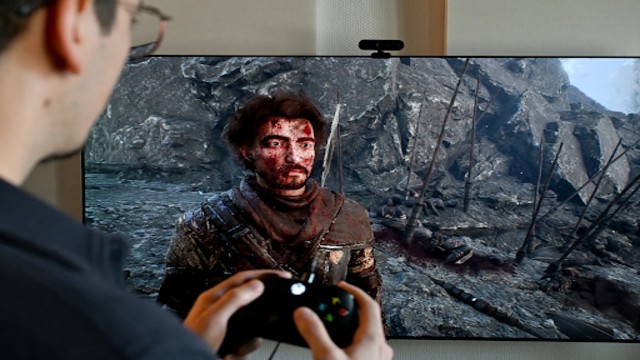
A manager plays “Clair Obscur: Expedition 33” at the company’s headquarters in Montpellier. Getty Images
The global gaming community is gathering in Los Angeles for the industry’s biggest awards night. Yet the most talked-about contender isn’t a blockbuster from Ubisoft, Sony, Nintendo or EA. It’s a moody, Belle Epoque-inspired adventure built by a small studio in southern France.
Clair Obscur: Expedition 33, created by the 30-member team at Sandfall Interactive, has emerged as the unexpected favorite. The game’s haunting storyline follows players on a mission to stop an annual ritual that wipes out entire populations. It was made for under $10 million — a tiny fraction of today’s blockbuster budgets.
Indie Games Rise as Industry Shifts
The spotlight on indie titles reflects a deeper shift in gaming. Big studios continue to pour money into massive productions with cinematic visuals. But more players are turning to accessible, lower-budget games on platforms like Steam and Roblox.
Roblox has seen particularly explosive growth. Its young player base nearly doubled to 150 million last year. Games built on Roblox require low development costs and can be played instantly on any device. This accessibility is reshaping what “success” looks like in gaming.
Geoff Keighley, who oversees the awards show, says the landscape has changed dramatically. A decade ago, major publishers dominated nominations and premieres. Today, independent teams from around the world are earning recognition and delivering hits.
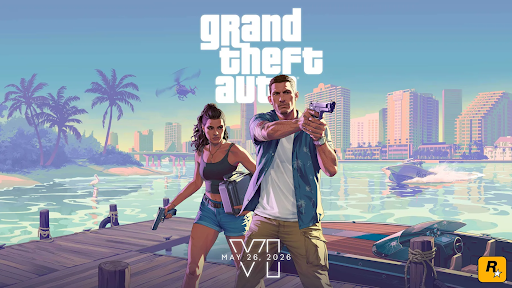
Grand Theft Auto VI.Source: Take-Two Interactive Software Inc.
Cost Pressures Hit Big Publishers
While indie games surge, the traditional model is struggling. Consumer spending on video games dropped 3.5% in 2022 and has remained almost flat. Premium gaming has become costly, with consoles priced around $450 and new titles at $70 each.
Video-game analyst Matthew Ball notes that major markets have lost players, and those remaining are spending less. At the same time, development costs have surged by 20% to 30% in many regions.
This economic squeeze has led to sweeping job cuts. The industry shed 14,600 jobs last year, following 10,500 cuts the year before. More than 25 studios closed, creating a dangerous cycle for big-budget games that can no longer guarantee profits.
Simon Zhu, former global investment president at NetEase, predicts a shortage of high-quality AAA titles in coming years. NetEase itself has shuttered or spun off multiple studios. Other giants — including Microsoft, Amazon, Embracer Group and EA — have also downsized.
In a sign of shifting power, EA recently agreed to go private through a deal with Silver Lake Management and Saudi Arabia’s Public Investment Fund. Ubisoft is also preparing for major change as Tencent takes a 25% stake in a new entity that will oversee several of its top franchises.
Big Bets Are Becoming Riskier
The challenges are similar to Hollywood’s. A few mega-franchises still dominate, such as the highly anticipated new Grand Theft Auto, expected to become the best-selling game ever. But investors are wary of pouring hundreds of millions into untested ideas.
Recent high-profile flops offer cautionary tales. EA’s Immortals of Aveum reportedly cost $125 million and earned mixed reviews. Sony’s Concord, with a $200 million budget, was shut down only two weeks after release.
According to Zhu, even mediocre AAA games once sold millions. Now, anything below top-tier quality may sell only half a million copies — or fewer.
Younger Players Want Something Different
Many young gamers are opting for shorter, more casual experiences over traditional 80-hour adventures. Roblox titles such as Steal A Brainrot and Grow A Garden are growing rapidly because they fit into busy, mobile-first lifestyles.
Analysts believe AAA dominance is fading. Joost van Dreunen, CEO of Aldora, says the decline of big-budget titles is already underway. He notes that younger audiences are gravitating to stylistically unique games, often built with AI tools, rather than ultra-realistic graphics.
Mat Piscatella of Circana agrees. What attracts players today is not realism but social connection, convenience and instant access.
Shawn Layden, former president of Sony Interactive Entertainment America, recalls how budgets spiraled over the years. Games once made for $20 million grew to $60 million, then $120 million. Sony’s Spider-Man 2 ultimately cost more than $300 million.
He says he always wanted creators to dream big — but those dreams have become far more expensive to build.
The shift now underway suggests a new era. Indie studios, flexible platforms and creator-driven experiences may define the future of gaming more than ever before.