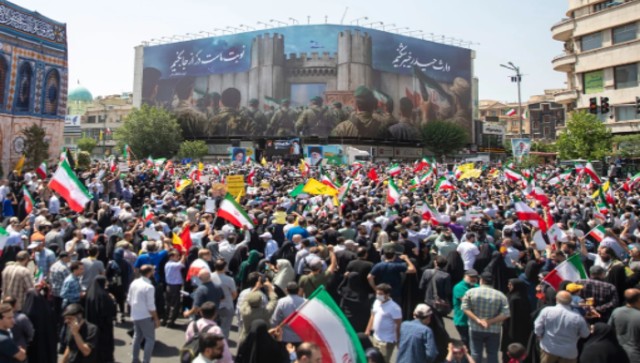
Demonstrators wave Iranian and other flags during a protest against Israeli attacks on Iran, after the Friday prayer ceremonies on June 20, 2025, in central Tehran, Iran.
Diplomatic tensions between Iran and the United States may still have a path to peace—if a critical move is made. An Iranian presidential official claims the ongoing Iran conflict could be stopped with a single phone call from U.S. President Donald Trump to Israel.
Majid Farahani, an advisor to Iran’s presidency, told CNN that diplomacy is still an option, but it hinges on one key action. The U.S. must stop Israeli airstrikes targeting Iranian sites. “Iran believes in civilian dialogue,” he said. “Direct or indirect communication doesn’t matter.”
One Call Could Change Everything
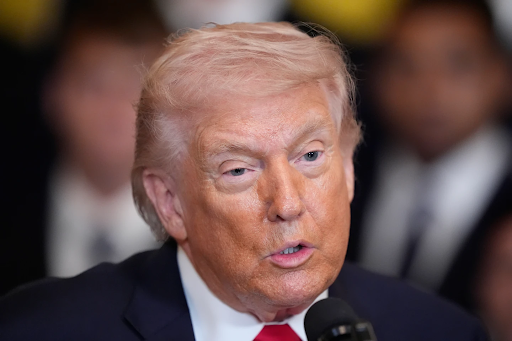
According to Farahani, the Iran conflict can be halted immediately. All it would take is Trump ordering Israel to end its military campaign. He emphasized that no real negotiations can happen while bombs are still falling. “President Trump can easily stop the war with just one call to the Israelis,” he stressed.
This statement reflects Iran’s unwavering stance: peaceful talks are impossible in the face of violence. Yet, Farahani also hinted at flexibility, especially around Iran’s controversial nuclear program.
Iran's Nuclear Program: Flexible But Firm
Iran continues to assert that its nuclear program is peaceful. However, it remains a major sticking point in global diplomacy. Farahani made it clear that enrichment would not stop entirely, but some adjustments could be made. “Maybe it can be lower, but we don’t stop it,” he said.
This position comes as European powers, including France, have hardened their stance. French foreign ministry spokesperson Christophe Lemoine said the country supports “zero enrichment,” echoing calls from the U.S. and Israel.
Iran, on the other hand, insists its nuclear development is for peaceful energy production, despite creating stockpiles of near-weapons-grade material.
A Narrow Window for Peace Talks
Amid rising tensions, Trump has left a sliver of hope for diplomacy. He has opened a two-week window for potential negotiations before deciding on any military action. Though the odds are slim, this move could provide the only current chance to avoid war.
On Friday, foreign ministers from Iran, the U.K., France, and Germany, along with the EU’s foreign policy chief, met in Geneva. It was the first face-to-face meeting since the outbreak of the latest Iran conflict.
This diplomatic gathering may signal a shift—albeit a cautious one—towards peaceful resolution.
A Divided U.S. Administration
Within Trump’s own team, there appears to be growing disagreement. Some advisors push for military strikes, while others advocate for restraint. The lack of unity has added to global uncertainty surrounding the U.S. response.
“If America gets involved in the war,” warned Farahani, “there are so many options—and all of them are on the table.”
Iran's Streets Echo With Rage
While global leaders debated in Geneva, Iranian citizens made their stance known on the streets of Tehran. Massive pro-government rallies erupted Friday, displaying both nationalism and defiance. Protesters waved Iranian, Hezbollah, and Palestinian flags, while U.S. and Israeli flags were burned.
Chants of “Death to Israel, Death to America” echoed loudly, reinforcing the deep-rooted anger many Iranians feel toward both nations.
One protester, speaking to CNN, expressed the sentiment driving the public: “Trump, you are threatening my leader. Don’t you know that my nation believes death is sweeter than honey?”
Final Thoughts: Can the Iran Conflict Be Avoided?
The Iran conflict remains dangerously close to full-scale war. But officials on both sides recognize that diplomacy, though difficult, is not entirely off the table. As Farahani noted, a single call from Trump to stop Israeli strikes could restart peace talks.
In a world increasingly shaped by bold moves and fragile peace, perhaps that one call could rewrite history.