Iran strikes send drones and missiles across Gulf states, exposing defense gaps and rising tensions. Explore the unfolding regional security crisis.
Tensions are rising between the United States and several Gulf nations after Iran launched waves of drones and missiles across the region. Officials from the Persian Gulf say their governments were left unprepared for the attacks, claiming they received little or no warning before the United States and Israel struck Iranian targets last weekend.
As Iranian retaliation intensified, the absence of advance coordination and limited defensive support from the United States has sparked growing frustration among some of Washington’s closest regional partners.
Allies Say Advance Warning Was Missing
Officials from two Gulf countries, speaking anonymously due to the sensitive diplomatic nature of the issue, said their governments were disappointed by how the Iran strikes unfolded. According to them, Gulf states were not informed ahead of the U.S.-Israeli operation that triggered the current wave of retaliation.
They also say earlier warnings about the potential regional consequences of attacking Iran were largely ignored. Once the strikes occurred, Iranian forces began launching drones and missiles toward several Gulf countries, placing both civilian areas and military installations at risk.
The officials added that many leaders in the region now believe the United States focused primarily on defending Israel and American troops, leaving Gulf partners to rely largely on their own defenses.
Growing Concerns Over Regional Defenses
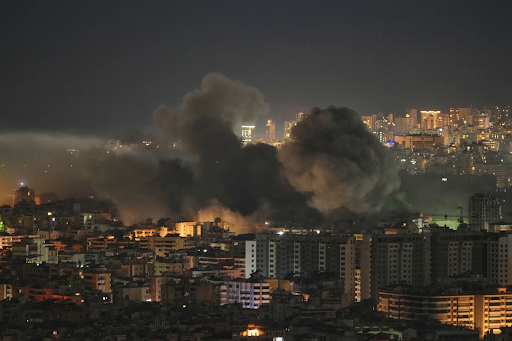
The scale of Iran’s retaliation has heightened anxiety across the Gulf. Since the conflict began, Iran has reportedly launched at least 380 missiles and more than 1,480 drones toward five Arab Gulf states, according to compiled official statements. Local authorities say at least 13 people have been killed in the attacks so far.
Defense officials in one Gulf country warned that interceptor missile supplies are rapidly declining as air defense systems struggle to keep up with the incoming threats. Pentagon briefings to U.S. lawmakers this week also acknowledged the difficulty of stopping waves of Iranian drones, particularly the widely used Shahed models.
During those briefings, Defense Secretary Pete Hegseth and Joint Chiefs Chairman Gen. Dan Caine reportedly told lawmakers that many of the incoming unmanned aerial vehicles may not be intercepted. Officials also admitted that U.S. defensive capabilities in parts of the Gulf region remain limited, especially outside established military bases.
Iranian Drone Strikes Hit U.S. Targets
The consequences of the ongoing drone campaign have already been felt. Six American soldiers were killed in Kuwait after an Iranian drone strike hit an operations center located in a civilian port facility more than 10 miles from the main U.S. Army base.
Elsewhere in the region, drone attacks caused minor fires at the U.S. Embassy compound in Riyadh and outside the American consulate in Dubai. These incidents have underscored how widely Iranian drones can reach and how difficult they are to intercept once launched in large numbers.
Strategic analysts say the Gulf countries present attractive targets for Iranian retaliation because of their proximity to Iran and the concentration of high-value infrastructure. The region hosts U.S. military facilities, major energy production sites, and key shipping routes that are critical to global oil supply.
Public Criticism Begins to Surface
While official responses from Gulf governments have remained cautious, some influential public figures have openly criticized the United States. Prince Turki al-Faisal, a former Saudi intelligence chief, suggested that Israeli Prime Minister Benjamin Netanyahu had pushed Washington into an unnecessary conflict.
Analysts also believe the United States underestimated how exposed Gulf countries would become during the confrontation. Bader Mousa Al-Saif, a Kuwait-based analyst with Chatham House, said the absence of a clear regional defense plan reflects a short-sighted strategy.
According to Al-Saif, Washington may have assumed that American forces and Israel would remain the primary targets of Iranian retaliation, without fully considering the vulnerability of neighboring Gulf states.
Uncertain Path Forward for the Region
Despite their frustration, Gulf countries have not launched counterstrikes against Iran, a stance that has puzzled some U.S. officials. Analysts say regional governments remain cautious because they fear further escalation could damage their economies and destabilize the region.
Michael Ratney, a former U.S. ambassador to Saudi Arabia, noted that Gulf states may support weakening Iran strategically, but they are deeply concerned about the long-term consequences of an expanding war.
For now, many leaders across the region are focused on one pressing question: what happens next. If the conflict continues to intensify, Gulf countries may ultimately bear the greatest burden of its economic and security fallout.