Iran’s leadership enters a critical phase as contenders emerge in the Iran supreme leader successor race following Khamenei’s death.
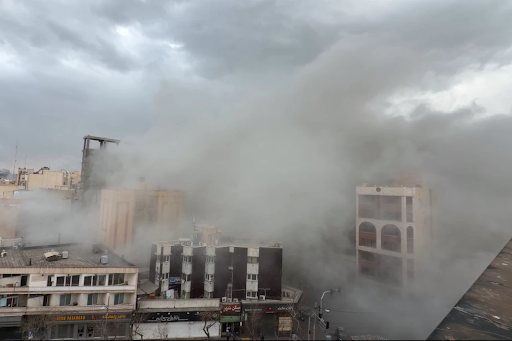
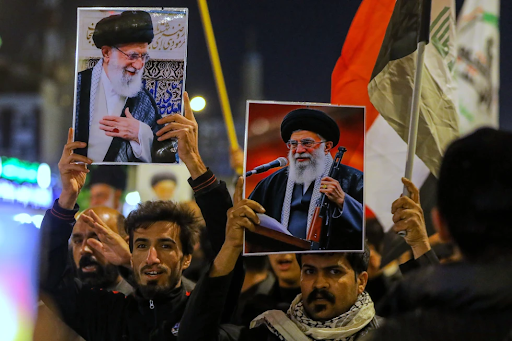
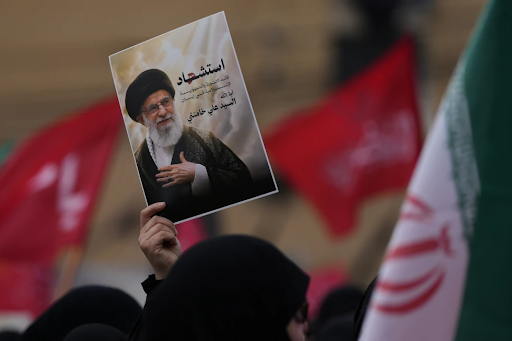
Iran is entering one of the most uncertain chapters in its modern history. The killing of Supreme Leader Ayatollah Ali Khamenei in a surprise U.S. and Israeli bombardment has triggered an urgent power transition. After ruling for 37 years, Khamenei leaves behind a system deeply shaped by his authority and influence.
This marks only the second time since the 1979 Islamic Revolution that Iran must appoint a new supreme leader. The stakes are immense because the supreme leader holds final authority over war, peace, and Iran’s controversial nuclear program. As political maneuvering intensifies in Tehran, attention has shifted to the Iran supreme leader successor and the figures most likely to shape the country’s future.
Provisional Leadership Steers the Crisis
While the formal selection process unfolds, a temporary council is guiding the country. President Masoud Pezeshkian, judiciary chief Gholamhossein Mohseni Ejei, and senior cleric Ayatollah Ali Reza Arafi form the interim leadership structure. Their role is to ensure stability during a tense transition.
Foreign Minister Abbas Araghchi indicated that a new leader could be named within days. That timeline reflects the urgency surrounding the Iran supreme leader successor decision, especially as regional tensions remain high.
How the Iran Supreme Leader Successor Is Chosen
The responsibility of choosing the next supreme leader rests with the Assembly of Experts. This 88-member clerical body is constitutionally mandated to appoint a successor quickly. Its members are elected by the public, although their candidacies must first be approved by the Guardian Council.
Khamenei wielded considerable influence over both institutions during his tenure. That influence makes a dramatic ideological shift unlikely, even though different factions are competing behind the scenes. Some candidates favor confrontation with Western powers, while others advocate cautious diplomatic engagement.
Mojtaba Khamenei: Continuity Through Family Ties
Among the most discussed Iran supreme leader successor candidates is Mojtaba Khamenei, the late leader’s son. A mid-level cleric, he has maintained strong connections with Iran’s powerful Revolutionary Guard. However, he has never held formal government office.
His possible appointment raises sensitive questions. The Islamic Republic has long criticized hereditary rule in monarchies. Elevating Mojtaba could appear inconsistent with those principles, even if it promises continuity for the ruling establishment.
Ayatollah Ali Reza Arafi: The Insider Cleric
Ayatollah Ali Reza Arafi stands out as another prominent contender. He currently serves on the provisional governing council, giving him visibility during this transitional period. Khamenei personally appointed him to the Guardian Council in 2019.
Arafi later secured a position within the Assembly of Experts. He also oversees a vast network of religious seminaries, reinforcing his influence within Iran’s clerical community. His credentials and institutional ties make him a serious Iran supreme leader successor possibility.
Hassan Rouhani: A Moderate Voice
Former President Hassan Rouhani represents a comparatively moderate option. During his presidency from 2013 to 2021, he negotiated the landmark nuclear agreement with the United States under the Obama administration. That agreement was later scrapped by President Donald Trump.
Rouhani’s reformist leanings and diplomatic track record distinguish him from hard-line rivals. However, he was disqualified from seeking reelection to the Assembly of Experts in 2024. He publicly criticized that decision, describing it as limiting political participation.
Hassan Khomeini: A Symbolic Figure
Hassan Khomeini, grandson of the Islamic Republic’s founder Ayatollah Ruhollah Khomeini, also attracts attention. Though he has never held public office, his lineage carries symbolic weight. He currently works at his grandfather’s mausoleum in Tehran.
Like Rouhani, he is seen as relatively moderate. His candidacy could appeal to those seeking balance between revolutionary legacy and pragmatic governance.
Ayatollah Mohammed Mehdi Mirbagheri: The Hard-Line Option
Ayatollah Mohammed Mehdi Mirbagheri appeals strongly to conservative factions. A senior cleric and Assembly of Experts member, he is widely supported by hard-liners. He was close to the late Ayatollah Mohammad Taghi Mesbah Yazdi, known for uncompromising views.
Mirbagheri has taken controversial positions in the past. During the COVID-19 pandemic, he opposed school closures and labeled them conspiratorial. He currently leads the Islamic Cultural Center in Qom, Iran’s principal hub for religious scholarship.
A Defining Moment for Iran
The decision on the Iran supreme leader successor will define the country’s trajectory for years. Whether Iran moves toward confrontation or cautious diplomacy remains uncertain. What is clear, however, is that this leadership choice will shape not only domestic policy but also regional stability.