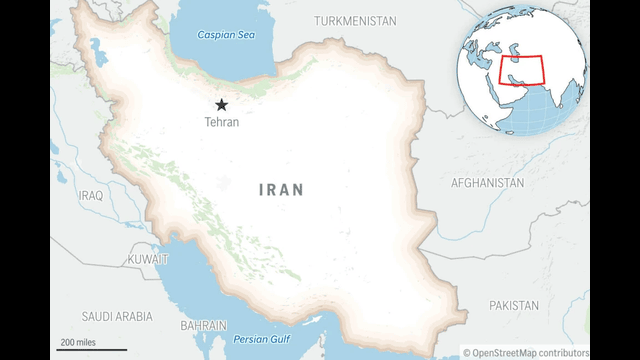
This is a locator map for Iran with its capital, Tehran.
Iran has seized a Marshall Islands-flagged tanker in the Strait of Hormuz, heightening concerns in one of the world’s most vital shipping lanes. A U.S. defense official confirmed the incident on Friday, marking the first vessel interception by Iran in months. The tanker, named Talara, was diverted into Iranian territorial waters under unclear circumstances, adding fresh strain to an already volatile region.
Tanker Talara Diverted Into Iranian Waters
The Talara was sailing from Ajman in the United Arab Emirates to Singapore when Iranian forces intercepted it. According to a U.S. official, the vessel was forced to change course before communications with its operators were lost.
A U.S. Navy MQ-4C Triton drone monitored the area for hours, confirming activity around the tanker during the seizure. Flight-tracking data supported the drone’s presence overhead throughout the incident.
Private Security Firms Confirm Seizure
Ambrey, a private maritime security company, reported that three small Iranian boats approached the Talara before the vessel veered into Iranian waters.
The United Kingdom Maritime Trade Operations (UKMTO) also flagged the event, noting that “state activity” had altered the tanker’s route.
Cyprus-based Columbia Shipmanagement, the manager of the Talara, said it had lost contact with the ship, which was transporting high-sulphur gasoil. The firm stated it was working with global maritime authorities to re-establish communication, adding that crew safety remains the top priority.
Iran Silent Amid Heightened Regional Pressures
Iran has not officially acknowledged the tanker seizure. The timing is significant, coming after Iran warned it could retaliate following a 12-day war with Israel in June. That conflict saw the United States launch strikes on Iranian nuclear facilities, fueling Tehran’s claims of defensive action in regional waters.
The seizure also aligns with Iran’s long-standing strategy of demonstrating control over the Strait of Hormuz, where nearly 20% of global oil shipments pass.
History of Maritime Confrontations
The latest tanker incident adds to a long list of maritime confrontations involving Iran.
- In 2019, the U.S. Navy blamed Iran for limpet mine attacks damaging multiple tankers.
- In 2021, an Iranian drone strike on an Israeli-linked tanker killed two European crew members.
- In 2022, Iran seized two Greek tankers, releasing them only after months of negotiation.
- In April 2024, Iran captured the Portuguese-flagged MSC Aries in another high-profile maritime action.
These recurring incidents often followed political flashpoints, including the U.S. withdrawal from the 2015 Iran nuclear deal, which reignited tensions between Iran and Western governments.
Regional Conflicts Intensify Shipping Risks
Maritime routes have grown increasingly dangerous due to violence linked to multiple regional conflicts.
Iran’s actions are unfolding against the backdrop of the Israel-Hamas conflict in Gaza. Iranian-aligned Houthi rebels have launched repeated assaults on cargo vessels in the Red Sea, drastically reducing commercial traffic and forcing companies to reroute shipments.
These disruptions have revived fears over the safety of global energy and trade corridors.
Strait of Hormuz: A Global Flashpoint
The Strait of Hormuz has long been a critical pressure point. Iran frequently threatens to block the passage in response to military or political tensions.
For decades, the U.S. Navy’s 5th Fleet, based in Bahrain, has operated in the region to ensure that one of the world’s most important waterways remains open.
Friday’s seizure reinforces concerns that maritime confrontations in the Persian Gulf could escalate rapidly, especially as geopolitical pressures mount.
A Dangerous Moment for Global Shipping
With Iran under pressure from recent conflicts, U.S. strikes, and growing international scrutiny, Friday’s seizure of the Talara highlights how quickly tensions can spill into maritime confrontation.
As authorities attempt to regain contact with the tanker, global markets and energy analysts are watching closely. Any further escalation in the Strait of Hormuz could have significant global economic consequences, making the situation a critical point of international focus.