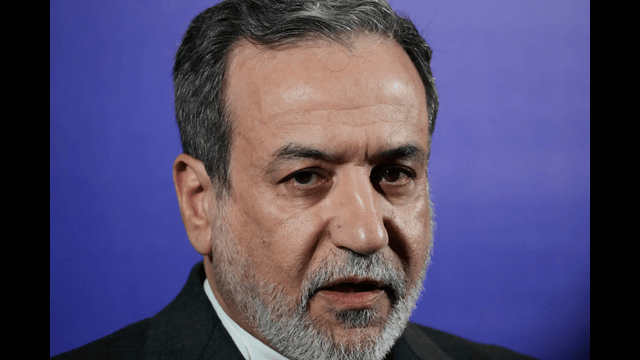
Iranian Foreign Minister Abbas Araghchi speaks in a new briefing after attending a conference titled “International Law Under Assault: Aggression and Self-Defense,” in Tehran, Iran, Sunday, Nov. 16, 2025.
Iran’s foreign minister has declared that the country is no longer enriching uranium at any site, signaling a possible willingness to resume diplomatic talks with the West. The statement follows the destruction of key enrichment facilities during a 12-day war involving Israel and the United States in June.
Iran Halts Enrichment After Facility Attacks
Foreign Minister Abbas Araghchi confirmed that uranium enrichment has stopped across Iran because its facilities were severely damaged.
He stressed that all nuclear sites remain under International Atomic Energy Agency (IAEA) safeguards.
“There is no undeclared nuclear enrichment in Iran,” he said. “There is no enrichment right now because our enrichment facilities have been attacked.”
Araghchi delivered his comments while answering questions from an Associated Press journalist who received a rare three-day visa to attend a diplomatic summit in Tehran.
Iran Claims Threats Over Accessing Bombed Sites
Top nuclear official Mohammad Eslami told the summit that Iran has been warned against accessing damaged enrichment facilities at Fordo, Isfahan and Natanz.
Satellite images reviewed by AP indicate no major repair efforts at these locations since the attacks.
“Our security situation hasn’t changed,” Eslami said. “Every day we are threatened that if we touch anything, we’ll be attacked.”
Before the strikes, Iran had enriched uranium up to 60% purity, a level close to weapons-grade. Tehran insists its nuclear program is peaceful, but Western nations and the IAEA argue Iran once operated a structured weapons program before 2003.
Iran Reasserts Nuclear Rights as Talks Remain Stalled
Araghchi said Iran still expects the world to recognize its right to peaceful nuclear technology, including enrichment.
“Iran’s right for enrichment is undeniable,” he said. “We would never give up our rights.”
However, he hinted at possible negotiations with the U.S. if Washington changes its approach.
He criticized current U.S. demands, calling them “maximalist and excessive.”
“What we have seen is an effort to dictate terms. We see no chance for dialogue under such demands,” he added.
Sanctions Pressure Grows
European nations recently moved to reimpose UN sanctions on Iran over its lack of cooperation with nuclear inspections.
Meanwhile, the IAEA Board of Governors is preparing to vote on another resolution criticizing Iran for failing to fully comply with monitoring obligations.
Iran Summit Condemns Western ‘Aggression’
The summit, hosted by Iran’s Institute for Political and International Studies, focused on the theme “International Law Under Assault: Aggression and Self-Defense.”
Iranian analysts framed the June conflict as a justified response to Israeli attacks.
One paper criticized comments by German Chancellor Friedrich Merz, who praised Israel for doing the “dirty work.”
International relations expert Mohammad Kazem Sajjadpour described Iran’s actions as “remarkable, inspiring and pure,” contrasting them with what he called Israel’s “dirty deeds.”
Images of children killed during the conflict lined the entrance of the venue, which is named after Gen. Qassem Soleimani, the Iranian commander killed by a U.S. drone strike in 2020.
A Vulnerable Moment for Iran
Despite strong rhetoric, Iran faces a weakened defense posture. Israel’s attacks heavily damaged its air defenses, raising fears of more potential strikes.
Domestic challenges also continue to mount:
- Economic pressure remains high.
- Public unrest lingers over issues like mandatory hijab enforcement.
- Concerns rise over possible increases in fuel prices, which have triggered mass protests in the past.
As tensions escalate, Iran must navigate nuclear diplomacy, security threats, and internal pressures simultaneously.