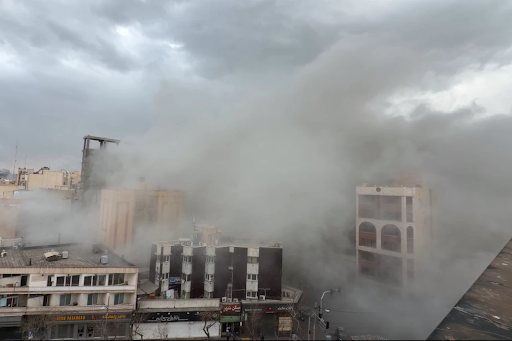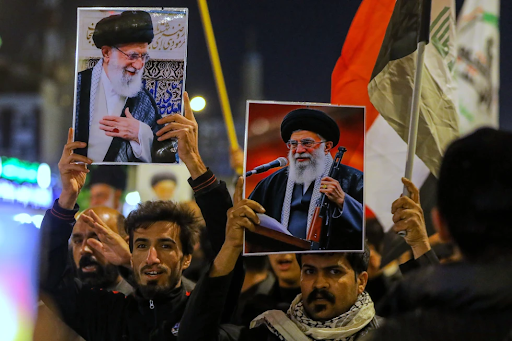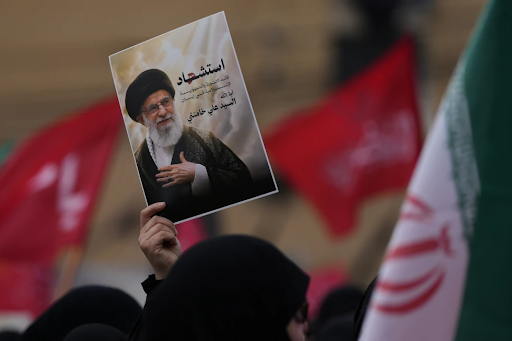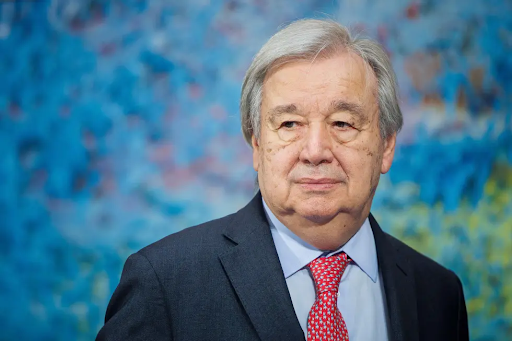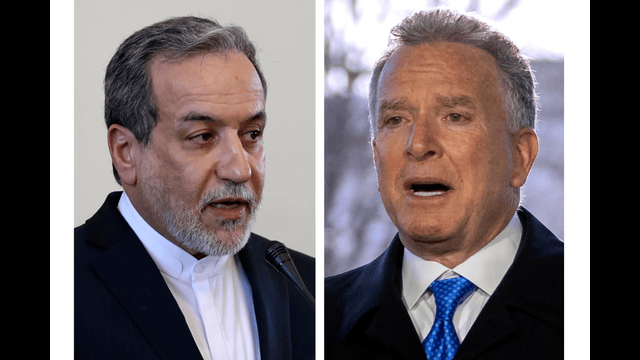
This combo shows Iranian Foreign Minister Abbas Arafhachi, left, pictured in Tehran, Iran, on Feb 25, 2025, and shows Steve Witkoff, right.
Iran and the United States are preparing for fresh diplomatic talks in Oman.
The discussions follow weeks of regional tension and internal unrest in Iran.
Both sides are expected to address Iran’s nuclear program at minimum.
The talks come after earlier plans for broader regional meetings collapsed.
The return to Oman marks a cautious reset.
Previous rounds here ended abruptly after a brief war in June.
That conflict reshaped regional security calculations on both sides.
Oman Re-Emerges as the Diplomatic Venue
Oman is once again hosting the sensitive Iran US talks.
The sultanate has long served as a quiet mediator.
Its location and neutrality make it a preferred channel.
Earlier plans included talks in Turkey with regional players.
Those efforts unraveled amid rising military tensions.
Oman ultimately became the fallback option.
Shadow of the June War Still Looms
The talks follow Israel’s 12-day war against Iran in June.
During the conflict, U.S. forces struck Iranian nuclear sites.
Many centrifuges enriching uranium were likely destroyed.
Israeli airstrikes also weakened Iran’s air defenses.
Parts of its ballistic missile infrastructure were hit.
The damage altered Iran’s military posture significantly.
Protests Shake Iran’s Leadership
Iran enters talks amid deep domestic turmoil.
Nationwide protests last month posed a serious challenge.
They were the largest since the 1979 Islamic Revolution.
Security forces responded with a harsh crackdown.
Thousands were reportedly killed during unrest.
Tens of thousands more were arrested.
U.S. officials see Iran as politically weakened.
Secretary of State Marco Rubio echoed that assessment.
Supreme Leader Ayatollah Ali Khamenei now faces rare internal pressure.
Military Pressure Builds Around Iran
The U.S. has reinforced its regional military presence.
The USS Abraham Lincoln operates nearby.
Additional warships and fighter jets are deployed.
Officials say this posture offers military leverage.
However, doubts remain over its effectiveness.
Toppling Iran’s government remains highly uncertain.
Gulf nations fear escalation.
They worry a conflict could engulf the region.
Recent incidents underline those concerns.
U.S. forces shot down an Iranian drone recently.
Iran also attempted to stop a U.S.-flagged vessel.
The encounter occurred in the Strait of Hormuz.
Strategy of Pressure and Diplomacy
Analysts say Washington seeks leverage through pressure.
The goal is to force concessions at the negotiating table.
Iran’s economic stress and proxy losses increase vulnerability.
Experts note years of sanctions have taken a toll.
Internal unrest adds to Tehran’s challenges.
The U.S. hopes this moment favors diplomacy.
Limited Clarity Ahead of Talks
Details of the Iran US talks Oman remain unclear.
Officials disclosed little before negotiations begin.
Security appeared tight at Omani entry points.
Iran’s Foreign Minister Abbas Araghchi arrived quietly.
Several senior diplomats accompanied him.
State media confirmed his presence.
Araghchi emphasized lessons from recent history.
He called for mutual respect and equal standing.
He stressed commitments must be honored.
Signals of Support From Tehran
Senior Iranian officials publicly backed Araghchi.
They described him as a trusted negotiator.
Leadership unity appears important entering talks.
On the U.S. side, envoy Steve Witkoff is expected.
He is a longtime confidant of President Donald Trump.
Jared Kushner is also traveling in the region.
Nuclear Program Takes Center Stage
Iran says talks will focus only on its nuclear program.
Broader issues remain contentious.
Proposals reportedly include halting enrichment temporarily.
One plan suggested exporting enriched uranium.
Another called for limits on missile use.
Iranian leaders have rejected those ideas publicly.
Washington wants a wider agenda.
Rubio insists missiles and regional militias matter.
Human rights issues are also part of U.S. demands.
High Stakes, Uncertain Outcome
The Iran US talks Oman carry heavy expectations.
Both sides face pressure at home and abroad.
Trust remains fragile after years of hostility.
Diplomacy now competes with deterrence.
Whether talks ease tensions remains unclear.
For now, the world is watching Muscat closely.