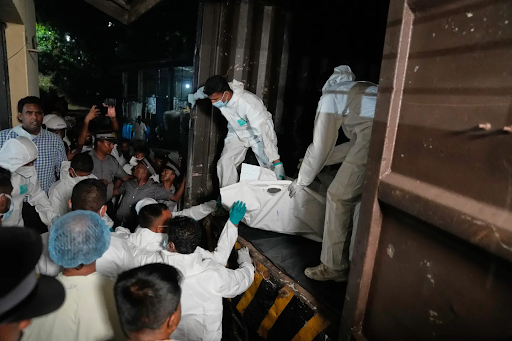
Rescue teams respond after the Iranian warship sinking near Sri Lanka, as global tensions rise and regional security concerns grow.
The sinking of an Iranian warship in the Indian Ocean has triggered geopolitical debate across the region, particularly in India, after officials confirmed the vessel had recently taken part in a naval event hosted by the country. The incident occurred near Sri Lanka and is being viewed as another sign that the ongoing conflict involving Iran, Israel, and the United States is expanding beyond the Middle East.
According to officials, the Iranian frigate IRIS Dena had completed participation in multinational naval activities in India before setting course back toward its home waters. The ship was later torpedoed by a U.S. submarine in international waters near Sri Lanka, marking one of the rare instances of a submarine sinking a warship since the Second World War.
From Naval Diplomacy to Sudden Disaster
India’s defense ministry confirmed that the Iranian warship had joined the International Fleet Review and the multinational MILAN 2026 naval exercise hosted by the Indian Navy in the port city of Visakhapatnam between February 15 and February 25. The large maritime gathering brought together naval forces from 74 countries and was intended to promote cooperation and strengthen regional security partnerships.
Images shared earlier by the Indian Navy showed the IRIS Dena sailing alongside other international vessels during the exercise. Crew members were also seen standing on the ship’s deck with the Iranian flag, highlighting the diplomatic nature of the visit.
However, the vessel’s journey home ended in tragedy. Sri Lanka’s navy said it responded to a distress signal from the ship in international waters south of the island nation. By the time rescue teams arrived, the vessel had already sunk, leaving behind oil slicks and sailors struggling in the water.
Rescue crews recovered 87 bodies and managed to save 32 sailors from the wreck. Survivors were taken to a hospital in Galle, a coastal city in southern Sri Lanka, where they received medical treatment.
U.S. Operation Expands Beyond the Middle East
The United States confirmed that the attack was part of its broader military campaign against Iran during the ongoing regional conflict. U.S. Defense Secretary Pete Hegseth described the Iranian vessel as a “prize ship,” suggesting the strike was intended to weaken Iran’s naval capabilities.
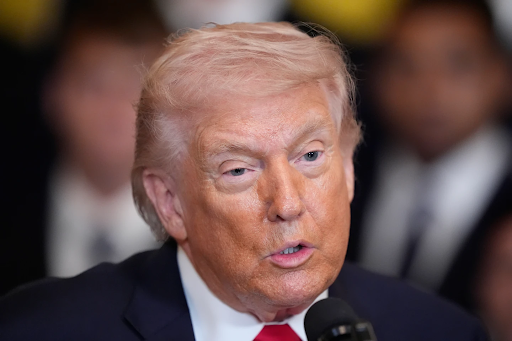
U.S. President Donald Trump has previously stated that dismantling Iran’s naval power is one of the strategic objectives of the war. The U.S. Department of Defense later released a video on social media showing the moment the torpedo struck the ship, triggering a massive underwater explosion that tore the vessel apart.
Iran reacted sharply to the incident. Foreign Minister Abbas Araghchi condemned the attack, accusing the U.S. Navy of committing what he called an “atrocity at sea.” He warned that the United States would eventually face consequences for targeting the frigate, which he said carried nearly 130 crew members.
Araghchi also emphasized that the ship had recently been a “guest” of India during the naval exercises.
Another Iranian Warship Enters Sri Lankan Waters
The incident quickly drew Sri Lanka into the unfolding situation. Government spokesperson Nalinda Jayatissa told parliament that another Iranian vessel had entered the country’s exclusive economic zone shortly after the sinking.
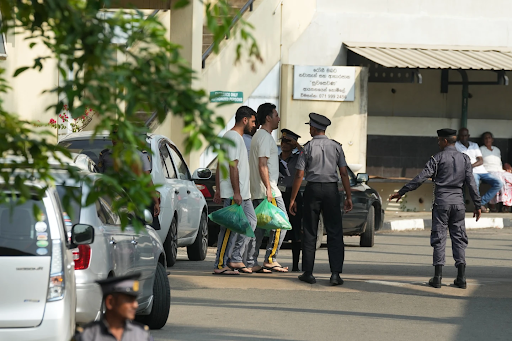
Sri Lankan authorities moved swiftly to manage the situation. President Anura Kumara Dissanayake later confirmed that the Sri Lankan Navy had taken control of the Iranian warship IRIS Bushehr, transferring 208 sailors from the vessel to Colombo for safety.
The crew members are expected to be temporarily housed at a naval base near the capital while the ship itself is escorted to a port in eastern Sri Lanka. Officials said the vessel had reportedly experienced engine trouble, though further details were not disclosed.
Political Questions Emerge in India
The sinking has sparked political debate in India, where the Indian Ocean is considered central to national security and maritime trade routes. The region hosts critical sea lanes used for global energy shipments and commercial shipping, making stability there a key strategic priority for New Delhi.
Opposition leaders argued that the government should respond publicly to the incident, given its proximity to India’s maritime neighborhood and the vessel’s recent participation in Indian-hosted exercises.
Rahul Gandhi of the Indian National Congress criticized what he described as the government’s silence, saying the conflict had effectively reached India’s doorstep.
Former Indian foreign secretary Kanwal Sibal also commented on the issue, stating that while India was not responsible for the U.S. strike, it carried a moral responsibility because the ship had been present in regional waters following India’s invitation.
As tensions continue to ripple through the region, the Iranian warship sinking has become a stark reminder that conflicts once confined to specific regions can rapidly extend into vital global waterways.