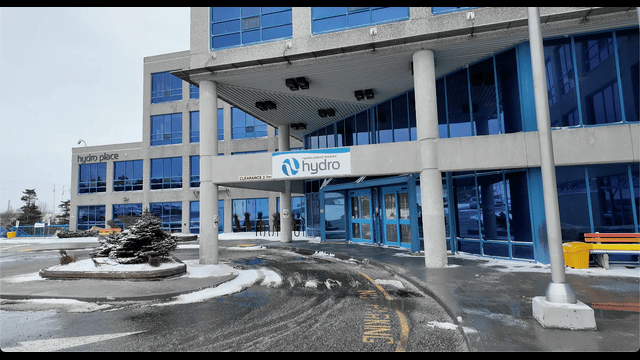
Picture showing the outside of the Hydro Place building.
A sudden and widespread power disruption left much of the island without electricity Thursday afternoon, prompting Newfoundland and Labrador Hydro to announce a media availability to address the situation. The outage, which unfolded quickly and affected multiple communities, was traced to a trip on the Labrador-Island Link transmission line.
As homes and businesses experienced interruptions, the utility moved to stabilize the grid while preparing to provide further updates to the public. Although such incidents can cause concern, officials indicated that outages of this nature are not uncommon within the island portion of the province.
What Triggered the Island-Wide Outage
According to a statement released Thursday, the disruption began when the Labrador-Island Link transmission line tripped unexpectedly. This high-voltage line plays a critical role in moving electricity across regions, and when it is interrupted, the effects can cascade across connected systems.
The resulting island-wide outage led to temporary power interruptions in several areas, though not every customer was impacted in the same way. Different blocks of customers typically experience outages depending on grid conditions at the time of the incident. Hydro crews immediately began assessing the system to determine the cause and restore stability as efficiently as possible.
While the sudden loss of power can disrupt daily routines, the utility emphasized that these events are generally brief. In most cases, service is restored within a relatively short window, limiting prolonged inconvenience for residents and businesses.
How Often Do These Outages Happen?
Officials noted that similar outages occur approximately five to eight times each year on the island portion of the province. Each event varies slightly in scope and the number of customers affected, depending on which sections of the grid are involved.
Despite the frequency, the majority of these interruptions are short-lived. Hydro indicated that such outages rarely extend beyond 30 minutes, as built-in safety mechanisms and operational protocols are designed to isolate issues quickly and prevent broader system damage.
These temporary interruptions, though disruptive, are part of the complex realities of operating a large interconnected transmission network. Protective systems are designed to trip automatically when irregularities are detected, a measure intended to safeguard equipment and maintain long-term reliability.
Communication and Next Steps from Newfoundland and Labrador Hydro
In the wake of the island-wide outage, Newfoundland and Labrador Hydro confirmed it would hold a media availability later in the day. The session is expected to provide additional clarity on what caused the transmission line trip and outline any preventative steps being considered.
Public communication has become an essential component of outage management, especially when disruptions span wide geographic areas. By addressing media questions directly, the utility aims to reassure customers while reinforcing confidence in the grid’s resilience.
As restoration efforts concluded and power returned to affected communities, attention shifted toward understanding the technical factors behind the interruption. For many residents, the swift return of electricity was a relief, even as questions remained about the trigger.
Ultimately, while island-wide outages can feel dramatic in the moment, officials stress they are typically short and manageable events. With protective systems functioning as intended and restoration times remaining brief, Newfoundland and Labrador Hydro maintains that the overall reliability of the island’s electrical grid remains strong.