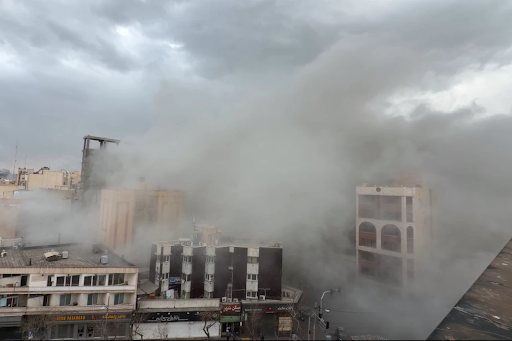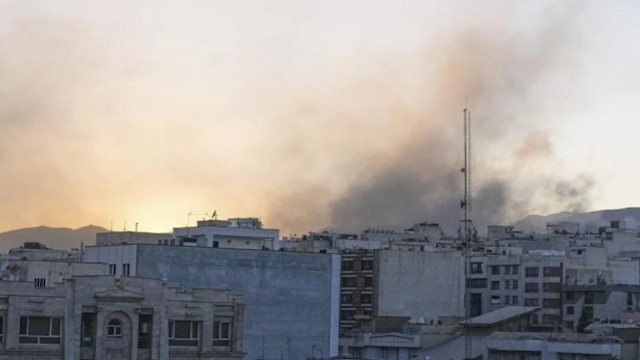
Dense smoke billows over Tehran after Israeli airstrike, June 18, 2025
The conflict between Israel and Iran deepened Thursday with a chilling new development. Israel’s military warned civilians to evacuate the area around Iran’s Arak heavy water reactor—an unusual move that signals the possible expansion of Israeli airstrikes to sensitive nuclear zones.
The warning was issued on X (formerly Twitter) alongside a satellite image showing the Arak facility circled in red. Similar imagery has often preceded previous Israeli strikes.
Arak on Alert
Located roughly 250 kilometers southwest of Tehran, the Arak reactor plays a key role in Iran’s nuclear infrastructure. While heavy water helps cool reactors, it also creates plutonium—a potential ingredient for nuclear weapons.
Although Iran had agreed to redesign the facility under the 2015 nuclear deal, its status has since grown murky. Iran began operating the plant’s secondary circuit in 2019, a move that technically remained within the agreement’s terms. Still, it raised international concerns about Iran’s long-term nuclear ambitions.

Maxar Satellite image showing Iran’s Arak heavy water reactor, Feb 2025 (AP Photo)
Strikes Escalate, Warnings Mount
Thursday marked the seventh consecutive day of Israeli airstrikes across Iran, including in Tehran and surrounding regions. The Israeli military confirmed the attacks but offered few details.
Iran responded with another wave of missile launches toward Israel. Sirens blared, and residents were urged to seek immediate shelter. Though Israel has begun lifting some domestic restrictions, hinting at a reduced threat level, the situation remains volatile.
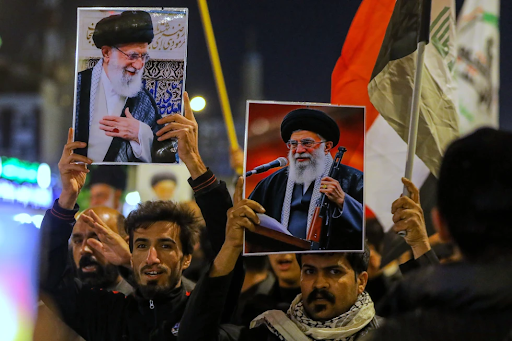
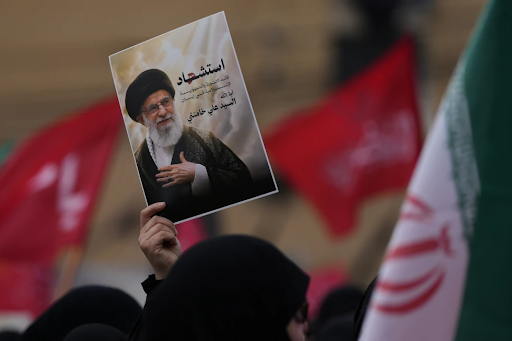
Earlier this week, Iran’s Supreme Leader dismissed U.S. appeals to de-escalate and warned that American involvement would lead to “irreparable damage.” His message came just a day before the fresh round of bombings.
High-Profile Targets Hit
Israel’s military campaign has already struck multiple high-value Iranian facilities. These include the uranium enrichment site at Natanz, centrifuge workshops near Tehran, and a nuclear research center in Isfahan. Several top Iranian generals and nuclear scientists have also reportedly been killed in the strikes.
According to a Washington-based Iranian human rights group, the conflict has so far claimed at least 639 lives in Iran—including 263 civilians—and injured more than 1,300 people. Iran’s retaliation, involving over 400 missiles and hundreds of drones, has killed at least 24 people in Israel. Many of these attacks hit residential areas, causing significant destruction.
Global Nuclear Watchdogs Raise Concerns
The International Atomic Energy Agency (IAEA) has strongly discouraged Israel from targeting nuclear facilities like Arak. Inspectors last visited the site on May 14. However, due to recent restrictions by Iran, the agency has lost “continuity of knowledge” regarding the country’s heavy water production and stockpiling.
This uncertainty adds to the growing tension. Without verification, it’s unclear how much heavy water Iran currently possesses—raising fears that nuclear escalation could follow military missteps.
From Diplomacy to Destruction?
As part of the original 2015 nuclear deal, Iran had agreed to export excess heavy water to avoid sanctions. Even the U.S. bought 32 tons in a single transaction. But with diplomacy failing and bombs falling, hopes for nuclear restraint appear to be fading fast.