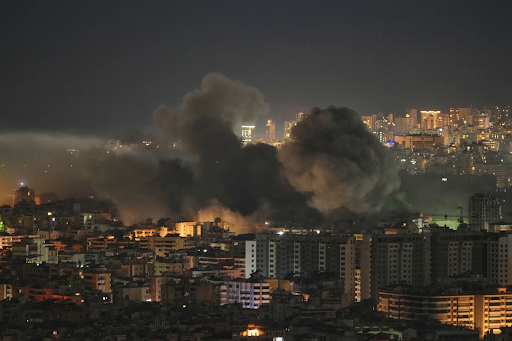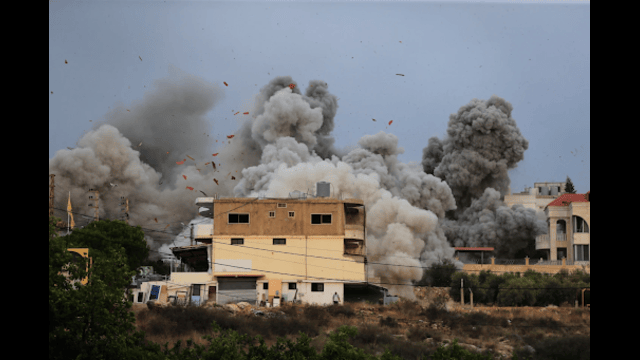
Smoke rises following an Israeli strike in the village of Tier Debba, Southern Lebanon, Nov 6, 2025
Israeli warplanes launched multiple airstrikes across southern Lebanon on Thursday, targeting what they described as Hezbollah positions. The strikes followed a stark warning to residents in several border towns, signaling an escalation in the near-daily hostilities between Israel and the Iran-backed group.
Israeli Strikes Follow Evacuation Warnings
Hours before the strikes, Israeli military spokesperson Avichay Adraee warned civilians in Tayba, Teir Debba, and Aita al-Jabal to move at least 500 meters from residential areas allegedly used by Hezbollah. Additional alerts were later issued for Zawtar al-Sharqiyah and Kfar Dounin.
The Israeli army said its warplanes struck Hezbollah’s military infrastructure, including weapons storage facilities “constructed within civilian-populated areas.” Officials claimed these operations were part of efforts to prevent Hezbollah from rebuilding after last year’s U.S.-brokered ceasefire.
“We will not allow Hezbollah to rearm or regain the strength to threaten Israel,” said government spokesperson Shosh Bedrosian. Lebanon’s health ministry confirmed one civilian injury, though most residents reportedly evacuated before the bombardment.
Lebanese Leadership Responds Amid Peace Efforts
The strikes coincided with a cabinet meeting in Beirut, where Prime Minister Nawaf Salam reviewed a military plan aimed at disarming Hezbollah and other non-state militias. Information Minister Paul Morcos said the government praised the army’s progress despite “ongoing Israeli hostilities.”
President Joseph Aoun condemned the airstrikes, accusing Israel of undermining peace initiatives. “Every time Lebanon shows openness to dialogue, Israel intensifies its aggression,” Aoun said in a statement. He reiterated his willingness to engage in negotiations but warned that continued attacks make peace more difficult.
Ceasefire Fraying Nearly a Year Later
Nearly a year has passed since the ceasefire that ended months of fighting between Israel and Hezbollah in late 2024. Both sides accuse each other of violating the truce.
Israel maintains that its near-daily strikes target Hezbollah operatives and weapons depots. Lebanon, however, claims the attacks often hit civilian neighborhoods and unrelated infrastructure.
Hezbollah’s military capabilities were heavily damaged during the 2024 conflict, but the group has refused to disarm. Its deputy leader, Sheikh Naim Kassem, recently vowed that Hezbollah would continue to resist “no matter how limited our resources.”
Roots of Renewed Tension
The latest flare-up can be traced back to the October 7, 2023, Hamas-led attack on Israel, which sparked the war in Gaza. In solidarity, Hezbollah launched rockets into northern Israel, prompting Israeli airstrikes in return. What began as limited exchanges grew into a full-scale war by September 2024.
Since the ceasefire, Lebanon’s health ministry has reported over 270 deaths and around 850 injuries from Israeli strikes. According to the U.N. human rights office, 107 of the fatalities were civilians. No Israeli deaths have been reported from Lebanese attacks since the truce began.
U.S. Tightens Financial Pressure on Hezbollah
In a related move, the U.S. Treasury announced fresh sanctions on individuals allegedly facilitating fund transfers from Iran to Hezbollah. The measures target both licensed and unlicensed money exchange firms accused of enabling Hezbollah’s money laundering through Lebanon’s cash-driven economy.
The sanctions, officials said, are part of Washington’s effort to disrupt Hezbollah’s financial networks and weaken its operational capabilities in the region.
A Fragile Calm Under Fire
Thursday’s airstrikes mark yet another chapter in the deteriorating Israel-Hezbollah standoff. While diplomatic channels remain open, the growing frequency of Israeli raids and Hezbollah’s defiance suggest that peace may still be far from reach.
As both nations trade accusations and threats, the fragile ceasefire—once a symbol of hope—now hangs by a thread.