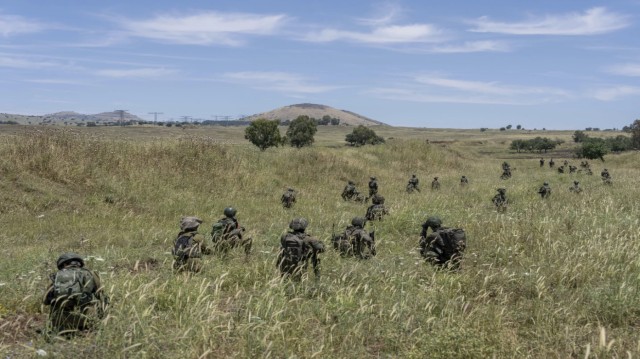
An Israel Combat reservist taking positions during a training in the Israel-controlled Golan Heights on May 8, 2024.
As Israel intensifies its Gaza offensive, growing resistance is emerging from within its own ranks. Soldiers and their mothers are increasingly refusing to return to Gaza, despite the threat of imprisonment.
The defiance comes nearly two years into the devastating war that began with Hamas’ Oct. 7, 2023 attack. While official figures remain undisclosed, new groups are openly encouraging refusal, marking a rare phenomenon in Israeli military history.
Rising Anger Against Netanyahu
Protests across Israel accuse Prime Minister Benjamin Netanyahu of prolonging the war for political gain. Critics argue he is avoiding a deal with Hamas that could free the remaining 48 hostages. Only 20 are believed alive.
Former security officials warn the offensive risks both hostages and soldiers’ lives. International pressure is also mounting over Gaza’s humanitarian crisis, fueled by Israel’s blockade and airstrikes.
Mothers Take the Lead
Among the most vocal are mothers united in grief and fear. The group Save Our Souls (SOS) represents nearly 1,000 mothers of serving soldiers. Many demand an end to what they call a “political war.”
“I thought about breaking his arm so he couldn’t return,” said Noorit Felsenthal-Berger, sobbing at the thought of her son fighting again.
The mothers hold protests nationwide, meet officials, and publish open letters. Some urge their sons to refuse service, while others stress their anger is directed at Israel’s leaders, not their children.
Exhausted and Demoralized Troops
For many soldiers, the Gaza war has dragged on with little purpose. Avshalom Zohar Sal, a 28-year-old medic, said troops feel exhausted and unfocused.
His doubts grew after witnessing hostages killed during an operation near his station. On later tours, he saw soldiers sent repeatedly into the same dangerous areas.
“Don’t make me risk my life again,” he said, questioning Israel’s strategy.
Growing Movements of Refusal
The group Soldiers for Hostages says it represents over 360 soldiers refusing to serve. While still small, it highlights the shift from early war days when reservists volunteered en masse.
Refusal carries jail time, though only a few cases have led to imprisonment. Three soldiers linked to the movement have served short sentences this year.
“Netanyahu’s aggression puts hostages and society at risk,” said member Max Kresch at a press conference.
Heavy Toll of War
Since the 2023 ground invasion, more than 450 Israeli soldiers have been killed. In Gaza, over 64,000 Palestinians have died, nearly half women and children, according to the territory’s health ministry.
Hostility toward the government is deepened by exemptions for ultra-Orthodox men, who avoid service through political deals. With 60,000 reservists recently called up, many Israelis feel the burden is unfairly shared.
Public Opinion Shifts
Support for the war, once overwhelming, is waning. An August poll by the Israel Democracy Institute found two-thirds of Israelis want a ceasefire, hostage release, and withdrawal from Gaza. About 60% of Jewish Israelis agreed.
Hamas has long offered such terms, but Netanyahu refuses. He insists the war will end only when Hamas is disarmed and all hostages returned, with Israel maintaining long-term control of Gaza.
The Sacred Line of Service
Despite growing dissent, refusal remains taboo for many Israelis. Military service is deeply tied to national identity. Analysts warn forcing divided troops to continue fighting could harm Israel’s long-term security.
Yet cracks are showing. Mothers’ voices, soldiers’ fatigue, and shifting public opinion suggest that the war’s political and human cost is testing one of Israel’s most sacred institutions.