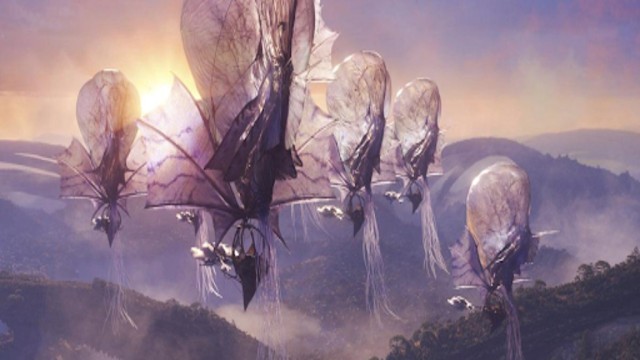
A cinematic still from Avatar: Fire and Ash, showcasing the film’s vibrant visuals. (20th Century Studios/Disney)
James Cameron has spent more than half his career building a cinematic world unlike any other. Now, at 71, the director stands at a crossroads as he prepares to release his third Avatar film, Fire and Ash, on December 19.
The journey has been decades in the making. Cameron first sketched the idea more than 30 years ago, inspired by a vivid dream of a glowing forest. He began serious work on Avatar around 20 years ago, with production for Fire and Ash running alongside 2022’s The Way of Water for nearly eight years. By Hollywood standards, it remains one of the most ambitious undertakings in film history.
“Time feels different as you get older,” Cameron said in a recent interview from his New Zealand farm. “It’s not infinite.”
Avatar — The Saga Continues
The Avatar franchise has already grossed more than $5.2 billion worldwide. To refresh audiences before the December release, The Way of Water will return to theaters on October 3. Two additional sequels are written, with release dates slated for 2029 and 2031.
“As I told the studio, we’re right on track,” Cameron noted. “The first film was chaos. The second, hectic. But this one—everything feels strong.”

Image released by Disney shows Lo'ak, voiced by Britain Dalton, left, and Tsireya, voiced by Bailey Bass, in a scene from "Avatar: Fire and Ash." (20th Century Studios/Disney)
For Cameron, the latest installment deepens Avatar’s central themes: family, spirituality, and humanity’s relationship with nature. Fire and Ash introduces new conflicts among the Na’vi themselves, exploring what happens when a community loses its way.
“These films are about connection,” he explained. “Family, empathy, and spirituality. That’s why they resonate everywhere.”
Balancing Past and Future
Cameron acknowledges that his life has been consumed by Avatar. Since Titanic in 1997, the saga has been his creative anchor, driving new technologies in visual effects and performance capture. He describes the commitment as both exhausting and rewarding.
“I knew it would take eight to ten years,” he said. “It ended up being much more. But these films carry messages that matter—about the environment, about humanity, about empathy.”
At the same time, he is considering new projects. Among them is Ghosts of Hiroshima, an adaptation of Charles Pellegrino’s book exploring the human toll of nuclear weapons. Cameron calls it a story about “testing our empathy boundaries” and a reminder of the destructive potential of modern arsenals.
“There were three bombs in 1945. Now there are over 12,000,” he said. “We’re living in a precarious world.”
A Shifting Movie Landscape
Cameron is also acutely aware of the industry’s challenges. Theatrical revenues remain down about 30 percent from pre-pandemic levels. Streaming booms and busts have reshaped filmmaking economics, often at the expense of original, big-budget spectacles.
“The only way to keep the magic alive is to make movies people need to see in theaters,” he stressed. “But studios hesitate because costs are so high. That limits new stories and voices.”
Cameron believes generative AI and new technologies can streamline production, reduce costs, and revive ambitious filmmaking. “If we adopt new tools, budgets may shrink. That could bring more opportunities for filmmakers and more great stories to theaters.”
Looking Ahead
While two more Avatar films are already mapped out, Cameron admits he may not direct them all.
“The question is, do I direct both? One? Or pass the baton?” he said. “I’ll decide next year, once the dust has settled.”
For now, his focus is on delivering Fire and Ash. He describes the experience as smoother than past productions, yet no less consuming.
“I’m just a humble movie farmer,” Cameron joked, referencing his dual life as both filmmaker and actual farmer in New Zealand.
As audiences await the next chapter of Pandora’s story, Cameron reflects on the bigger picture.
“I’d like to think we’ve been building a new monument,” he said. “Something that will endure, the way great films always have.”