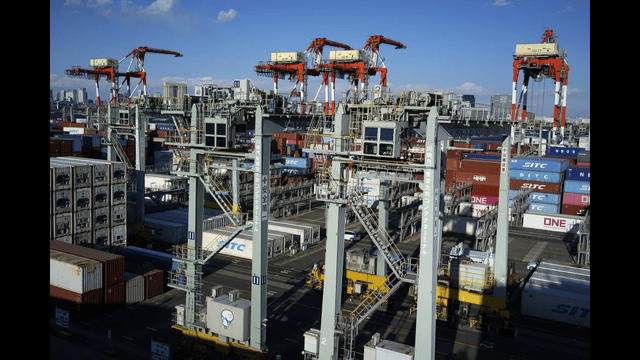
Tokyo Container Terminal is seen in Tokyo on Wednesday, Feb. 19, 2025.
Japan’s export performance showed a mixed picture in October, with global exports rising while shipments to the United States continued to fall. Fresh government data revealed that Japan’s trade landscape is shifting as tariff concerns and regional tensions reshape export strategies.
Global Exports Grow Despite Challenges
Japan’s overall exports increased 3.7% in October compared to last year. Imports also climbed slightly, up 0.6%, signaling stable trade activity despite global economic uncertainties.
The Finance Ministry report highlights steady demand for Japanese products worldwide, even as specific markets show signs of strain.
U.S. Exports Slide for Seventh Straight Month
Exports to the United States dropped 3.1%, marking the seventh consecutive monthly decline. This downturn reflects the impact of U.S. tariffs imposed under President Donald Trump’s revised trade framework.
Trump’s decision introduced a 15% tariff on Japanese goods, lower than the initially proposed 25% but still significantly higher than the earlier 2.5% rate. Analysts say these increased duties have weakened demand for Japanese machinery, auto parts, buses, and trucks in the U.S. market.
Imports from the U.S. See Sharp Growth
While exports weakened, imports from the U.S. surged 20.9% in October. The biggest increases were seen in cereal products, food items, and petroleum, which contributed to the strong import figures.
This growth suggests shifting trade flows, with Japan relying more on U.S. agricultural and energy supplies.
Strong Global Demand for Select Goods
Some sectors recorded notable gains. Soybean imports jumped 37.3%, reflecting increased global food demand and supply shifts.
However, iron and steel product imports fell 17.1%, indicating weaker demand or competitive sourcing from other markets.
Asia Becomes Japan’s Growth Engine
Japan’s exports to Asia strengthened, offering a bright spot in the trade report. Exports to China rose 2.1%, while shipments to Hong Kong surged 19.2%. Taiwan also saw a strong 17.7% increase.
These gains underscore Asia’s growing importance as a trade destination, particularly as Japan faces slowing growth in U.S. markets.
Political Tensions with China Add New Risks
Despite strong export figures to China, new challenges have emerged. Recent comments by Prime Minister Sanae Takaichi, Japan’s first female leader, regarding Taiwan, have sparked diplomatic friction.
China responded by issuing a travel advisory, warning citizens about visiting Japan. Economists warn that escalating tensions could disrupt Japan-China trade, which remains crucial for Japan’s economic stability.
Japan May Pivot to Asian Markets
With U.S. tariffs weighing heavily on key industries, analysts believe Japan may shift its focus further toward Asian markets to sustain growth. The region already accounts for a large portion of Japan’s trade activity, and rising demand in countries like China, Hong Kong, and Taiwan presents opportunities for expanded exports.
Economists note that diversifying export partners can help Japan reduce dependency on the U.S. and mitigate the risks linked to ongoing tariff issues.
Outlook for Japan’s Export Strategy
Japan’s October trade performance highlights a dual reality: global export recovery on one side and persistent challenges in the U.S. market on the other. As tariff concerns linger and geopolitical tensions rise, Japan may need to accelerate efforts to strengthen ties across Asia.
For now, the export growth to Asian nations serves as a buffer, helping Japan navigate shifting global trade dynamics while planning for a more diversified future.