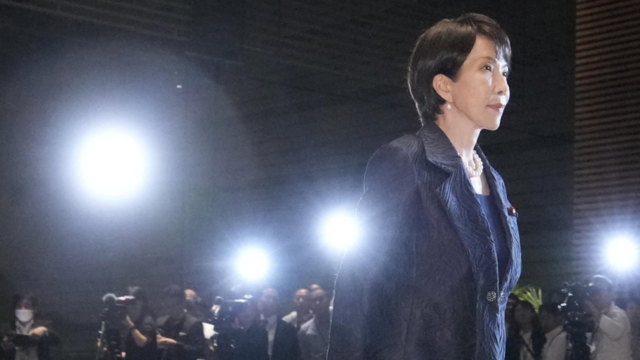
Sanae Takaichi has taken office as Japan’s first woman prime minister, a groundbreaking moment for a nation led by men for generations. BBC
Japan has made history with Sanae Takaichi becoming the country’s first female prime minister. For many young women, seeing her in power feels inspiring. Her rise challenges a political system long controlled by men. But while her appointment marks a symbolic moment, not everyone believes she represents progress for women.
“I think people outside Japan see this as a huge step for gender equality,” said 21-year-old student Ayda Ogura. “But that’s a very naive interpretation.”
She believes Takaichi supports the same conservative traditions that have held women back.
The “Iron Lady” of Japan
Often compared to Britain’s Margaret Thatcher, Takaichi admires the former UK leader and calls her a role model. Like Thatcher, she promotes traditional values and a strong conservative agenda.
Takaichi opposes same-sex marriage and rejects allowing married couples to use separate last names. She also disagrees with letting women join the line of imperial succession.
During her campaign, she softened her tone slightly, supporting tax breaks for companies that offer childcare and incentives for families. Still, she continues to back traditional gender roles, aligning with Japan’s slow progress on equality.
Japan’s Gender Gap Remains Wide
Japan struggles with one of the largest gender gaps among developed countries. Despite women being well educated, their political representation remains low.
According to recent rankings, Japan places near the bottom globally for gender equality and last among G7 nations. Only about 15 percent of national lawmakers are women.
Even basic issues take time to change. Only this year did Japan approve over-the-counter access to emergency contraception, something available for years in most countries.
Divided Opinions Among Young Women
Some see Takaichi’s rise as a positive turning point. Naomi Koshi, Japan’s youngest-ever female mayor, says her leadership “lowers psychological barriers” for women and girls. She believes it could make leadership roles seem more achievable.
Others remain cautious. Audrey Hill-Uekawa, 20, notes, “It’s great Japan finally has a woman in charge, but it took her 30 years to get there.”
She adds, “She’s saying the same thing as the men. We should focus on her policies, not her gender.”
Many young women worry her conservative stance may reinforce traditional expectations rather than challenge them. “People might expect us to follow the same path and not question the system,” said student Minori Konishi, 21.
A Leader Backed by Powerful Allies
Takaichi’s rise owes much to support from powerful figures in her party. She was mentored by the late prime minister Shinzo Abe and backed by Taro Aso, another senior conservative leader. Their endorsement united the right wing of Japan’s ruling Liberal Democratic Party behind her.
As she takes office, Takaichi faces major challenges—economic stagnation, rising prices, and public frustration. She must also host former U.S. president Donald Trump within days of taking office.
For now, her leadership stands as both a breakthrough and a test of Japan’s readiness for change.