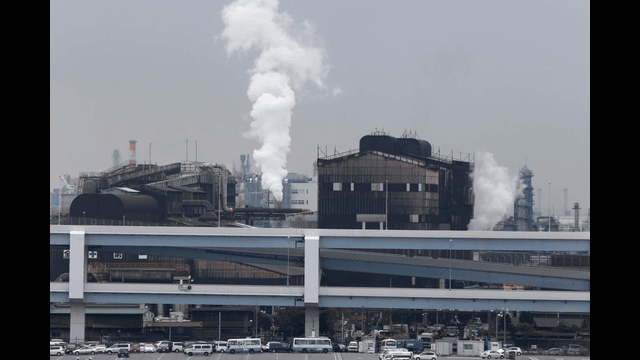
Smoke billows from an oil refinery in Kawasaki, Southwest of Tokyo.
Japan and Malaysia are preparing a cross-border carbon capture project that could reshape Southeast Asia’s climate strategy.
The proposal would transport captured Japanese industrial emissions to Malaysian offshore storage fields.
Supporters call the carbon capture project innovative, while critics warn it may delay real emissions cuts.
Cross-Border Carbon Capture Plan Takes Shape
Japan plans to send carbon dioxide from heavy industries overseas for long-term storage.
The sectors include power generation, cement production, steel manufacturing, shipping, and oil refining.
Officials hope shipments could begin within the next few years.
Malaysia wants to become Southeast Asia’s leading carbon capture hub through this partnership.
If successful, analysts believe similar projects could emerge across Indonesia and Thailand.
How the Carbon Capture Process Would Work
Carbon capture involves three major steps: capture, transport, and underground storage.
First, emissions are collected directly from factories or power stations.
Facilities may install specialized systems or retrofit existing infrastructure.
Next, the captured gases must be separated so pure carbon dioxide remains.
The carbon is then compressed into liquid form for shipping.
Specially designed vessels would transport the liquid carbon to offshore burial sites.
Experts expect storage locations in depleted gas fields near Sarawak, Malaysia.
After injection underground, monitoring systems must check continuously for possible leaks.
Doubts Over Climate Impact Grow
Many environmental specialists question whether carbon capture meaningfully reduces global emissions.
Some analysts argue the technology offers political reassurance more than measurable climate benefits.
Grant Hauber of the Institute for Energy Economics described rising interest as overly optimistic.
He suggested the technology promises results that may never fully materialize.
The International Energy Agency still recognizes carbon capture as one possible climate tool.
However, its net-zero outlook predicts the technology may deliver under five percent of reductions.
Critics Say Burden Shifts to Malaysia
Environmental groups warn the carbon capture project could shift responsibility unfairly toward Malaysia.
Rachel Kennerley from the Center for International Environmental Law voiced strong concern.
She argued the plan moves Japan’s climate burden onto another nation.
Some activists also object to exporting pollution instead of cutting emissions domestically.
They fear this approach could slow already struggling global climate progress.
Ayumi Fukakusa from Friends of the Earth Japan labeled the strategy “carbon colonialism.”
She said exporting emissions allows polluters to continue operations while claiming climate action.
Malaysia Expands Its Carbon Capture Ambitions
Despite criticism, Malaysia is investing heavily in carbon capture infrastructure and legislation.
The country passed a law last year designed to promote the emerging storage industry.
Officials estimate the sector could contribute roughly $250 billion to Malaysia’s economy within decades.
The government believes the industry could create jobs and strengthen energy investment.
State oil company Petronas is building a massive offshore storage facility.
The $1.1 billion project could become the world’s largest offshore carbon storage site.
Construction aims for operations before the decade’s end.
Domestic Energy Realities Shape Policy
Malaysia still generates about 81 percent of electricity from fossil fuels.
Climate advocates argue renewable expansion would deliver faster emission reductions.
Campaigner Eqram Mustaqeem criticized the spending on carbon capture infrastructure.
He said funds should instead support solar deployment and electricity grid modernization.
Japan Seeks Emissions Relief Through Overseas Storage
Japan ranks among the world’s largest carbon emitters due to heavy fossil-fuel dependence.
To meet climate targets, it is investing in nine carbon storage projects.
Three of those storage sites are located in Malaysia.
Officials estimate these projects could store 20 million tons annually by 2030.
That amount equals roughly two percent of Japan’s yearly emissions.
Malaysia would likely receive payment per ton of carbon stored.
Japan could then deduct those stored emissions from its national totals.
A Regional Climate Experiment Begins
The Japan–Malaysia carbon capture project represents a major regional experiment in emissions management.
Supporters say it buys time while industries transition toward cleaner energy systems.
Opponents argue it risks delaying essential shifts toward renewable power.
As planning continues, the world will watch closely.
The project’s success or failure may influence future carbon capture policies across Asia.