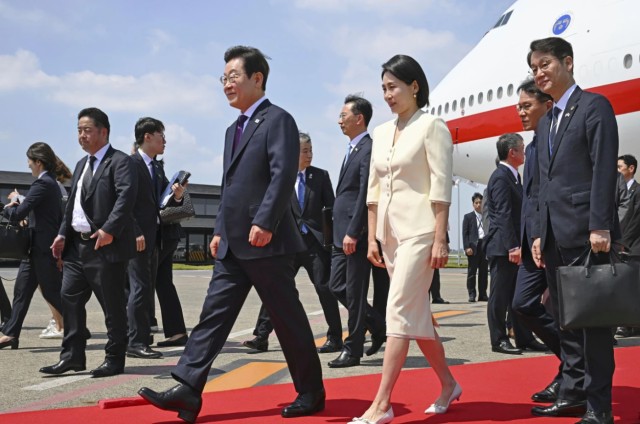
South Korean President Lee Jae Myung, center left and his wife Kim Hai Kyung, center right arrive at the Haneda Airport in Tokyo, Japan, Saturday, August 23, 2025.
South Korean President Lee Jae Myung arrived in Tokyo on Saturday for his first official summit with Japanese Prime Minister Shigeru Ishiba. The visit highlights a renewed push for stronger ties between the two neighbors as they prepare to face common challenges alongside their ally, the United States.
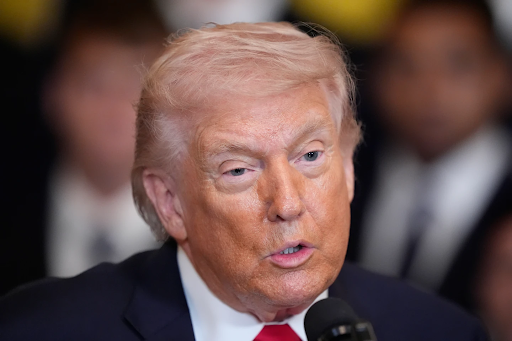
Lee’s decision to meet Ishiba before visiting Washington is seen as a symbolic yet strategic step. It signals Seoul’s commitment to Tokyo while also preparing him for his upcoming first summit with U.S. President Donald Trump.
Japan Visit Comes Before Washington Talks
Traditionally, South Korean leaders prioritize meetings in Washington before Tokyo. Lee’s move breaks that order. Analysts say the decision reflects his pragmatic diplomacy and his attempt to strengthen trilateral cooperation with both Japan and the U.S.
Japanese officials welcomed the timing. They view it as a strong message that Seoul places genuine importance on its partnership with Tokyo. Relations between the two countries have often been strained by unresolved historical disputes, weakening coordination with Washington.
Boost for Ishiba’s Political Standing
For Prime Minister Ishiba, the visit comes at a crucial political moment. He has faced pressure from rivals within his own party after losing July’s elections. A successful summit with Lee could help him regain support and prove his leadership strength.
Rintaro Nishimura, an associate at The Asia Group in Japan, noted that Lee’s choice shows his strategic focus. “Tariffs play a role, but this visit is also a clear gesture. It proves Japan is central to Lee’s foreign policy vision,” he explained.
Symbolism of Friendship and 60 Years of Ties
The leaders last met briefly at the G7 summit in June. Saturday’s talks, however, were more focused on showcasing friendship and cooperation. The meeting carries symbolic weight as both nations mark the 60th anniversary of normalized diplomatic ties this year.
Possible outcomes include easier visa approvals for South Korean travelers and expanded working holiday programs. These initiatives would strengthen people-to-people exchanges and highlight a forward-looking partnership.
Common Concerns: North Korea and China
Beyond symbolic gestures, the leaders discussed pressing security issues. North Korea’s growing nuclear and missile program remains a shared concern. They also touched upon China’s rising influence and assertiveness in the region.
Ishiba, who already secured a tariffs deal with Washington earlier this year, used his experience to align strategies with Lee before Trump’s summit. This coordination is expected to help both leaders present a united front in Washington.
A New Tone of Reconciliation
The summit followed recent conciliatory gestures from both sides. On August 15, during Korea’s Liberation Day speech, President Lee called for overcoming historical grievances from Japan’s colonial rule. While urging Tokyo to face unresolved issues, he stressed the need for future-oriented ties.
In a separate interview with Japan’s Yomiuri newspaper, Lee confirmed he would honor past agreements on forced labor and “comfort women.” Although many Koreans remain dissatisfied, his remarks show a willingness to build trust.
Prime Minister Ishiba echoed the tone of reconciliation. He openly acknowledged Japan’s wartime aggression and expressed remorse, calling the conflict a “mistake.” His use of the word “remorse” in Japan’s surrender anniversary address marked its first inclusion since 2013, signaling a shift in tone from his predecessors.
Building a Path Forward
Lee’s Tokyo visit underscores the importance of repairing bilateral ties while preparing for global challenges. Strengthening trust with Japan not only improves regional stability but also ensures stronger coordination with the United States.
As Lee heads to Washington, his strategy is clear: build bridges with neighbors, secure alignment with allies, and address the future with pragmatic diplomacy.