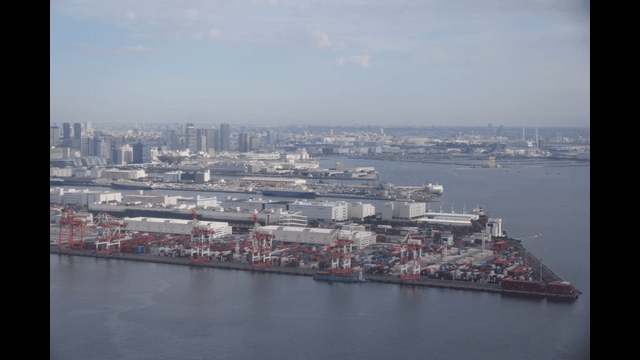
A container port is seen from a helicopter in Tokyo, Oct. 29, 2025.
Japan recorded its fifth consecutive annual Japan trade deficit in 2025, official data showed on Thursday. The figures highlight mounting pressure from global trade tensions and shifting diplomatic ties.
The Finance Ministry’s preliminary report confirmed a full-year trade deficit of 2.65 trillion yen. That equals nearly $17 billion. Despite the negative balance, the gap narrowed sharply from the previous year.
The deficit was almost 53% smaller than in 2024. This improvement came as exports showed modest growth. Imports, however, stayed largely flat throughout the year.
Exports Show Modest Growth
Japan’s exports rose 3.1% in 2025. The increase reflected steady demand from several overseas markets. Imports edged up by less than 1%, signaling subdued domestic consumption and cautious buying.
The smaller Japan trade deficit suggests some resilience in external demand. Yet, trade flows remained vulnerable to geopolitical risks and tariff barriers.
December Brings a Trade Surplus
Japan closed December with a trade surplus of 105.7 billion yen. The monthly surplus was still weaker than last year. It fell about 12% on an annual basis.
Imports during December rose 5.3% compared to a year earlier. Exports also increased, but at a slower pace of 5.1%. This narrowed the monthly surplus.
U.S. Trade Tensions Weigh on Shipments
Exports to the United States dropped sharply in December. Shipments fell by nearly 11%. The decline reflected the impact of higher U.S. tariffs on Japanese goods.
The United States currently imposes a 15% tariff on most Japanese imports. This rate is lower than earlier proposals. However, it is still higher than levels before President Donald Trump took office.
The tariff policy has become a key factor behind the ongoing Japan trade deficit. It has reduced competitiveness in the U.S. market.
Mixed Performance Across Regions
While exports to the U.S. weakened, other regions showed strength. Shipments to Britain, Africa, and parts of Asia increased during December. Imports from Europe also remained strong.
These gains helped offset some losses from the American market. Still, the overall trade balance remained under strain.
China Tensions Add Fresh Risks
Another concern is Japan’s trade relationship with China. Beijing recently announced controls on exports of rare earths. These materials are critical for Japanese manufacturers.
Automakers and electronics firms could face supply disruptions. Such risks may further affect the Japan trade deficit in coming months.
The measures followed remarks by Prime Minister Sanae Takaichi. She suggested Japan could respond militarily if China moved on Taiwan. The comments heightened diplomatic tensions.
Political Moves and Economic Outlook
Prime Minister Takaichi has called snap elections for next month. She hopes to strengthen her party’s position in Parliament while public support remains strong.
Despite trade challenges, Japan’s broader economy has held up. Many citizens still complain about rising prices and slow wage growth.
However, financial markets tell a brighter story. The Nikkei index continues to hit record highs. Investors remain optimistic about corporate earnings and long-term stability.
For now, the Japan trade deficit remains a defining economic issue. Its future path will depend on global trade policies and regional diplomacy.