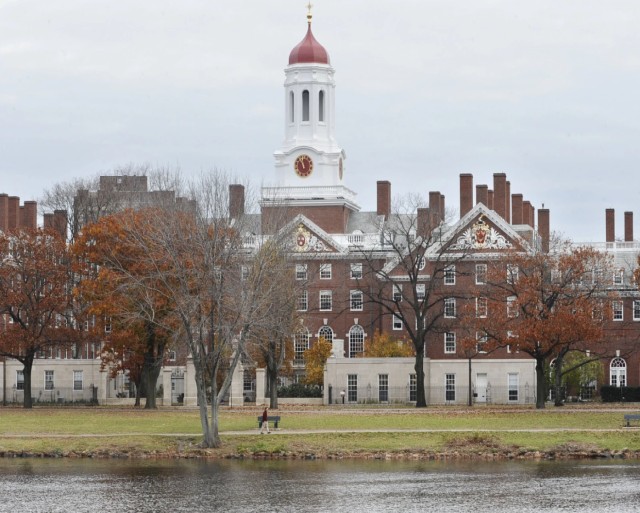
This Nov. 13, 2008 file photo shows the campus of Harvard University in Cambridge, Mass.
A federal judge in Boston has handed Harvard University a major victory against the Trump administration. On Wednesday, U.S. District Judge Allison Burroughs reversed federal funding cuts worth more than $2.6 billion.
The ruling restores crucial research funds and challenges the government’s claims that Harvard failed to address antisemitism.
Judge Calls Cuts Retaliation Against Harvard
Judge Burroughs ruled that the Trump administration’s actions were not about fighting antisemitism but about punishing Harvard. She said the administration used discrimination concerns as a “smokescreen” for an ideologically driven attack on one of the country’s most prominent universities.
She emphasized that while antisemitism must be addressed, free speech and academic independence must also be protected.
Federal Funding Freeze Escalated Into Cuts
The conflict began when Harvard rejected demands from a federal antisemitism task force. The administration wanted sweeping changes to campus governance, protests, academics, and admissions. Hours later, the government froze $2.2 billion in research grants.
Soon after, Education Secretary Linda McMahon announced Harvard would not be eligible for new grants. Contracts were canceled, and long-running projects lost funding.
The funding freeze quickly grew into outright cuts, threatening Harvard’s vast research operations and hundreds of jobs.
White House Pushes Back
The Trump administration immediately announced plans to appeal. White House spokeswoman Liz Huston criticized Judge Burroughs, calling her an “activist Obama-appointed judge.”
Huston argued Harvard allowed antisemitism to fester on campus and stressed that “Harvard does not have a constitutional right to taxpayer dollars.”
The administration maintains that it has broad authority to stop funding institutions that, in its view, fail to address discrimination.
Harvard Defends Academic Freedom
Harvard President Alan Garber welcomed the ruling but signaled further battles ahead. In a campus message, he said the decision affirms Harvard’s fight for academic freedom.
Garber pledged to continue addressing antisemitism but rejected the idea that government should dictate admissions, faculty hiring, or academic focus.
Faculty and researchers, however, remain cautious. Many worry the appeal could delay or block the release of restored funds. “We fear the government may find new ways to obstruct research funding,” said Rita Hamad, a Harvard health policy researcher.
Broader Battle Between Trump Administration and Harvard
The clash over funding is only one piece of a larger struggle. The Trump administration previously attempted to bar Harvard from hosting international students and even threatened to revoke its tax-exempt status.
Negotiations over a potential settlement have been ongoing. Reports suggest the administration sought at least $500 million from Harvard to resolve disputes. No agreement has been reached, though similar deals were made with Columbia and Brown Universities.
Historians and faculty leaders see the court ruling as a turning point. Kirsten Weld, president of Harvard’s chapter of the American Association of University Professors, said it should embolden Harvard not to compromise on core rights.
Legal Grounds of the Ruling
Judge Burroughs sided with Harvard on multiple legal claims. She ruled that the funding cuts violated the First Amendment by retaliating against the university’s speech and governance choices.
She also said the administration failed to follow Congress’s procedures under Title VI of the Higher Education Act, which forbids discrimination in education.
Her decision bars the government from imposing future funding cuts that violate Harvard’s constitutional rights or federal law.
What Happens Next
Although the court reversed the freezes and cuts, it remains uncertain when, or if, Harvard will actually receive the money. With the administration preparing an appeal, the legal battle is far from over.
For now, Harvard celebrates a legal win that reinforces its stance on academic independence. Yet, researchers and students remain in limbo, waiting to see if billions in federal funding will truly return.