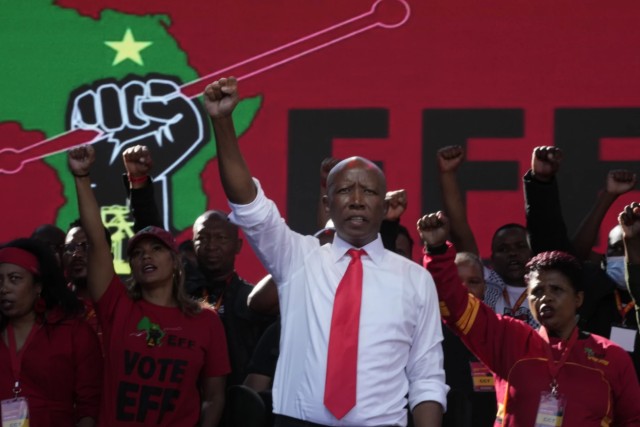
Economic Freedom Fighters party leader Julius Malema raises his first at an election rally in Polokwane, South Africa, on May 25, 2024.
South African opposition leader Julius Malema has been found guilty of hate speech. The ruling comes after race-fueled remarks he made during a 2022 political rally.
The case has reignited debates over free speech, race relations, and political rhetoric in South Africa.
What Julius Malema Said at the Rally
At the rally, Malema declared that no white man could intimidate him. He urged supporters not to fear violence, saying revolutions often required killing.
His words sparked outrage. Critics called the comments dangerous and divisive. Supporters, however, claimed they were being taken out of context.
Equality Court’s Verdict on Hate Speech
The Equality Court ruled against Malema, labeling his comments as hate speech. These courts handle issues of discrimination, harassment, and racism in South Africa.
Punishments may include public apologies, compensation payments, or even recommendations for criminal prosecution. However, the court has not yet decided Malema’s penalty.
Malema’s Past Hate Speech Controversies
This is not Malema’s first hate speech case. He previously faced charges for chanting the apartheid-era slogan “shoot the boer.”
That chant targeted white Afrikaner farmers, a small but politically sensitive minority in South Africa. Malema was initially found guilty, but the decision was later overturned.
Despite the legal battles, he continues to use provocative language that often lands him in controversy.
Trump’s Criticism of Julius Malema
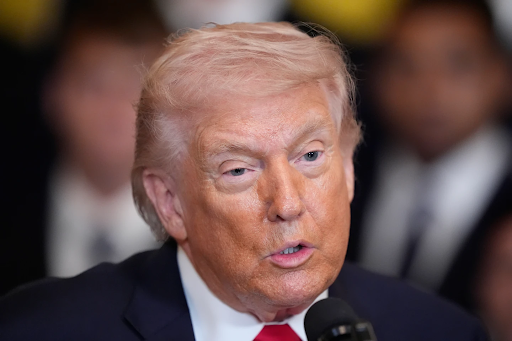
Julius Malema has also drawn international attention. In 2018, former U.S. President Donald Trump accused him of leading an “anti-white movement.”
Trump even played a video featuring Malema during a White House meeting with South African President Cyril Ramaphosa. The footage highlighted claims of white farmers being killed to seize land.
The South African government rejected Trump’s allegations, calling them misinformation. Officials said the accusations were used to justify the U.S. decision to cut financial aid to South Africa.
Malema’s Political Role and International Backlash
Malema is the leader of the far-left Economic Freedom Fighters (EFF) party. Though he holds no government office, his voice carries weight in national politics.
His fiery speeches often stir intense debate. Some see him as a revolutionary voice for the marginalized. Others see him as a dangerous populist spreading division.
This year, the U.K. denied him a visa twice, citing his public support for groups such as Hamas. That move underscored how his rhetoric has global consequences.
Impact on South Africa’s Politics
The ruling against Malema reflects the delicate balance South Africa faces in managing race relations.
The country is still haunted by its apartheid past. Political leaders continue to struggle between championing freedom of expression and curbing hate speech that fuels division.
Malema’s case highlights this tension. His supporters argue he is being silenced. His critics insist accountability is vital in a fragile democracy.
What Happens Next
For now, Malema remains a free man. The Equality Court has yet to decide his punishment. Options range from a formal apology to compensation or criminal referral.
Whatever the outcome, the case reinforces the scrutiny surrounding Malema’s role in South Africa’s political landscape.
As the nation watches closely, one question remains: will this ruling limit Malema’s influence, or strengthen his appeal as a defiant opposition figure?