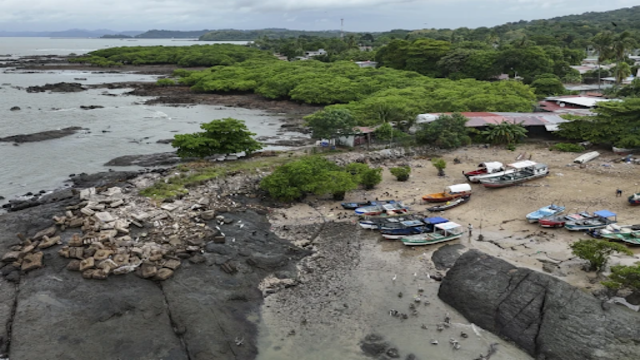
Boats sit on the shore in Veracruz, Panama, Wednesday, July 30, 2025, after fishermen removed them from the water as a precaution following a tsunami warning after an earthquake struck off the coast of Russia. Associated Press
A powerful 8.8 magnitude earthquake struck off Russia’s remote Kamchatka Peninsula early Wednesday, triggering widespread tsunami alerts and emergency responses across the Pacific region. While initial warnings stirred panic and evacuations from Japan to Hawaii, the most destructive fears eventually eased. However, South American nations remained on high alert, with thousands evacuated and coastlines cleared.
Tsunami Panic Eases in U.S., but South America Stays Cautious
Tsunami warnings were swiftly issued for coastal communities in Japan, Hawaii, the U.S. West Coast, and South America following the undersea quake. The tremor, one of the strongest in recent history, sent tsunami waves across the Pacific.
U.S. officials later downgraded their alerts, stating the worst had passed. Still, strong currents and potential flooding remained concerns in parts of northern California. Areas such as Crescent City recorded waves over 3 feet high. Residents were urged to stay away from beaches.
In South America, however, the situation remained tense. Chile raised its tsunami alert to the highest level and initiated evacuations along much of its coastline. Ecuador and Colombia followed suit with beach closures and school suspensions, especially in coastal and island regions like the Galapagos.

In this image taken from a video released by Russian Emergency Ministry Press Service, rescuers inspect a kindergarten damaged by an earthquake in Petropavlovsk-Kamchatsky, Russia, Wednesday, July 30, 2025.
"We’ve Never Seen Anything Like This"
In Hawaii, thousands scrambled to evacuate beachfront hotels and low-lying areas, especially in popular tourist zones like Waikiki. Jimmy Markowski, visiting from Arkansas, said his family stocked up on snacks and sought higher ground.
“This is our first tsunami warning ever. It’s all new to us,” he shared.
While no major destruction was reported in Hawaii, traffic jams clogged streets for hours as the evacuation unfolded. Later, authorities lifted orders but kept a tsunami advisory in effect for safety.
Waves Hit Japan, Causing Casualties and Chaos
Japan was among the first countries to feel the effects. Tsunami waves of up to 2 feet hit several coastal towns, including Hamanaka and Kuji. Tragically, a woman in Mie Prefecture died while driving to an evacuation center. At least ten others were injured during the chaos.
Extreme heat also impacted Japan’s response. Temperatures climbed to 40°C (104°F) in some regions, causing heat-related illnesses among evacuees. Eleven people were hospitalized while sheltering from the potential tsunami.
Residents of Fukushima—where the 2011 earthquake and tsunami caused a nuclear disaster—rushed to higher ground after sirens sounded. The Fukushima Daiichi plant’s operators reported no damage this time, with staff retreating to elevated zones as a precaution.

People take shelter on the roof of a fire station in Mukawa town, Hokkaido, northern Japan Wednesday, July 30, 2025, after a powerful earthquake in Russia’s Far East prompted tsunami alert in parts of Japan.
Kamchatka Quake Rattles Russian Region
The earthquake struck about 120 kilometers offshore from Petropavlovsk-Kamchatsky, Kamchatka's regional capital. The tremor triggered several powerful aftershocks, some measuring up to 6.9 magnitude.
Damage in Russia remained limited. A kindergarten suffered structural harm, though it was unoccupied. In a cancer clinic, medical staff were seen protecting patients during surgery as the quake shook operating rooms. On the Kuril Islands, waves flooded parts of the port of Severo-Kurilsk and disrupted power supplies, but no serious damage was reported.
Tsunami waves near Kamchatka reached up to 6 meters (20 feet) but didn’t result in widespread devastation.
Meanwhile, lava began flowing from the region’s massive volcano, though scientists haven’t yet linked the activity directly to the quake.
Why Tsunami Advisories Persist
Though no catastrophic waves followed, officials emphasized caution. Even waves as low as 3 feet can cause flooding across blocks of coastline.
“It’s not just height. A tsunami is a wall of water stretching for miles,” explained Diego Melgar, director of the Cascadia Region Earthquake Science Center.
Experts added that it’s often difficult to determine when to cancel tsunami advisories, especially after such a large seismic event.
Among the Strongest Quakes of the Century
This quake ranks among the world’s most powerful since the 9.1 magnitude event off Japan in 2011, which caused massive loss of life and a nuclear crisis. Fortunately, no nuclear plants were affected this time.
The earthquake occurred along the volatile Pacific “Ring of Fire,” known for frequent and intense seismic activity. Its ripple effect highlighted the vulnerability of thousands of coastal communities across continents.
Continued Vigilance Urged
As alerts ease in parts of the Pacific, officials from Chile to California continue to urge vigilance. Dangerous currents and unpredictable wave patterns may persist into Thursday.
While the Pacific avoided a worst-case scenario, the event served as a sobering reminder of nature’s force—and the importance of preparedness.