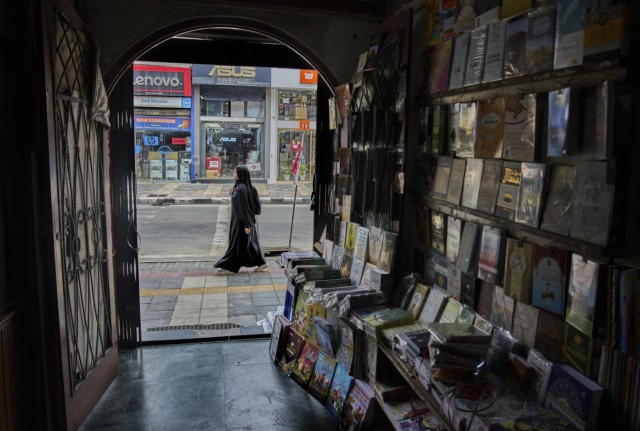
A Kashmiri woman walks past a book store in Srinagar, Indian Controlled Kashmir, Thursday, August 7, 2025.
In a controversial move, Indian authorities have banned 25 books in Kashmir, citing threats to national integrity. The ban, announced by the region’s Home Department, targets works by globally recognized authors and scholars, claiming they spread “false narratives” and “secessionist” views.
Eminent Voices Silenced
The banned list includes writings by prominent figures such as Booker Prize winner Arundhati Roy, legal expert A.G. Noorani, and political scientist Sumantra Bose. Other noted scholars affected include Christopher Snedden and Victoria Schofield—names respected in academic and international circles for their work on Kashmir and South Asia.
These books are now labeled “forfeit” under India’s new criminal code, meaning possession, sale, or circulation of them is now a criminal act in the region.
Jail Time for Possession
The order, issued by the Home Department under Lieutenant Governor Manoj Sinha’s authority, could lead to prison terms ranging from three years to life. No arrests have been made yet, but the warning is clear.
Authorities argue the literature “glorifies terrorism,” misleads youth, and encourages violence. The move follows what officials describe as “credible intelligence” about the spread of such material under the guise of political commentary or historical analysis.
Police Raids Bookstores
In response to the ban, Kashmir police conducted raids across Srinagar and surrounding areas. Bookstores, roadside vendors, and publishing outlets were searched. While it remains unclear if any of the banned books were seized, the crackdown sends a strong message about the government’s stance on dissent.
Authors React
Sumantra Bose, whose book Kashmir at Crossroads was banned, called the accusations defamatory. “I’ve worked on Kashmir since 1993,” he stated, emphasizing that his work promotes peace and seeks to end violence in the region.
“I stand for peaceful resolution—not armed conflict,” he added, defending the integrity of his research.
A Pattern of Suppression
Since India revoked Kashmir’s semi-autonomous status in 2019, free speech has come under increasing pressure. The region, already heavily militarized, has seen a series of raids, arrests, and media clampdowns.
Earlier this year, police seized hundreds of books linked to an Islamic group. In past years, even school textbooks and university exam papers have been scrutinized. In one case, a college lecturer was arrested for allegedly anti-national content in an exam question.
Resistance Leaders Speak Out
Mirwaiz Umar Farooq, a leading resistance figure in Kashmir, condemned the ban. “Erasing books won’t erase history,” he said in a statement. He also criticized the irony of hosting a government-backed book festival while simultaneously banning scholarly work.
“It shows a deep insecurity and contradiction in the government's actions,” he remarked.
Freedom of Expression Under Threat
Book bans in India have historically been rare. But under Prime Minister Narendra Modi’s leadership, critics say such measures are becoming more common. Independent media outlets have been raided, journalists jailed, and educational curriculums rewritten.
Chapters on Muslim Mughal rulers have been removed from school textbooks. Critics argue this is part of a broader effort by the ruling Bharatiya Janata Party (BJP) to shape history through a Hindu nationalist lens.
International Concerns Rising
The book ban in Kashmir has raised alarms not just locally but globally. It reflects a troubling trend of criminalizing intellectual thought, curbing dissent, and promoting a single narrative in a region already grappling with decades of conflict.
As scholars and human rights groups speak out, questions remain: Can banning books bring peace? Or will it deepen the mistrust and alienation in an already fragile region?