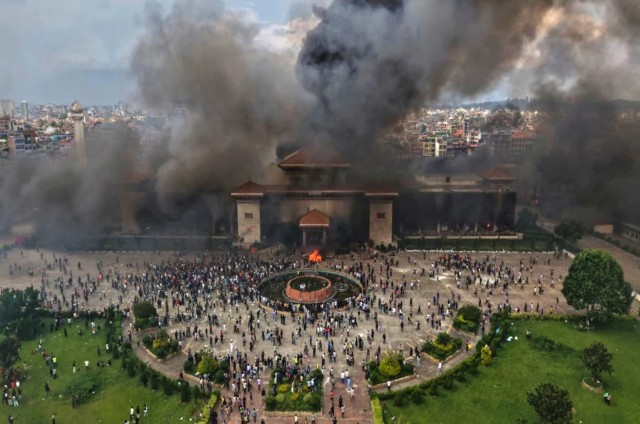
Protesters celebrate at the parliament building after it was set on fire during a protest against social media ban and corruption in Kathmandu, Nepal, Tuesday, Sept. 9, 2025.
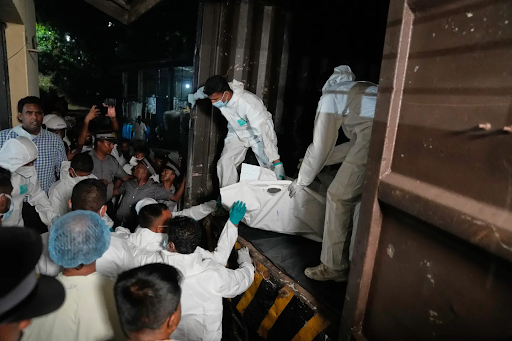
Kathmandu witnessed chaos as deadly protests shook Nepal this week, forcing the government to collapse and prompting the army to restore order. The unrest, triggered by a social media ban, has already claimed 25 lives and injured more than 600 people.
Army Enforces Curfew After Days of Unrest
Troops patrolled the streets of Kathmandu on Wednesday after two days of violence left the capital in flames. Armed soldiers ordered residents to remain indoors, checked vehicles and pedestrians, and tried to bring calm after widespread arson and clashes.
The Nepalese military, rarely deployed for internal security, was mobilized late Tuesday when police failed to control the unrest.
Protesters Push for Former Chief Justice as Leader
As political uncertainty deepened, protest representatives met army officials to discuss leadership of a transitional government. One faction proposed Sushila Karki, Nepal’s first female chief justice, as interim prime minister.
Karki, widely respected during her Supreme Court tenure in 2016–2017, emerged as a popular choice. But not all protesters agreed, and divisions surfaced outside army headquarters.
Prime Minister Resigns Amid Crisis
The violent demonstrations forced Prime Minister Khadga Prasad Oli to resign on Tuesday. President Ram Chandra Poudel urged him to continue in a caretaker role, but Oli fled his official residence, leaving his location unknown.
His sudden disappearance deepened the leadership vacuum, adding to the tension on the streets.
Social Media Ban Sparks “Gen Z Protest”
The crisis began Monday after the government blocked major social platforms including Facebook, YouTube, and X. Authorities claimed the companies failed to register locally or accept government oversight.
The ban, quickly dubbed the trigger for “Gen Z protests,” sparked outrage among youth already disillusioned with the political elite. Police opened fire during demonstrations, killing 19 people. Although the ban was lifted Tuesday, anger only intensified.
Youth Anger Fuels Wider Movement
The protests soon spread beyond the social media issue. Young Nepalese voiced anger at corruption, inequality, and nepotism in politics. Many accused “nepo kids” of enjoying privileges while ordinary youth faced bleak job prospects.
According to the World Bank, youth unemployment was around 20% last year. The government estimates more than 2,000 young people leave Nepal daily to work abroad.
This frustration turned the protests into a wider movement demanding accountability and change.
Political Leaders and Buildings Attacked
The violence quickly escalated against political leaders and government institutions. Protesters attacked Nepali Congress party chief Sher Bahadur Deuba and his wife, Foreign Minister Arzu Rana Deuba. Both were seen bleeding in viral videos.
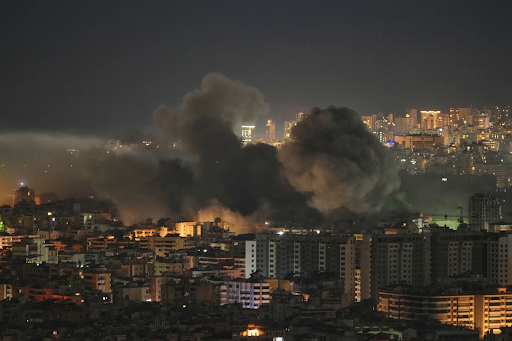
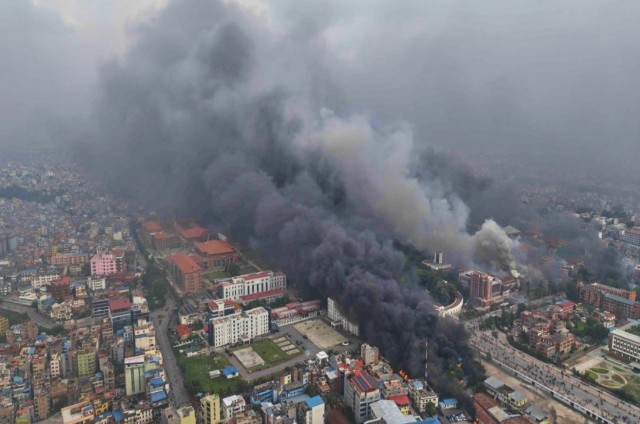
Crowds torched key government buildings including the parliament, presidential house, central secretariat, and the prime minister’s residence. Smoke still rose from these landmarks on Wednesday.
Even Kantipur Publications, Nepal’s largest media group, was damaged. Car showrooms and vehicles across Kathmandu were set ablaze.
Jailbreak Foiled by Army
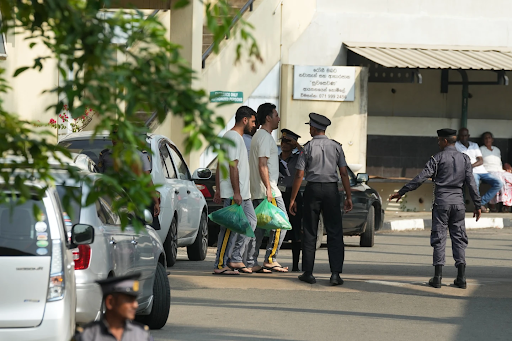
Amid the unrest, inmates at Kathmandu’s main prison overpowered guards and set fire to parts of the facility. They attempted to escape, but soldiers fired warning shots, recaptured prisoners, and transferred them elsewhere. No casualties were reported in the jailbreak attempt.
Critics Slam Government’s Social Media Bill
The turmoil coincided with government efforts to tighten regulation on digital platforms. A proposed bill would force companies to appoint liaison offices in Nepal and ensure compliance with local rules.
Critics argue the law is a tool for censorship and a direct attack on freedom of expression. Rights groups say it targets government critics and undermines fundamental rights.
Around two dozen platforms were affected by the registration order, though TikTok, Viber, and a few others complied and continued operating.
Nepal at a Crossroads
The violent protests have left Nepal at a political crossroads. With its prime minister gone, its youth on the streets, and trust in institutions eroding, the country faces an urgent test.
Whether former Chief Justice Sushila Karki or another figure leads a transitional government remains uncertain. But for many protesters, the demand is clear — justice, accountability, and a voice for the next generation.