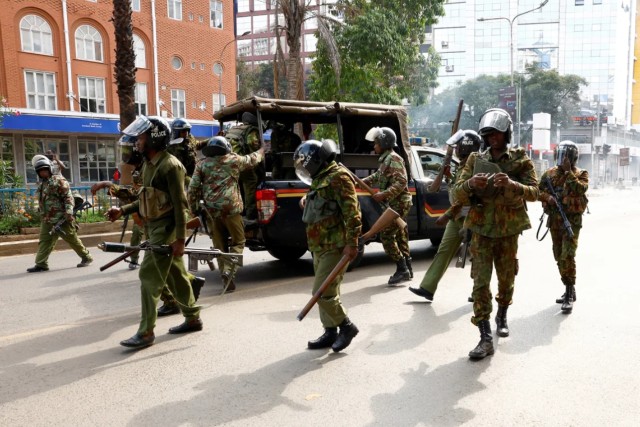
Police officers are seen during demonstrations in Kenya's capital on June 25.
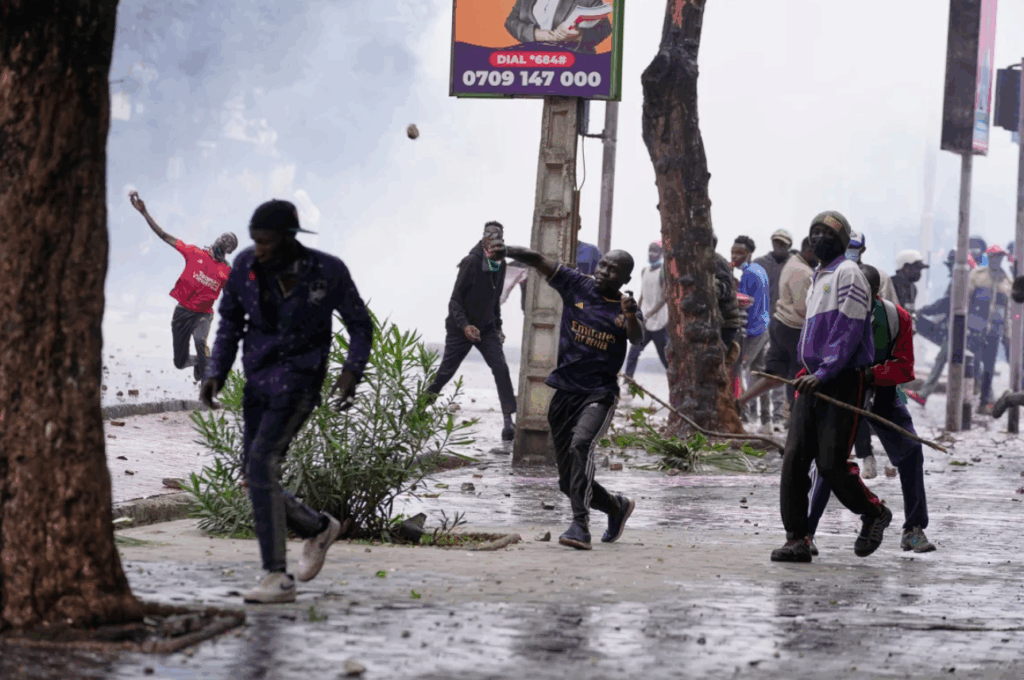
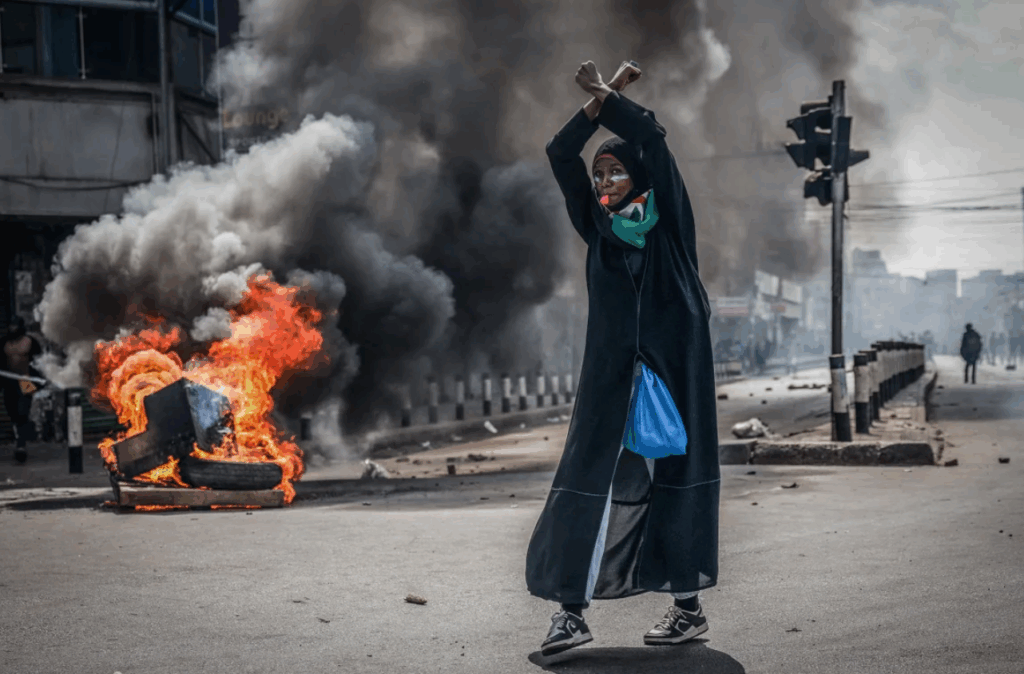
Thousands of demonstrators filled the streets of Kenya on Wednesday, marking the one-year anniversary of deadly anti-government protests. The day, meant for remembrance, quickly spiralled into chaos as police fired tear gas and water cannons to disperse crowds. Tensions ran high in cities like Nairobi, Mombasa, and Machakos, where security forces clashed with protestors demanding justice and reforms.
Media Gag Sparks Outrage
As the demonstrations unfolded, Kenya’s Communications Authority issued a controversial order: a complete ban on live media coverage of the events. The regulator claimed that broadcasting the Kenya protest violated national laws, threatening action against outlets that defied the directive.
However, many local stations, including Citizen TV, refused to comply immediately. The move to muzzle the media drew criticism from civil rights groups, who labelled it an attack on transparency and press freedom.
Nairobi: City on Edge
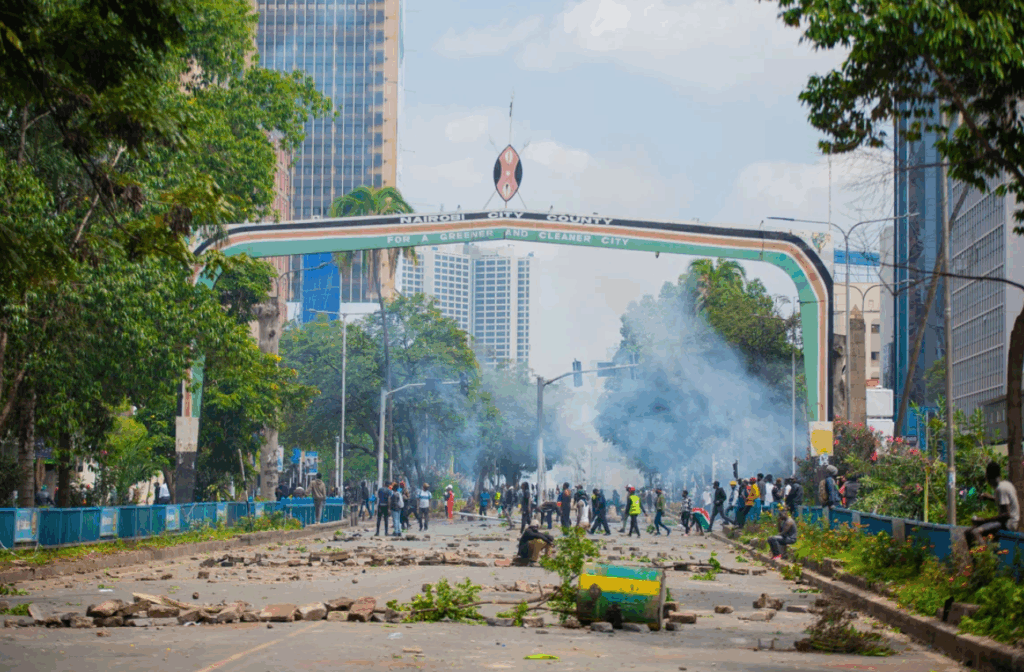
In Nairobi, the capital city, key roads leading to Parliament and the president’s office were sealed off with barricades.
Authorities braced for unrest in the same locations where, a year ago, security forces opened fire on demonstrators — a tragic event that left multiple civilians dead.
Tensions were already simmering, and Wednesday’s march reignited collective anger over the state’s violent handling of public dissent. Videos from the scene showed protestors fleeing as clouds of tear gas filled the air.
Arrests and Bloodshed in Mombasa and Machakos
In Mombasa, police arrested several demonstrators, dragging them into trucks, as seen in videos circulated on social media. Meanwhile, in Machakos County, one person was confirmed dead early in the morning.
Citizen TV, a leading national broadcaster, reported that the victim died amid clashes with police. The footage added fuel to the already burning outrage, as Kenyans mourned yet another life lost to the ongoing struggle for accountability.
Grim Toll: Protest Turns Deadly
According to a joint statement by Amnesty International Kenya and several other organizations, the Wednesday demonstrations ended in bloodshed. The statement claimed that eight protestors were killed and over 400 were injured across the country. Of those injured, at least 83 sustained serious wounds, and eight were reportedly shot.
The chilling figures highlight the growing concern over police brutality in Kenya during peaceful protests. The statement was signed by respected groups, including the Law Society of Kenya, Kenya Medical Association, and Police Reforms Working Group.
Though it has yet to verify the casualty numbers independently, it has reached out to the Kenyan police for a response. As of now, there has been no official comment.
A Nation in Turmoil
The Kenya protest anniversary was meant to serve as a moment of reflection and remembrance. Instead, it unveiled the harsh reality of the country’s political and civil unrest. The aggressive crackdown on demonstrators, combined with attempts to silence the press, has only deepened public mistrust.
What started as a peaceful youth-led movement has now become a symbol of resistance in the face of state suppression. The anniversary protests have sent a strong message — the fight for justice in Kenya is far from over.
The Bigger Picture
This recent escalation brings renewed attention to human rights violations in Kenya, particularly regarding freedom of assembly and press freedom. Civil society groups are now urging international communities to closely monitor the situation and hold Kenyan authorities accountable for their actions.
As the dust settles, the nation waits for answers — and for justice. But one thing is clear: the cries for change are growing louder, and they won't be silenced easily.