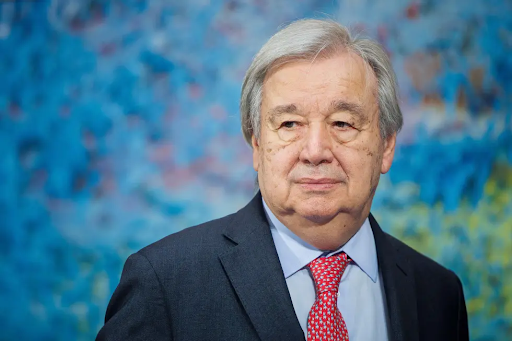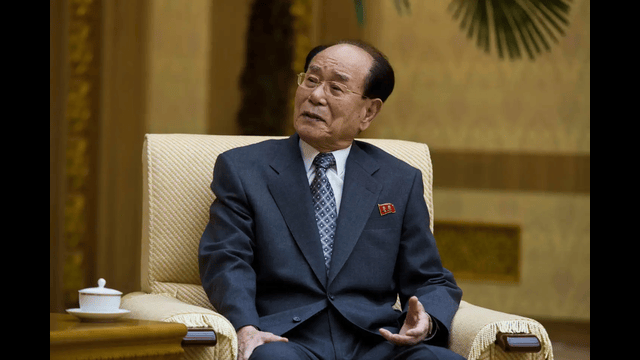
Kim Yong Nam, head of the Presidium of the Supreme People’s Assembly of North Korea, speaks with the Associated Press at the Mansudae Assembly Hall in Pyongyang, North Korea, Oct. 4, 2013.
Kim Yong Nam, North Korea’s veteran statesman and former ceremonial head of state, passed away at the age of 97. The Korean Central News Agency (KCNA) confirmed on Tuesday that he died of multiple organ failure on Monday.
North Korean leader Kim Jong Un reportedly visited the bier early Tuesday to pay his respects. A state funeral will be held on Thursday, with a 100-member committee—headed by Kim Jong Un—overseeing the arrangements.
A Voice of the Regime for Over Two Decades
For more than 20 years, Kim Yong Nam served as the face of North Korea’s diplomacy. From 1998 to 2019, he held the position of president of the Presidium of the Supreme People’s Assembly, effectively functioning as the country’s nominal head of state.
Known for his deep, resonant speeches filled with patriotic fervor, he represented Pyongyang on the global stage while the real power remained firmly in the hands of the Kim family.
KCNA praised him as a “faithful comrade” who “upheld the party’s ideology and leadership” and contributed significantly to the nation’s political and diplomatic history.
From a Patriotic Family to Pyongyang’s Power Circles
Born in 1928 into what KCNA described as “a patriotic family” resisting Japanese rule, Kim Yong Nam’s political rise began in the mid-1950s when he joined the ruling Workers’ Party.
Over the decades, he climbed the ranks, serving as foreign minister and eventually joining the powerful Politburo. His career endured the turbulent purges that often reshaped North Korea’s elite.
Even as Kim Jong Un consolidated his authority through high-profile executions and removals, Kim Yong Nam maintained his position—his loyalty earning him rare longevity in a regime known for instability at the top.
A Symbol of North Korea’s Diplomacy
Kim Yong Nam became one of North Korea’s most recognizable figures abroad. His diplomatic reach extended to meetings with leaders and participation in global events, including the 2012 Non-Aligned Movement Summit in Iran.
In 2018, he led the North Korean delegation to the Pyeongchang Winter Olympics in South Korea, alongside Kim Yo Jong, the leader’s sister. The visit marked a brief thaw in inter-Korean relations.
At the opening ceremony, he was seated just a few feet from then–U.S. Vice President Mike Pence, a striking image during a time of cautious diplomatic outreach. That trip made him the highest-ranking North Korean official to visit the South in years.
The Waning of a Political Era
Despite his prestige, Kim Yong Nam’s influence began to fade with age. In 2019, he was succeeded by Choe Ryong Hae, one of Kim Jong Un’s close allies and a senior military-political figure.
His death marks the end of an era for North Korea’s older revolutionary generation—a bridge between the regime’s founding under Kim Il Sung and its modern rule under Kim Jong Un.
Remembered by Allies and Rivals
Tributes have poured in from across the Korean Peninsula. South Korean Unification Minister Chung Dong-young expressed condolences, remembering Kim Yong Nam as a “dedicated figure who helped open dialogue between North and South.”
Chung recalled meeting him during the 2005 and 2018 inter-Korean talks in Pyongyang, describing their discussions as “meaningful steps toward peace and cooperation.”
A Loyal Bureaucrat Until the End
Kim Yong Nam’s life mirrored the story of North Korea’s political system—strict, disciplined, and unwavering in loyalty. He was known for his calm demeanor and adherence to state ideology.
Former journalist Don Oberdofer once described him as “cordial in person, but relentless once he began his scripted duties,” comparing him to the Soviet diplomat Andrei Gromyko.
In his final act of devotion, Kim Yong Nam read an elegy for Kim Il Sung in 1994 and later formally nominated Kim Jong Il for leadership after a three-year mourning period.
A graduate of Kim Il Sung University and Moscow State University, Kim Yong Nam embodied the old guard of North Korean politics—a generation that built its careers on ideological loyalty, resilience, and service to the ruling Kim dynasty.
As North Korea prepares for his state funeral, Kim Yong Nam will be remembered as a steadfast voice of the regime—one that echoed the continuity of power across three generations of the Kim family.