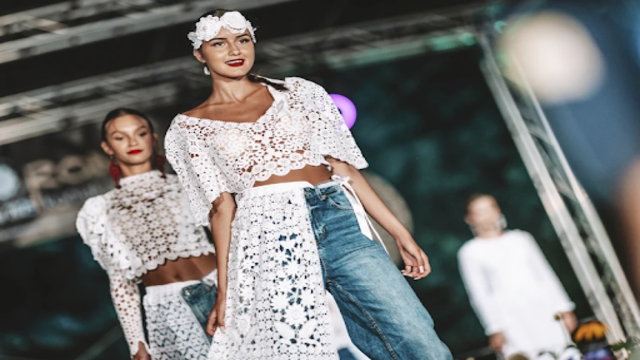
Models present hand-made lace outfits during a fashion show in the village of Koniakow, in Poland’s Beskid Mountains, Saturday, Aug. 16, 2025. Associated Press
Wiesława Juroszek first held a crochet needle at six. Guided by women in her family, she mastered lace-making—a craft deeply rooted in her mountain village. More than five decades later, Juroszek is part of a movement giving Koniaków lace worldwide fame.
What was once a domestic tradition is now a thriving fashion trend. Handmade lingerie, bridal gowns, skirts, blouses, and tablecloths from Koniaków are commanding attention and high prices.
“In Koniaków, almost every woman does ‘hekla.’ For us, it’s not just work, it’s life,” Juroszek said.
A Village Where Lace Crochet is a Way of Life
Koniaków, nestled in Poland’s Beskid Mountains near Slovakia, is home to nearly 700 lace makers. For generations, women have passed down the skill, originally used to decorate bridal bonnets with delicate ribbons.
Over time, the craft shifted. Lace patterns became round, ideal for napkins and table décor. Selling these items helped women earn money for their households. Today, the same tradition has transformed into a prized art form recognized far beyond Poland.
Traditional Craft, Elevated Value
Koniaków lace is no longer just a hobby. It has become a luxury. Handmade blouses start at 3,000 złoty ($750), while intricate wedding gowns can cost tens of thousands.
The prices reflect weeks, even months, of meticulous work. A simple blouse may require several weeks to complete. Despite modern technology, the tradition continues to flourish instead of fading.

Women practice “hekla”, the traditional art of hand-crocheted lace making, on a valley slope in the village of Koniakow, Poland, Sunday, Aug. 17, 2025.
Nature as a Designer’s Muse
Each Koniaków lace piece is one-of-a-kind. Patterns often echo the mountain scenery—flowers, stars, and natural motifs stitched into cotton yarn.
“In this tiny village, women create patterns from imagination,” explained Lucyna Ligocka-Kohut, president of the Koniaków Lace Foundation. “We don’t use templates. Every design is new, which makes our lace attractive to fashion houses.”
From Local Craft to International Runways
Fashion houses have taken notice. Global names such as Christian Dior, Dolce & Gabbana, Magda Butrym, Rei Kawakubo, and Comme des Garçons have embraced Koniaków lace.
The craft has even graced Paris Fashion Week—twice. The uniqueness and exclusivity of the handmade work continue to capture global interest.
Lingerie in Bold Shades
Traditionally, lace makers worked with white and soft ecru. Today, modern demands inspire bolder colors. Black, red, and green lace often appears in lingerie and swimwear collections.
From bras and panties to G-strings, Koniaków lace lingerie is sold online for customers worldwide. This digital reach allows people who cannot visit Poland to own a piece of this heritage craft.
Loved by Locals and Tourists Alike
The lace has loyal admirers in Poland too. Homemaker Ewa Lesiewicz, 63, proudly owns several pieces.
“I already have a lace blouse, a lace bra, and a set with panties,” she said. “I also want a blouse and skirt set.”
Her story mirrors that of countless other Polish women who cherish the lace as both fashion and tradition.
Koniaków Lace: A Timeless Fashion Legacy
What began as household support has grown into a global symbol of craftsmanship. Koniaków lace is no longer confined to village homes—it now shines on international catwalks and in luxury wardrobes.
With every thread, the women of Koniaków are weaving history, culture, and artistry into the future of fashion.