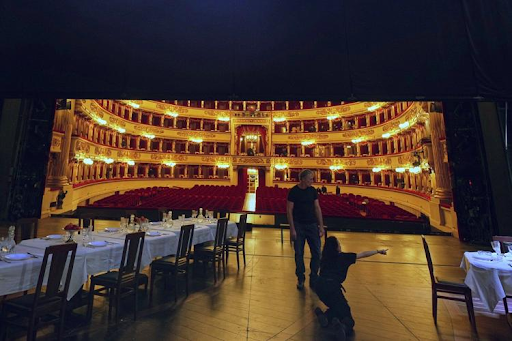
The stage is prepared ahead of the dressed rehearsal of “The Lady Macbeth of Mtsensk District,” by Dmitri Shostakovich, at La Scala Opera House in Milan, Italy, Thursday, Dec. 4, 2025. (AP Photo)
The 2024–25 opera season at Milan’s Teatro alla Scala launched with thunderous applause. Dmitry Shostakovich’s once-banned masterpiece, Lady Macbeth of Mtsensk, returned to the legendary stage. The audience responded with a 12-minute standing ovation. It marked a triumphant moment for a work that Stalin once condemned.
U.S. soprano Sara Jakubiak captivated viewers as Katerina Izmajilova. She received a shower of carnations after delivering an intense and tirelessly emotional performance. Maestro Riccardo Chailly, guiding his final Dec. 7 premiere as music director, was celebrated with equal enthusiasm.
A Controversial Return to Russian Opera
This is La Scala’s second Russian opening night since Moscow’s 2022 invasion of Ukraine. Two years ago, Boris Godunov sparked protests. This time, the focus shifted to peace. A flash mob held Ukrainian and European flags, calling for democracy and freedom.
Nearby, a larger rally urged support for Palestinians. Demonstrations have long been part of La Scala’s glamorous opening nights, reflecting global tensions alongside red-carpet traditions.
Italy’s cultural leaders filled the royal box. Culture Minister Alessandro Giuli, Milan Mayor Giuseppe Sala, and Holocaust survivor Liliana Segre were among the dignitaries present. Popular artists Mahmoud and Achille Lauro also attended, blending political weight with celebrity presence.
A Work Once Silenced by Stalin
Shostakovich premiered Lady Macbeth in 1934. It exposed oppression and the harsh realities faced by women in Soviet society. Stalin personally attended a performance in 1936. Days later, the opera was blacklisted. That same year became the onset of the Great Purge. For decades, the piece remained shadowed by censorship.
Chailly believes presenting the opera now is essential. He called it a work “that has long suffered.” It is only the fourth time La Scala has staged it.
La Scala’s general manager, Fortunato Ortombina, defended spotlighting Russian repertoire. He argued that music surpasses political divisions and that great composers speak more deeply to people than governments do.
A Demanding Debut for Jakubiak
Jakubiak made her La Scala debut in this production. Her character Katerina battles oppression, chooses violence, and spirals into tragedy. Barkhatov’s staging changes her fate: instead of drowning, she dies in flames while taking her rival with her.
The role pushes both emotional and vocal limits. Jakubiak sings 47 high B-flats over nearly three hours. She admitted to feeling daunted, but praised the strong artistic support behind her.
Preparing the music, she said, was like piecing together a puzzle—text and rhythm guiding every step. She found common ground with Chailly, known for strict loyalty to the composer’s intentions.
Jakubiak, admired for Strauss and Wagner, is headed for another milestone next summer. She will debut as Isolde in London.
A Bold Reimagining Set in Stalin’s Final Years
Director Vasily Barkhatov relocated the story to a 1950s Soviet city. It evokes the fading grip of Stalin’s rule rather than the rural setting of the original play. The stage becomes a shadowed labyrinth—restaurant, basement, kitchen, and interrogation rooms. A revolving structure reveals each hidden corner of Katerina’s constrained world.
He sees the opera not as political propaganda, but as a human story. It examines how far someone will go to escape repression. Barkhatov calls it “a weird breakthrough to happiness and freedom,” though one marked by devastating sacrifice.
The night ended in triumph. La Scala embraced a once-censored opera with modern imagination, historical weight, and overwhelming emotion.