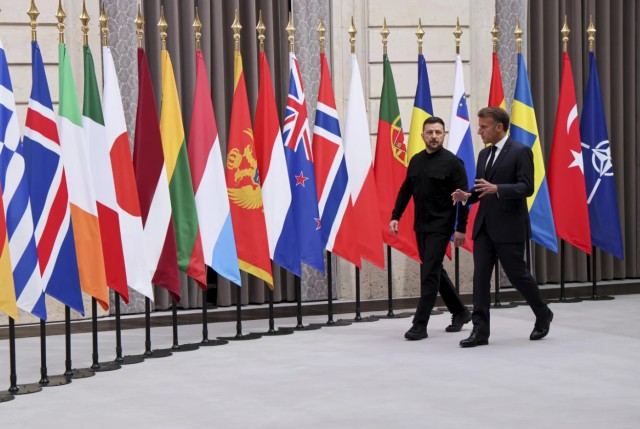
Ukraine’s President Volodymyr Zelenskyy, left, and French President Emmanuel Macron, arrive to attend a summit on Ukraine at the Elysee Palace, in Paris, France, Thursday, Sept. 4, 2025
French President Emmanuel Macron announced that 26 allied nations have pledged troops to support Ukraine once the war with Russia ends. The decision came after a high-level meeting in Paris involving 35 pro-Ukraine countries.
Macron described the deployment as a “reassurance force” designed to safeguard Ukraine the day peace is achieved. The initiative is aimed at guaranteeing security on land, sea, and air.
Coalition of the Willing Backs Ukraine
The Paris gathering brought together the so-called “coalition of the willing.” Leaders reaffirmed their commitment to Ukraine’s future security. Out of 35 nations, 26 agreed to commit troops or maintain a security presence.
Macron emphasized the reassurance force would not wage war against Russia. Instead, it seeks to prevent further aggression and provide Ukraine with long-term stability.
Zelenskyy Welcomes Support
Ukrainian President Volodymyr Zelenskyy joined the talks alongside U.S. envoy Steve Witkoff. Closed-door sessions focused on ensuring military aid and American involvement once the war ends.
Zelenskyy expressed gratitude for U.S. interest in the plan. However, he admitted details of Washington’s role remain uncertain. “In what format, I cannot yet say,” he told reporters.
Macron confirmed final planning would be carried out with the United States.
U.S. Backing Seen as Essential
Both Macron and British Prime Minister Keir Starmer insisted that any European reassurance force needs U.S. involvement. The two leaders have consistently highlighted Washington’s influence in deterring Russian aggression.
European leaders also pushed for stronger sanctions on Russia if Moscow delays peace efforts. Calls were made for Russian President Vladimir Putin to commit to ending hostilities.
Trump Joins the Talks
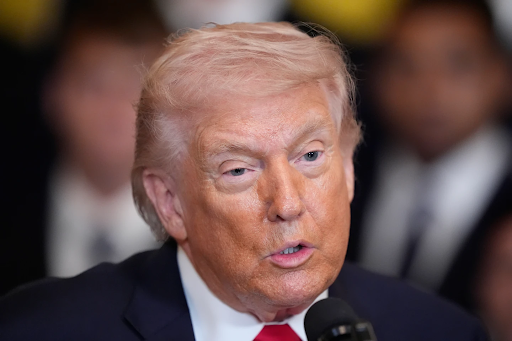
The meeting concluded with a phone call to U.S. President Donald Trump. Leaders reported Trump’s strong backing for Ukraine and his insistence on tightening economic pressure on Moscow.
Finnish President Alexander Stubb revealed that Trump urged Europe to stop buying Russian oil and gas. According to U.S. officials, Russia earned €1.1 billion from EU fuel purchases in one year.
Trump also pressed for economic measures against China, accusing Beijing of indirectly funding Russia’s war.
Germany Pushes for Ceasefire Talks
German Chancellor Friedrich Merz outlined three key actions: organizing a summit with Zelenskyy, achieving a ceasefire, and preparing stronger sanctions if Russia stalls negotiations.
Government spokesman Stefan Kornelius warned that Europe would escalate sanctions to push Moscow toward a diplomatic solution.
Zelenskyy echoed the need for direct talks with Putin. “This is not a desire, it is a necessity,” he stated.
Russia Signals Mixed Response
Russian officials gave no immediate reaction. However, President Vladimir Putin recently hinted at the possibility of compromise if “common sense prevails.” He also praised Trump’s “sincere desire” for a settlement.
Despite this, Russia continues its military campaign. Ukraine’s Air Force reported intercepting or jamming 84 of 112 drones launched overnight by Russia.
In a separate move, Moscow expelled an Estonian diplomat in retaliation for Estonia’s expulsion of a Russian official last month.
NATO Warns Against Complacency
NATO Secretary-General Mark Rutte stressed the need for a united front to deter Russia. He warned that European intelligence suggests Moscow may target other nations.
“We must make deterrence strong enough so Russia never dares,” Rutte said. He urged leaders not to be “naive about Russia’s intentions.”
A Turning Point for Ukraine’s Future
The Paris meeting signaled a major shift in post-war planning. With 26 countries pledging troops, Ukraine is receiving strong international guarantees of security.
While the U.S. role is yet to be finalized, the reassurance force could shape the balance of peace in Europe.
For Kyiv, the message is clear: global allies are preparing not just for the war, but for the day after it ends.