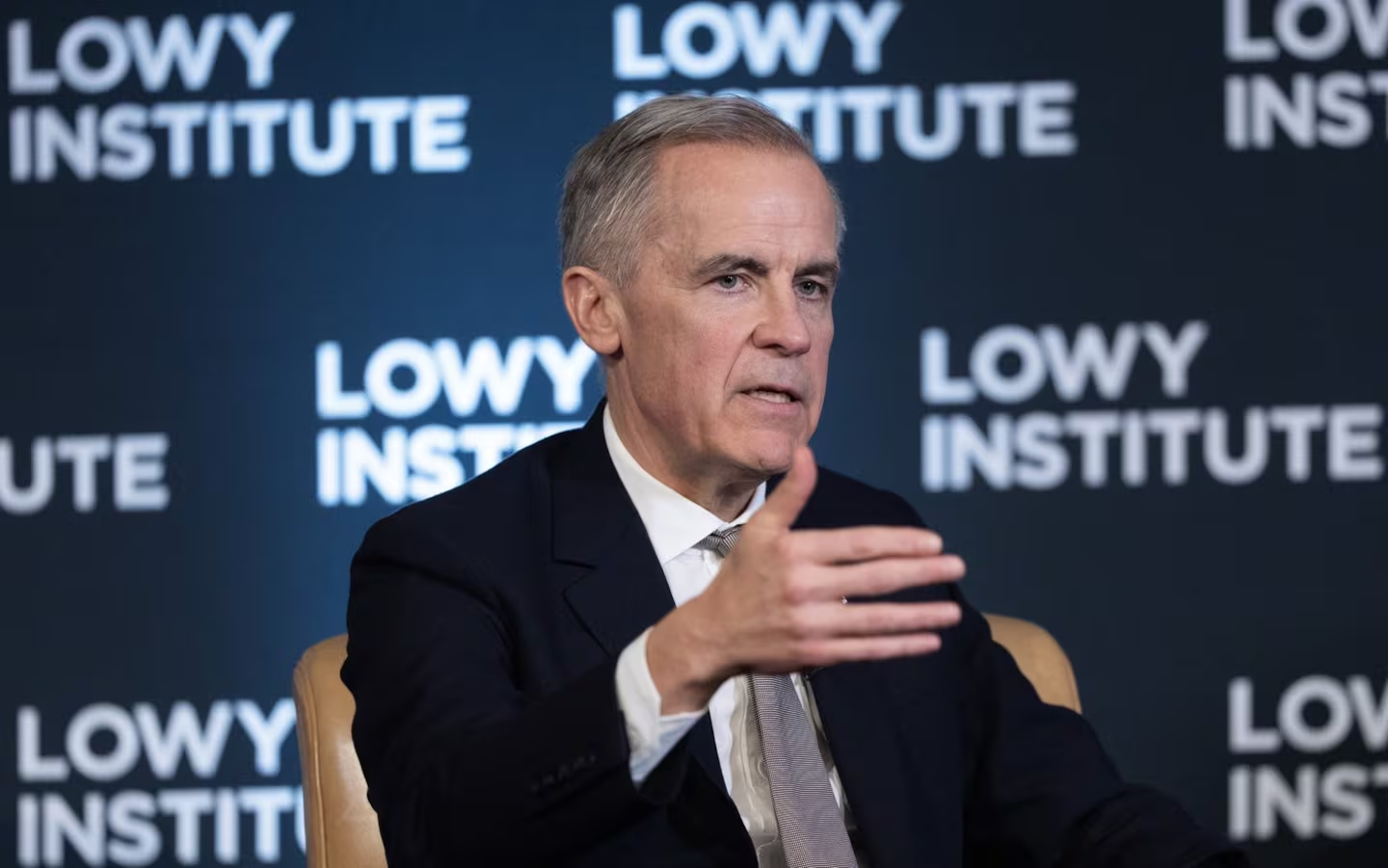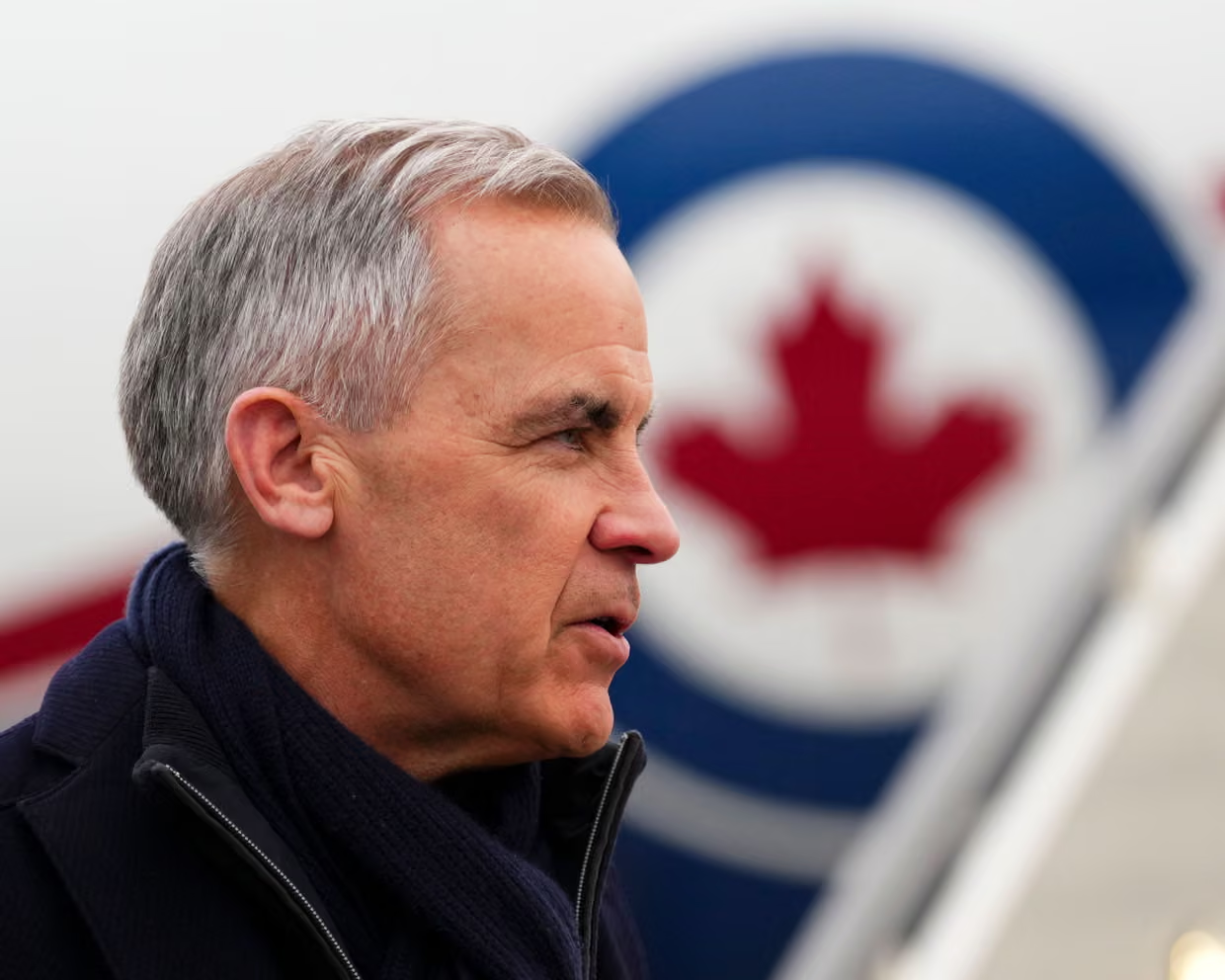
Prime Minister Mark Carney arrived in Davos to attend the World Economic Forum, where global leaders gathered for discussions. THE CANADIAN PRESS
For much of his career, Mark Carney built a reputation as a global thinker who believed in shared rules, open markets, and international cooperation. As an economist and central banker, he often appeared at global gatherings, speaking alongside business leaders and senior politicians about the value of working together.
Less than a year into his time as Canada’s prime minister, Carney now speaks with a sharper edge. On Tuesday, he delivered a blunt warning about today’s world order, saying, “The strong do what they can, and the weak suffer what they must.”
A Clear Break From the Past
Speaking at the World Economic Forum in Davos, Switzerland, Carney described a world where old rules no longer protect smaller nations. He warned that simply following the rules no longer guarantees safety.
“The old order is not coming back. We should not mourn it,” he said. “Nostalgia is not a strategy.”
The audience of politicians, business figures, and media members responded with a standing ovation. Many saw the speech as a turning point in how Western leaders publicly describe global power struggles.
An Unspoken Warning About the United States
Although Carney did not name Donald Trump, his message carried a clear warning. He spoke of growing concern that the White House wants to weaken systems of global cooperation built over decades.
Jack Cunningham, a professor at the University of Toronto, said Carney stood apart from other leaders who still hope they can manage or soften Trump’s actions.
“Mr. Carney has exposed that as simply inaccurate,” Cunningham said, adding that many countries now accept that they cannot control Washington’s direction.
Power, Pressure, and Economic Weapons
Carney warned that powerful nations now use trade and finance as tools of pressure. He pointed to tariffs, control of financial systems, and fragile supply chains as new ways strong countries exert influence.
He also cautioned against countries retreating behind economic walls, saying a world divided into “fortresses” would grow poorer and less stable.
“The question for middle powers, like Canada, is not whether to adapt to this new reality. We must,” he said.
Canada’s New Approach
Carney argued that countries like Canada must work together rather than stand alone. “If you are not at the table, you are on the menu,” he said, stressing that only large powers can afford to act alone.
He highlighted Canada’s recent outreach to China, including efforts to attract investment and reduce tariffs on electric vehicles, signaling a shift away from following U.S. policy automatically.
Flexible Alliances, Shared Values
Carney outlined a strategy he called “variable geometry,” forming different alliances depending on the issue. He reaffirmed Canada’s support for Ukraine and said the country stood “firmly” with Greenland and Denmark amid recent tensions.
Former UN ambassador Bob Rae said global institutions failed not because of their design, but because powerful nations ignored their responsibilities.
Carney closed by urging countries to defend legitimacy and shared rules together. “We should not allow the rise of hard power to blind us,” he said, calling for unity among nations that still believe in cooperation.