Timothée Chalamet as Marty in Marty Supreme.
Josh Safdie’s latest film, Marty Supreme, arrives like a cinematic adrenaline rush. It moves with the manic energy of a never-ending ping-pong rally, powered by chaos, dark humour, and an unhinged central performance from Timothée Chalamet. At 149 minutes, the film storms through one calamity after another, blending screwball absurdity with sharp commentary and a blizzard of cinephile references.
A Rollicking Performance from Chalamet
Chalamet plays Marty Mauser, a jittery New Yorker in 1952 with the charm of a showman and the impulsiveness of a hustler. His character loosely mirrors real-life table tennis legend Marty “The Needle” Reisman, known for his flamboyant sportsmanship and gambling antics.
Safdie gives Chalamet every opportunity to throw himself into the chaos. One outrageous scene in a dingy hotel room—featuring a dog, a bathtub, and cult director Abel Ferrara—sets the tone. Later, a shocking moment involving Marty’s bare backside delivers one of the film’s most unsettling gags.

Chasing Glory and Making Trouble
Marty works at a New York shoe shop but dreams of table tennis glory. He plans to unveil his own brand of ping-pong ball, the Marty Supreme. He is also entangled in a secret affair with his married childhood sweetheart, Rachel, while saving every dollar to compete in Britain’s world championships at Wembley.
Getting hold of his travel money triggers a chain reaction of confrontations. Once he lands in London, Marty baits the press with tasteless jokes about his Hungarian-Jewish friend Béla, a fellow player and Holocaust survivor played by Géza Röhrig. His antics continue at the Ritz, where he talks himself into a room and becomes obsessed with retired film star Kay Stone—portrayed stylishly by Gwyneth Paltrow.

‘Amusing and sensual’ … Gwyneth Paltrow in Marty Supreme. Photograph: Everett Collection Inc
Drama On and Off the Table
Marty’s showdown with Japanese table tennis icon Koto Endo spirals into humiliating disaster. Meanwhile, Kay’s husband Milton—also a potential sponsor—reveals his racist and antisemitic views toward Marty and Béla.
After returning to the US, Marty’s life descends into pure disarray. He races to secure money for a rematch with Endo and tries desperately to impress Kay. Every step triggers more mayhem, leaving him scrambling for control in a world that keeps spinning faster than he can handle.
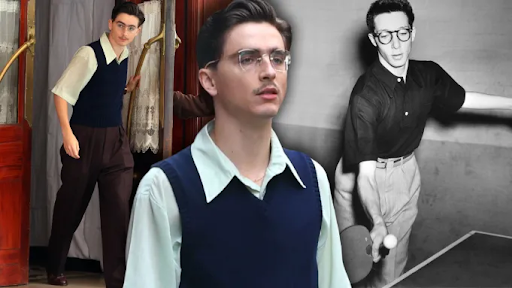
(L) Timothée Chalamet on the set of 'Marty Supreme', and the real Marty Reisman in 1948. Getty Images.
A Sports Film That Isn’t One
Despite its title, Marty Supreme refuses to follow classic sports-film formulas. There are no training montages or inspirational speeches. Marty never gains wisdom from a mentor, nor does he achieve heroic status like Forrest Gump, another fictional ping-pong figure.
Instead, the film uses the rhythm of table tennis. Scenes bounce back and forth with dizzying intensity, mirroring the sport’s rapid-fire nature. The focus stays on Marty—a frantic, unreliable, often unlikeable character who creates chaos wherever he goes.
Chalamet fully commits to his performance, delivering a twitchy, wounded, and strangely endearing portrayal. Paltrow, on the other hand, plays Kay with elegance and restraint, grounding Marty’s erratic energy with her composed presence.
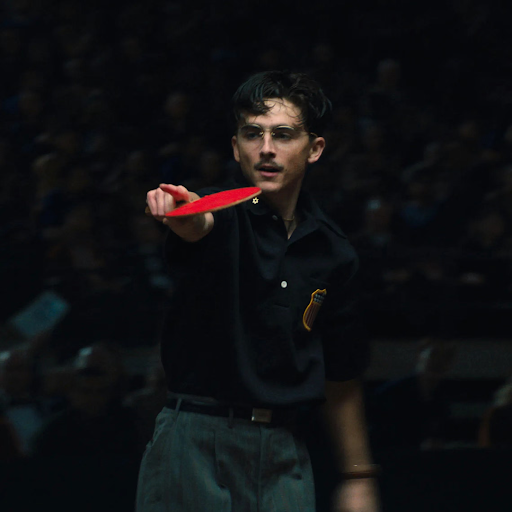
‘A poignant kind of maturity’ … Marty Supreme.
A Dizzying, Chaotic Triumph
By the final moments, the film leaves viewers breathless, as if they’ve been tracking a high-speed match with no breaks. Disasters pile up. Marty’s desperation grows. His insecurities burst into the open. Yet, in the last frame, he manages a moment of emotional clarity that feels unexpectedly moving.
Marty Supreme thrives on its own wild logic—messy, loud, chaotic, and strangely beautiful. In the middle of its absurdity, Safdie finds a surprising emotional beat, making this fever dream of a film hard to shake.Marty Supreme releases on 25 December in the US, 26 December in the UK, and 22 January in Australia.