Manitoba Hydro reports that electricity has been restored this week to several northern communities affected by wildfires. CTV
After more than 100 days of evacuation due to wildfire threats, the Mathias Colomb Cree Nation, also known as Pukatawagan, now has its electricity restored. Manitoba Hydro announced full power was returned to the community on Wednesday, ahead of the expected schedule of late September.
“Favourable weather, reduced wildfire activity, well-planned logistics ensuring adequate supplies of material, and well-equipped camps to house crews near work locations, helped expedite repairs,” the utility stated.
Repair Work and Improvements
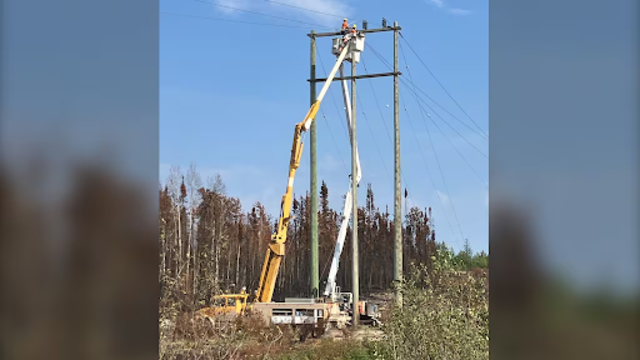
Repairs to a key transmission line are expected next week, which will improve overall power reliability. So far, 213 of the 253 damaged utility poles in the area have been repaired or replaced. Manitoba Hydro also reported power restoration to nearby communities, including Leaf Rapids and South Indian Lake, while Marcel Colomb First Nation and Lynn Lake are expected to have service restored Thursday.
Over 1,000 utility poles and related equipment were damaged or destroyed during this wildfire season, described as the worst in decades. The restoration effort is estimated to cost $32 million.
Community Challenges During Evacuation
Chief Gordie Bear previously urged federal and provincial governments to fund temporary generators to help members return home faster while full repairs were underway. “We got to get home,” Bear said last week in Winnipeg. “Our children are suffering. We’re suffering … Comfort is not easy to find when you’re in a concrete jungle.”
Approximately 2,200 community members remain evacuated, living in cities such as Winnipeg, The Pas, Brandon, and Niagara Falls, Ont. The restoration of power is a critical step toward allowing residents to return safely and rebuild their homes and daily lives.
Looking Ahead
While power restoration is a major milestone, Manitoba Hydro continues work to fully repair all damaged infrastructure and ensure long-term reliability. The company credits well-planned logistics, favourable weather, and efficient work crews for the accelerated timeline.
The successful restoration underscores the resilience of the community and the importance of coordinated efforts in disaster recovery. Chief Bear and community members now hope this progress will mark the beginning of returning to their homes and resuming normal life.