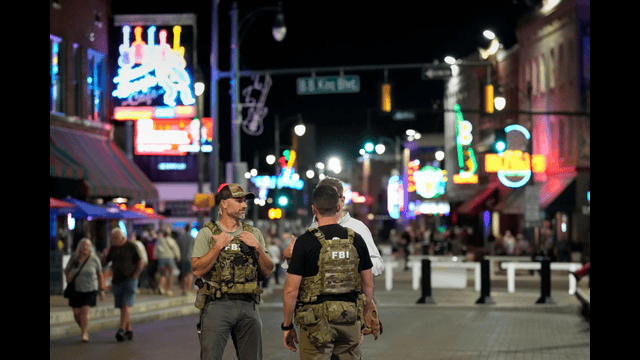
Federal law enforcement agents walk on the streets of Beale, Oct 10, 2025.
A sweeping crackdown led by President Donald Trump’s crime-fighting task force in Memphis has triggered thousands of arrests, pushing the city’s already strained jail system and crowded courts to the brink. Officials warn that the consequences of this surge may last months — or even years — as the overwhelming number of cases moves through the justice system.
Since late September, the Memphis Safe Task Force has been operating across the city, deploying hundreds of federal, state, and local officers. The operation has resulted in over 2,800 arrests and more than 28,000 traffic citations, according to Memphis police and task force data.
Crime-Fighting Surge Intensifies Pressure
Supporters, including Tennessee Gov. Bill Lee, say the task force is necessary to combat violent crime in Memphis. The city recorded nearly 300 homicides last year and almost 400 homicides in 2023.
Attorney General Pam Bondi visited Memphis on Monday, praising officers for removing dangerous suspects and illegal firearms from the streets. However, she acknowledged concerns about the justice system’s capacity to absorb the sudden influx of arrests.
U.S. Marshals Director Gadyaces Serralta said federal prosecutors are handling as many cases as possible. He emphasized the need for faster prosecution to prevent a severe backlog.
“We must speed up the process,” Serralta said. “But we are not giving free passes. If people keep committing crimes, we’ll keep arresting them.”
Memphis Crime Trends Shift
Crime data from AH Datalytics shows homicides in Memphis rose 33% from 2018 to 2024, with aggravated assaults climbing 41%. However, crime had already declined by 20% in the first nine months of this year, even before the task force began operating.
Despite these improvements, officials argue that the aggressive enforcement campaign remains essential.
Fears of Racial Profiling and Community Disruption
Critics say the task force’s tactics disproportionately target residents in majority-Black neighborhoods. Community leaders report intimidation of Latino residents, many of whom have skipped work or avoided public places due to fear of harassment or unjust detainment.
By late October, authorities had made 319 arrests on administrative warrants, many tied to immigration-related issues.
“The human cost is astounding,” said Josh Spickler, executive director of Just City, a Memphis-based criminal justice reform group.
Overcrowded Jails Reach Breaking Point
The crackdown’s effects extend deep into the Shelby County Jail system, which was already overcrowded.
In September, the jail — built to hold 2,400 inmates — housed an average of 3,195 detainees, a number expected to rise in October. With a 40% increase in bookings and bail hearings, some inmates now sleep in chairs while awaiting placement.
By mid-November, 250 overflow inmates had been transferred to other facilities, compared to just 80 a year earlier. These transfers complicate court access for attorneys and families and increase transportation costs.
Chief Jailer Kirk Fields requested $1.5 million in emergency funding for food, clothing, bedding, and additional corrections staff. Shelby County’s jail has recorded 65 deaths since 2019, heightening concerns about inmate safety amid rising crowding.
Court System Buckles Under Heavy Caseload
The Memphis courthouse is also feeling the strain. Long waits in traffic court force people to miss work, while overcrowded criminal dockets leave defendants detained longer as they await bail hearings.
Shelby County Mayor Lee Harris has asked state court officials for additional judges, anticipating 3,500 to 5,000 new arrests tied to the task force. He warned that the surge puts the county in “extreme financial peril.”
State officials said more judges are not yet needed but assigned two senior judges to assist if demands increase.
To cope with the backlog, local leaders are considering night court, Saturday sessions, and a misdemeanor surrender clinic to help clear outstanding warrants.
District Attorney Steve Mulroy questioned whether many low-level offenders must remain in jail, suggesting bail reviews for detainees who pose no danger or flight risk.
Task Force Defends Its Results
Task force spokesperson Ryan Guay said the high number of arrests shows the initiative is working.
“We recognize that success creates added pressure on detention facilities and courts,” he said.
To ease the burden, the Federal Bureau of Prisons has offered a satellite prison camp for temporary use. Its location remains undisclosed for security reasons.
A City at a Turning Point
As Memphis grapples with the dual pressures of reducing crime and managing the fallout of mass arrests, the debate intensifies over whether the task force’s aggressive approach is a long-term solution — or a short-term shock with lasting consequences.
With crowded jails, overworked courts, and divided public opinion, Memphis now faces months of complex legal, financial, and community challenges triggered by the Trump crime-fighting task force.