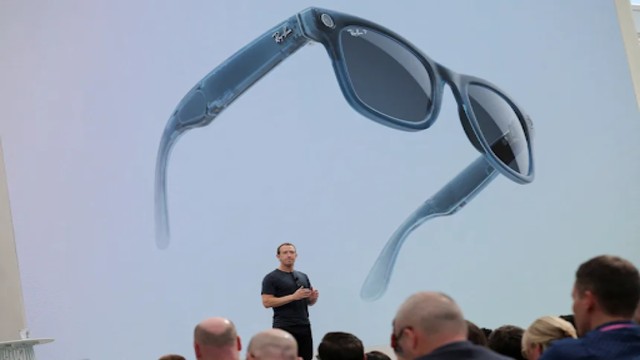
Mark Zuckerberg presents Ray-Ban Meta smart glasses at Meta Connect event in Menlo Park on September 27, 2023. (Reuters)
Meta CEO Mark Zuckerberg is doubling down on wearable tech. During the company’s July earnings call, he suggested that people who don’t use smart glasses could face a “significant cognitive disadvantage” compared to those who do.
This week, the vision could take shape at the Meta Connect conference, where the company is expected to unveil new AI-powered smart glasses. The event follows the success of the Ray-Ban Meta glasses.
Ray-Ban Meta Glasses: A Bright Spot
Meta’s smart glasses have emerged as a rare win amid the company’s mixed track record with early tech bets. The Ray-Ban collaboration allows users to capture photos and videos, analyze surroundings, and ask questions about their environment.
Ray-Ban parent company EssilorLuxottica reported in July that Meta glasses revenue more than tripled year-over-year. Market research indicates Meta is now the leading smart glasses brand.
Unlike Meta’s earlier ventures into smartphones or the metaverse, the glasses appear to resonate with consumers. Analysts see them as a potential gateway to Meta’s vision of “personal superintelligence,” AI that understands users deeply and assists in daily life.
The New Wave of Smart Glasses
Tech rivals, including Samsung, Google, Snap, and Amazon, are also preparing to launch AI glasses. Unlike Google Glass in 2013, which faced criticism for high costs and poor design, this new generation benefits from lighter, cheaper, and more powerful components.
AI advancements are driving the innovation. Meta’s glasses, for example, can answer questions about objects in real time. Users can ask if a pepper is spicy or translate signs instantly. Rumors suggest new models may include displays for apps and notifications, plus wristbands for gesture control.
Meta Connect is expected to showcase these innovations, although the company has declined to comment on specific product announcements. The current Ray-Ban Meta glasses rely on audio or phone app feedback, which may be less competitive than display-equipped alternatives from rivals.

Mark Zuckerberg wearing Orion AR smart glasses prototype at Meta Connect (Reuters)
Competing in the Post-Smartphone Era
Industry experts say smart glasses could evolve into the “next AirPods,” allowing communication and digital assistant use without smartphones. Melissa Otto of S&P Global Visible Alpha noted that, like wireless earbuds, glasses could provide hands-free interaction.
However, challenges remain. While shipments of smart glasses are predicted to grow from 3.3 million units in 2024 to 13 million by 2026, adoption remains small compared to hundreds of millions of smartphones shipped quarterly.
Meta’s Reality Labs, which develops AI glasses and VR headsets, reported a $4.5 billion operating loss in Q2 2025, highlighting the financial risk of these bets. By contrast, Meta’s social apps generated $583 million in revenue.
Why Meta is Betting Big
Despite the current losses, smart glasses could give Meta more control over its ecosystem. Zuckerberg has criticized Apple’s dominance over the App Store and aims to reduce reliance on other hardware platforms.
“If glasses become the main way people video chat and browse social media, Meta could control the experience directly,” Otto explained. Currently, users access Facebook, Instagram, Reels, and Threads primarily through iPhones, not smart glasses.
By owning both hardware and software, Meta hopes to shape the next generation of personal computing. Zuckerberg’s gamble is ambitious: he envisions a future where AI and wearable tech redefine how people interact with the digital world.
Whether smart glasses will reach the ubiquity of smartphones remains uncertain. But for Zuckerberg and Meta, the stakes are clear: the company is betting its future on wearable AI technology.