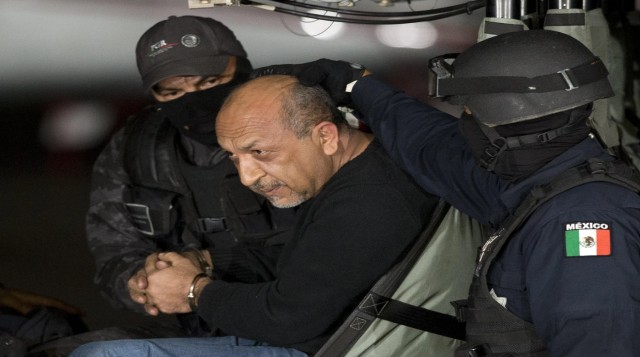
Mexican federal police escort who they identify as Servando “La Tuta” Gomez”, leader of the Knights Templar cartel, as he sits inside a helicopter at a Federal hangar in Mexico City, Feb 27, 2015.
Mexico has transferred 26 high-ranking cartel figures to U.S. authorities in a significant cross-border operation. The move marks one of the most extensive collaborations between Mexico and the Trump administration against drug trafficking networks.
The extradited group includes leaders from some of Mexico’s most violent criminal organizations. Among them is Abigael González Valencia, a senior figure in the “Los Cuinis” cartel, closely linked to the Jalisco New Generation Cartel (CJNG). Another, Roberto Salazar, is accused in the 2008 murder of a Los Angeles County sheriff’s deputy. Several have connections to the Sinaloa Cartel and other notorious drug gangs.
U.S. Attorney General Pam Bondi praised the action. “These 26 men brought drugs and violence to our shores. Under this Justice Department, they will face severe consequences,” she said.
Second Large Transfer in Months
This is the second time in recent months that Mexico has expelled major cartel suspects. Earlier in February, Mexico sent 29 cartel members to the U.S., including infamous drug lord Rafael Caro Quintero. That deal was sealed after the Justice Department agreed not to seek the death penalty against those extradited.
U.S. Ambassador to Mexico Ronald Johnson called the latest move “a clear example of two governments united against violence and impunity.” He said the extraditions will help protect citizens in both countries from dangerous criminal networks.
Political and Economic Pressures
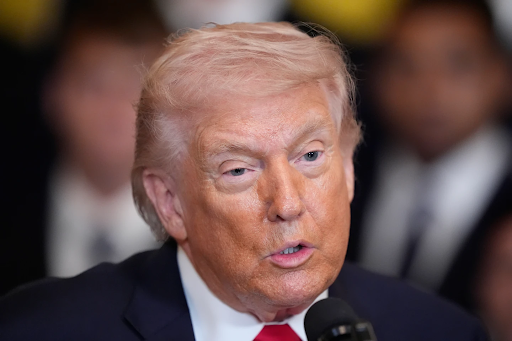
The February extraditions occurred during tense trade talks. At the time, Mexican officials sought to avoid the Trump administration’s threat to impose steep tariffs on imports. In late July, President Donald Trump and Mexican President Claudia Sheinbaum agreed to delay a planned 30% tariff for 90 days to allow further negotiations.
President Sheinbaum has taken a more aggressive stance against cartels than her predecessor. However, she has firmly rejected U.S. military intervention in Mexico, insisting on protecting the nation’s sovereignty.
Notorious Names on the List
The list of those handed over to U.S. custody includes Servando Gómez Martínez, known as “La Tuta.” Once a schoolteacher, Gómez became the feared leader of the Knights Templar cartel. Captured in 2015, he was sentenced to 55 years in a Mexican prison in 2019.
The Knights Templar once controlled the state of Michoacán. The cartel enforced its own rules, manipulated politics, and controlled local commerce. Despite projecting an image of religious devotion, it committed murders, extortion, and violent crimes.
Also extradited, Abigael González Valencia is the brother-in-law of Nemesio Rubén “El Mencho” Oseguera Cervantes, leader of the CJNG and one of the U.S. government’s top targets. A $15 million reward is offered for information leading to El Mencho’s arrest or conviction.
CJNG’s Growing Influence
Alongside his brothers, Abigael González Valencia helped finance the rise of CJNG. This cartel is among the most powerful in Mexico, known for smuggling cocaine, methamphetamine, and fentanyl into the U.S. and beyond.
CJNG has a reputation for extreme violence, using murder, torture, and corruption to maintain power. One of Abigael’s brothers, José González Valencia, was arrested in Brazil in 2017 under a false name. He was sentenced in June to 30 years in a U.S. prison for international cocaine trafficking.
A Landmark Moment in U.S.–Mexico Cooperation
This large-scale transfer highlights growing cooperation between Mexico and the U.S. in tackling organized crime. Both nations face the shared threat of drug trafficking and cartel violence.
“These fugitives will now face justice in U.S. courts,” Ambassador Johnson said. “Our citizens will be safer from these common enemies.”
The extradition of 26 cartel leaders sends a clear signal. Mexico and the United States are determined to dismantle the networks fueling the drug trade. With the CJNG and other groups still active, the fight is far from over — but this joint action marks a significant step forward.