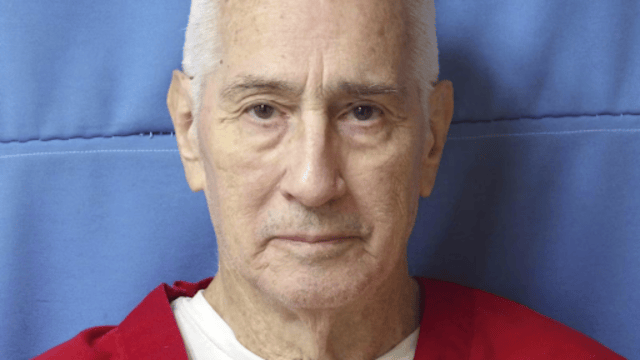
The Mississippi Department of Corrections released this photo of Richard Gerald Jordan, a death row inmate. AP
Mississippi executed 79-year-old Richard Gerald Jordan on Wednesday evening. He spent nearly 50 years on death row after being convicted of kidnapping and killing Edwina Marter in 1976. Jordan died by lethal injection at the Mississippi State Penitentiary in Parchman. Prison officials reported the execution started at 6 p.m. and ended by 6:16 p.m.
Final Words and Apology
Before his death, Jordan thanked officials for what he called a “humane way” to carry out the execution. He apologized to the victim’s family and asked for forgiveness. His last words were, “I will see you on the other side, all of you.” His wife, lawyer, and a spiritual adviser were present during the execution. They were seen wiping away tears.
Family’s Pain Still Fresh
The victim’s family did not attend the execution but shared a message through spokesperson Keith Degruy. They said, “Nothing will bring back our mom, sister and our friend.” They expressed frustration that Jordan had tried for years to avoid the death penalty. “We never had an option,” the family said. Edwina’s son, Eric Marter, who was just 11 when his mother died, added, “He needs to be punished. It should have happened a long time ago.”
Crime That Shocked a Community
Court records show Jordan called a bank and asked for loan officer Charles Marter. After learning his name, Jordan looked up the Marters’ home address. He kidnapped Edwina and later shot her in a forest. He then called her husband, lied that she was alive, and demanded $25,000. He never intended to release her.
Legal Battles and Mental Health Claims
Jordan’s legal team argued he suffered from post-traumatic stress disorder after serving in the Vietnam War. He completed three tours and was later diagnosed with PTSD. His lawyer, Krissy Nobile, said the court never heard about his mental health struggles. She argued the jury didn’t receive the full story. A petition also claimed his war trauma played a role in the crime. However, the victim’s family didn’t accept that defense. “He wanted money,” said Eric Marter. “He couldn’t take her with him. So he did what he did.”
Long Journey Through the Courts
Jordan’s case stretched over decades, including four trials and many appeals. He was one of the longest-serving death row inmates in the U.S. The Supreme Court denied his final appeal just days before his execution. His team had asked the governor for clemency, but it was denied.
Few Executions in Recent Years
This was Mississippi’s third execution in the past 10 years. Jordan’s case adds to a rising number of executions in 2025, with some experts saying it could be the highest since 2015. At the start of this year, Jordan was among 22 people sentenced in the 1970s who were still awaiting execution in the United States.