Mojtaba Khamenei gains attention as a possible successor after Iran’s supreme leader dies in an airstrike, raising questions about the country’s future.
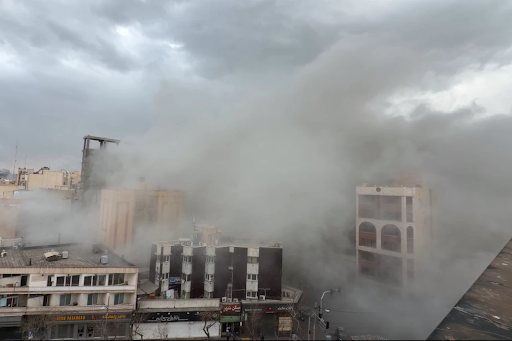
The political landscape in Iran is shifting rapidly after the death of Ali Khamenei, who was reportedly killed in an Israeli airstrike targeting his offices. As the country grapples with escalating military conflict and uncertainty about leadership, attention has increasingly turned toward his son, Mojtaba Khamenei, as a possible successor to the powerful post of supreme leader.
Although Mojtaba Khamenei has never held an elected office or formal government role, his name has circulated for years within Iran’s political circles as a potential heir to his father’s authority. The recent strike, which also killed his wife Zahra Haddad Adel, has intensified speculation about who might eventually assume control of the Islamic Republic’s most influential position.
At the same time, Mojtaba himself has not appeared in public since the attack. Reports suggest he may have gone into hiding as Israeli and American airstrikes continue across Iran, while state-run media have remained silent about his whereabouts.
A Shadowy Figure in Iran’s Power Structure
For years, Mojtaba Khamenei has remained one of the most enigmatic personalities within Iran’s political establishment. Unlike many prominent figures in the country’s leadership hierarchy, he has largely operated behind the scenes rather than through official positions.
Despite this low public profile, diplomats and analysts have long viewed him as a key player within his father’s inner circle. Leaked diplomatic cables described him as a powerful gatekeeper who helped manage access to the supreme leader and influence major political decisions.
Observers often compared his position to that once held by Ahmad Khomeini, the son of Iran’s revolutionary founder Ruhollah Khomeini. In that role, Ahmad served as confidant, adviser, and political intermediary between the supreme leader and the wider political system.
Similarly, Mojtaba Khamenei has been widely viewed as a trusted aide and influential broker of power, even without a formal title.
Early Life Shaped by Revolution
Born in 1969 in the northeastern city of Mashhad, Mojtaba grew up during a period of intense political upheaval. His childhood unfolded against the backdrop of growing opposition to Mohammad Reza Pahlavi, whose monarchy would eventually collapse during the Iranian Revolution.
Family accounts describe how the shah’s secret police once raided their home and assaulted his father, who was then a dissident cleric. The incident left a deep impression on the young Mojtaba, illustrating the risks his family faced during the revolutionary struggle.
After the monarchy fell, the Khamenei family moved to Tehran, where Ali Khamenei’s influence steadily grew within the newly established Islamic Republic.
During the Iran-Iraq War, Mojtaba reportedly served in a unit linked to the Islamic Revolutionary Guard Corps, an institution that later became one of the most powerful forces within the country’s political and military system.
Growing Influence Behind the Scenes
When Ali Khamenei became supreme leader in 1989, his son’s influence gradually expanded alongside his father’s authority. Working within the supreme leader’s offices in Tehran, Mojtaba developed relationships with powerful clerics, military commanders, and political figures.
Diplomatic reports later suggested he played an increasingly central role in shaping decisions inside the leadership circle. Some insiders even referred to him as “the power behind the robes,” highlighting the quiet influence he exercised within the regime.
His connections reportedly extended to elite branches of the Revolutionary Guard, including the Quds Force and the Basij militia. These groups have played crucial roles in Iran’s regional strategy and internal security operations.
In 2019, the United States Department of the Treasury imposed sanctions on Mojtaba Khamenei, accusing him of advancing policies aligned with his father’s regional ambitions and domestic control. He has also been linked by critics to political maneuvering during the presidency of Mahmoud Ahmadinejad, particularly during the controversial 2009 election that triggered widespread protests.
A Crucial Moment for Iran’s Leadership
The question of succession carries enormous weight in Iran because the supreme leader holds ultimate authority over the state. The position includes command of the armed forces, oversight of national security decisions, and the power to influence nearly every major policy direction.
This moment of transition comes during one of the most volatile periods in Iran’s recent history. The country is currently facing military confrontation with Israel while also navigating tensions surrounding its nuclear program and regional alliances.
Whoever becomes the next supreme leader will inherit not only political authority but also control over Iran’s military apparatus and strategic capabilities.
For now, Mojtaba Khamenei’s future role remains uncertain. Yet his long-standing connections within the political establishment and security forces mean his name is likely to remain central in discussions about Iran’s next chapter.