Concordia students launched a rocket from Northern Quebec, aiming to hit an exploration milestone in Canadian space. Genevieve Beauchemin reports.
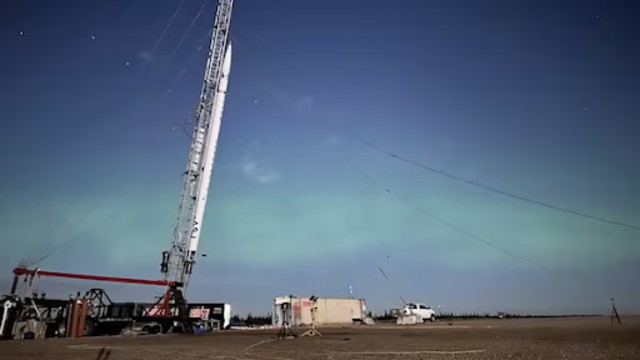
In the early morning sky of northern Quebec, a group of Concordia University students made history. Their rocket, named Starsailor, soared from a base camp on Cree territory, lighting up the horizon in a flash of white fire.
The launch, captured live, was the result of seven years of relentless effort by Space Concordia — the university’s student-run space program. While the mission did not achieve its ultimate goal of reaching the edge of space, the liftoff itself was a groundbreaking achievement in Canadian student engineering.
“This is insane,” one student exclaimed as the rocket thundered skyward.
Aiming for the Edge of Space
The team’s mission was bold: to send Starsailor past the Kármán line, 100 kilometres above Earth, the official boundary of space. At 5:34 a.m., the liquid-fuel rocket took off, igniting cheers and disbelief among the crowd.
Moments later, however, mission control confirmed the rocket had not reached its intended altitude.
“It looks like the rocket burned out earlier and separated earlier than planned,” explained spokesperson Hannah Halcro during the livestream.
A Dream Years in the Making
The project was born in 2018 when universities across North America entered a contest to build and launch a liquid-fuel rocket into space. Although the competition was cancelled during the pandemic, Concordia students pressed on.
More than 700 students contributed over the years, pooling their knowledge, time, and passion into the creation of Starsailor. Together, they built not only a rocket but also a student space program with a legacy.
The Cree community of Mistassini partnered with the team, offering land and support for the ambitious mission. Transport Canada approved the launch, closing the local airspace to ensure safety. Two previous attempts were cancelled due to poor weather, but this time the conditions aligned.
A Step Forward Despite Setbacks
Rocket science is never simple. Even with years of preparation, uncertainty hovered over the mission. Some students admitted they worried the rocket might fail on the launchpad.
But when Starsailor cleared the tower and pierced the sky, fear turned to triumph.
“The sky is not the limit obviously,” Space Concordia president Simon Randy said after the launch. “We’ve proven that we have a seat at the table of space launches.”
Though the rocket did not officially reach space, the team insists the project was far from a failure. Instead, it marked an unprecedented achievement: the most powerful student-built rocket in Canadian history.
Looking Ahead
Now, Space Concordia is studying flight data and analyzing debris to understand what happened during the flight. The findings will guide future designs as students refine their technology and aim for new milestones.
For the students who poured years into Starsailor, the launch was more than a technical challenge. It was a symbol of resilience, collaboration, and ambition that stretched far beyond the university campus.
As the sun set on their historic day, Halcro signed off the livestream with a promise: “See you in space next time.”