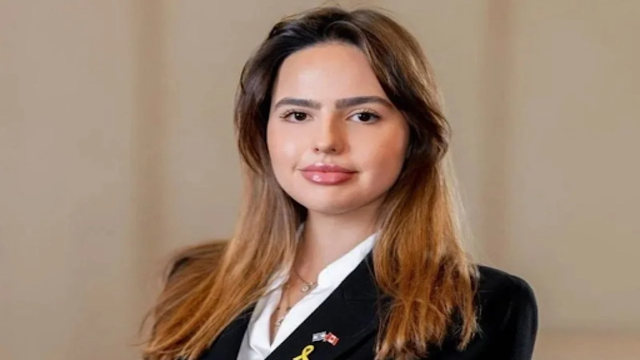
Anastasia Zorxhinsky says staff at a Montreal passport office told her she couldn’t list Israel as her country of birth. Linkedin
A Montreal woman says she faced unexpected resistance at a local passport office after staff told her she could not list Israel as her place of birth. The woman, Anastasia Zorchinsky, says the employee claimed Israel sits “in a conflict zone” and therefore could not appear on her Canadian travel document.
Zorchinsky was born in Kfar Saba, a city in central Israel. She became a Canadian citizen years ago, but she says she never imagined she would hear officials question her right to list her birth country.
Passport Office Dispute
In a video posted on Nov. 13, Zorchinsky shared that the worker told her she could instead choose Palestine. She says the worker insisted this change reflected a new rule tied to “the political conflict.” The employee claimed Kfar Saba and several other cities, including Jerusalem, fell under this alleged shift.
Zorchinsky asked staff to show her a written policy that explained the rule. Staff left the counter and later returned with colleagues who repeated the same claim. They said Canada recognized a Palestinian state and that this recognition affected certain birthplaces.
They also said an online list existed outlining which cities fell under this supposed policy. When Zorchinsky asked to see it, no one produced anything.
“She just said this without any support, no policy document,” Zorchinsky said. “It was clear something was off.”
Officials Reverse Course
After further questioning, staff told her she could in fact list Israel as her country of birth. Zorchinsky wonders how many others accepted the initial explanation without pressing for proof.
“If I had just submitted my application, who knows what would have happened?” she said. “It’s clear discrimination.”
Her lawyer, Neil Oberman, says no one should need to challenge a government office to have their birthplace recognized correctly. He worries that others, especially those less confident in challenging officials, may face similar situations.
“Jewish Canadians shouldn’t have to deal with this,” Oberman said. “Politics shouldn’t affect identity documents.”
Government Responds
A spokesperson for Immigration, Refugees and Citizenship Canada contradicted the passport office’s claim. In an emailed statement, he said, “No changes have been made regarding the issuing of passports for individuals born in Israel.” He confirmed that Kfar Saba can appear in passport documents with Israel listed as the birth country.
Oberman wrote to federal officials on Nov. 12, describing his client’s experience. His letter asked for training materials and any documents that might explain the statements made at the Montreal office. He also raised concerns about staff understanding of policy.
He requested a response by Nov. 18. If no response arrives, he says he may file complaints with the Canadian Human Rights Commission, the federal ombudsperson, or the Federal Court.
Community Reaction
The incident sparked concern from groups that track issues affecting Jewish Canadians. One organization said it contacted the federal government, calling the situation “unacceptable.” They noted Zorchinsky’s experience raises broader concerns about access to public services.
Zorchinsky says she felt compelled to refuse what she believed was an unfair instruction.
“If there is some sort of injustice,” she said, “you have to stand up, speak up.” She says she wants no one else to face the same situation, regardless of their birthplace.