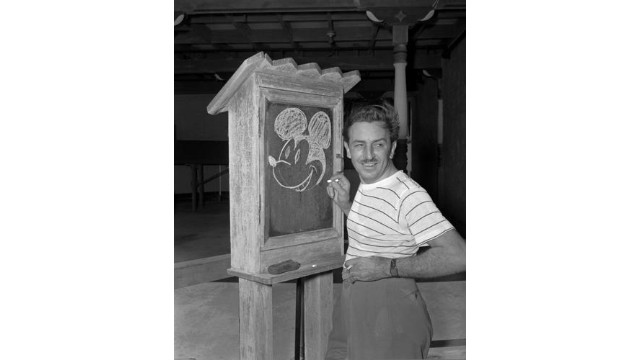
Walt Disney, creator of Mickey Mouse, poses at the Pancoast Hotel in Miami, Aug 13, 1941. (AP Photo)
Entertainment giant Disney is now at the center of a legal dispute with one of America’s largest law firms. Morgan & Morgan has filed a lawsuit against Disney, claiming the company has blocked its use of the iconic “Steamboat Willie” character in advertising campaigns.
The case, lodged in federal court on Wednesday, touches both nostalgia and intellectual property.
Morgan & Morgan’s Position
Morgan & Morgan, famous for its “For the people” tagline, argues that copyright protections for Steamboat Willie expired last year. The firm claims it approached Disney for reassurance that it could freely use imagery from the black-and-white classic without fear of a lawsuit.
Disney’s attorneys declined to provide guidance, saying they do not offer legal advice to third parties. Left without clear assurance, the firm says it turned to the courts to avoid being targeted for trademark infringement.
“Mickey Mouse’s debut belongs to the public now,” the lawsuit states. “No corporation, however powerful, can rewrite that fact.”
A New Twist on a Classic Cartoon
The disputed advertisement is already drafted. It reimagines the original animation, with Mickey at the helm of a boat — except this time, the boat rides on land. The vessel collides with a car driven by Minnie Mouse, who then reaches for her phone and contacts Morgan & Morgan for help.
To avoid confusion, the ad includes disclaimers. A voiceover explicitly informs viewers that Disney neither approved nor authorized the commercial.
Why Steamboat Willie Matters
Steamboat Willie is more than just a cartoon. When it premiered in 1928, it transformed animation by synchronizing sound and visuals, cementing Mickey Mouse as a cultural icon. For decades, Disney vigorously protected its rights to the character, shaping copyright debates in the United States.
Now, with the original film entering the public domain, new legal questions arise. Can companies like Morgan & Morgan use Mickey’s earliest form without crossing into trademark violations? That is the issue a federal judge will now be asked to decide.
Disney’s Response
As of Wednesday evening, Disney had not issued a public response to the lawsuit. The company has historically defended its intellectual property with exceptional tenacity, often lobbying Congress to extend copyright terms.
Legal experts note that while the original Steamboat Willie may be free to use, modern versions of Mickey Mouse remain protected under both copyright and trademark laws. This creates a gray area for commercial use.
Wider Implications
The outcome of this case could shape how public domain works are used in advertising, art, and media. Many companies are expected to explore ways to use classic Disney characters now that some of them have lost copyright protection.
If Disney succeeds, experts warn it could create a chilling effect, discouraging businesses and creators from using characters that should be freely available.
If Morgan & Morgan prevails, it may open the door for broader use of “Steamboat Willie” and other early animations.
What Comes Next
The legal battle is still in its early stages, and court proceedings are expected to attract wide attention. Both sides are preparing for what could become one of the most closely watched intellectual property cases of the decade.
For now, the cheerful whistle of “Steamboat Willie” has found itself in the middle of a serious courtroom showdown — one that will test the boundaries of copyright, trademark, and the rights of the public.