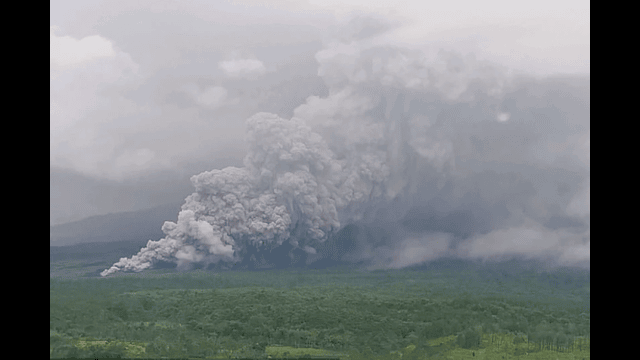
In this photo released by the Geological Agency (Badan Geologi) of Indonesia’s Ministry of Energy and Mineral Resources, Mount Semeru releases volcanic materials during an eruption in Lumajang, East Java, Indonesia, Wednesday, Nov. 19, 2025.
Indonesia’s Mount Semeru eruption on Wednesday sent massive clouds of ash billowing into the sky and forced emergency evacuations in East Java. The country’s highest alert level was activated as the volcano intensified throughout the day, blanketing nearby villages and threatening communities along its slopes.
Mount Semeru Eruption Sends Ash Clouds Skyward
Mount Semeru, the tallest mountain on Java island, erupted multiple times from midday to dusk. The volcano expelled hot ash clouds and a dangerous mix of rock, lava, and gas that surged up to 7 kilometers down its slopes.
Indonesia’s Geology Agency reported that a towering column of scorching ash rose 2 kilometers into the air. The rapid escalation of volcanic activity pushed authorities to raise the alert level twice—eventually reaching the maximum hazard level.
Despite the severity of the eruption, officials confirmed that no casualties have been reported so far.
Villages Coated in Ash as Evacuations Begin
Authorities began evacuating residents from the three most threatened villages in Lumajang district. More than 300 people were moved to government shelters as ash blanketed homes, fields, and roads.
The danger zone was expanded to 8 kilometers from the crater due to the increasing threat. Officials also warned communities to avoid the Besuk Kobokan River, a known path for lava and searing gas flow.
Over 170 People are Stranded Near the Volcano
Local media reported that about 178 people, including climbers and tourism staff, were stranded near the Ranu Kumbolo monitoring post. The group consists of 137 hikers, along with porters, guides, and park officials.
According to TNBTS spokesperson Endrip Wahyutama, the stranded individuals are safe. The monitoring post is located 4.5 kilometers from the crater on the mountain’s northern side—a section not directly affected by the hot cloud flows moving toward the south-southeast.
However, bad weather and heavy rain prevented their descent, forcing them to remain overnight at the site. Rescue operations are ongoing as conditions allow.
A Volcanic Giant with a Violent Past
Mount Semeru, also known as Mahameru, is one of Indonesia’s most active volcanoes. It has erupted repeatedly over the past 200 years, with thousands of residents continuing to live on its fertile but dangerous slopes.
Its last major eruption in December 2021 caused extensive devastation. That event killed 51 people, injured hundreds, and buried entire communities in mud and volcanic debris. More than 10,000 residents were evacuated, and nearly 3,000 homes were relocated outside the hazard zone.
Indonesia’s High-Risk Landscape
Indonesia sits along the Pacific Ring of Fire, a highly unstable belt of tectonic fault lines known for frequent earthquakes and volcanic eruptions. The nation hosts 129 active volcanoes, the most of any country in the world.
This geographic reality means millions of Indonesians live close to potential volcanic hazards, making rapid emergency response crucial whenever eruptions occur.
Authorities on High Alert After Mount Semeru Eruption
As Mount Semeru’s eruption continues to evolve, officials remain on high alert. Emergency teams are monitoring lava paths, assisting evacuees, and coordinating rescue efforts for stranded climbers.
Residents living near the volatile slopes have been urged to stay vigilant and follow safety advisories, as volcanic activity may continue in the coming days.