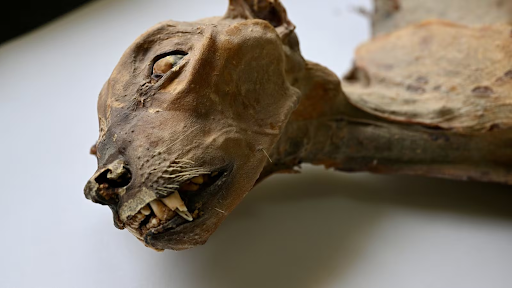
This undated photo shows the preserved remains of a cheetah, shared by Communications Earth and Environment. AP Photo
Scientists have uncovered the mummified remains of cheetahs hidden inside caves in northern Saudi Arabia, offering a rare glimpse into a long-lost animal population. The discovery took place near the city of Arar, where researchers found seven cheetah mummies along with bones from 54 other cheetahs.
Tests show the remains range in age from about 130 years to more than 1,800 years old. The find marks one of the most unusual discoveries involving large animals preserved outside of ice or human burial practices.
Nature Preserved What Time Could Not
Mummification slows decay and preserves bodies, often through dry air, stable temperatures, or lack of moisture. While ancient Egyptian mummies remain the most famous examples, nature can also create mummies in deserts, glaciers, and bogs.
The cheetah remains show clear signs of natural mummification. Their eyes appear cloudy, and their limbs look shrivelled, giving them a dried, husk-like appearance.
“It’s something that I’ve never seen before,” said Joan Madurell-Malapeira of the University of Florence, who did not take part in the research.
Why the Cheetahs Gathered
Researchers still do not know why so many cheetahs ended up inside these caves. One possible explanation suggests the caves served as den sites where mothers gave birth and raised their young. The dry air and steady cave temperatures may have helped preserve the bodies after death.
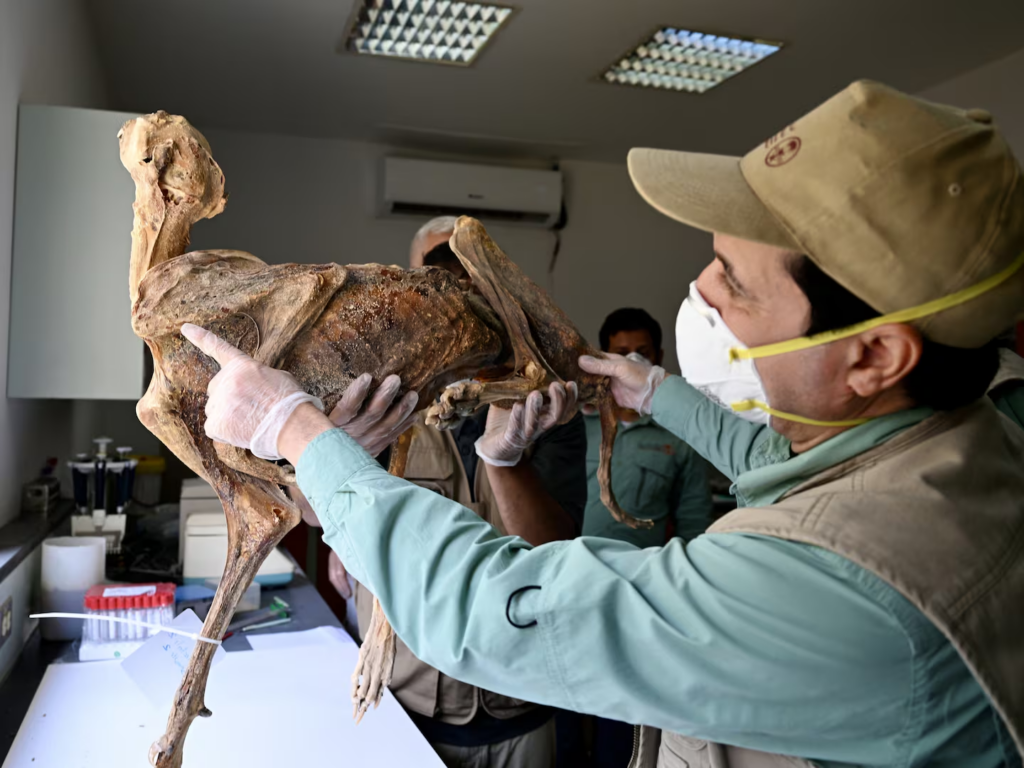
An undated photo shows a scientist closely studying the preserved remains of a mummified cheetah inside a laboratory setting. AP Photo
The findings appeared in the journal Communications Earth and Environment, which noted that such preservation of large mammals remains extremely rare.
Survival Against the Odds
Large animal remains usually disappear quickly after death. Scavengers such as birds, hyenas, and other predators often destroy carcasses before preservation can occur. For mummification to succeed, bodies must remain untouched in a stable environment for long periods.
Scientists have found mummified large cats before, including a saber-toothed cat cub in Russia, but such discoveries remain uncommon.
Clues to a Vanished Population
Cheetahs once lived across much of Africa and parts of Asia, including the Arabian Peninsula. Today, they occupy only about nine per cent of their former range and have not appeared in Arabia for decades.
Habitat loss, hunting, and shrinking prey numbers likely drove them out of the region.
For the first time involving naturally mummified large cats, researchers also studied the cheetahs’ genetic material. The results showed close ties to modern cheetahs living in parts of Asia and northwest Africa.
Hope for the Future
The genetic findings may help conservationists plan future reintroduction efforts in areas where cheetahs once lived. By understanding how past populations survived, scientists hope to guide efforts to protect the species today.