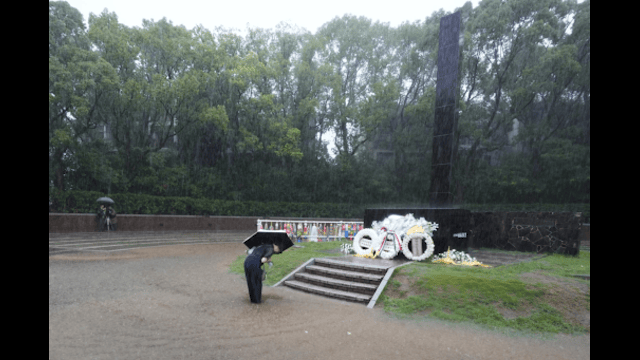
People Bows to pray in the rain, at the atomic bomb hypocenter park, ahead of a public ceremony to commemorate the 80th anniversary of the day an atomic bomb was dropped on Nagasaki, Japan August 9, 2025.
Nagasaki commemorated the 80th anniversary of the U.S. atomic bombing on Saturday. Survivors called for the city to remain the last place ever hit by a nuclear weapon.
On August 9, 1945, a U.S. plutonium bomb devastated Nagasaki, killing about 70,000 people. The attack came three days after Hiroshima’s bombing, which claimed 140,000 lives. Japan surrendered on August 15, ending World War II and its decades of aggression in Asia.
Around 2,600 people, including delegates from more than 90 countries, gathered at Nagasaki Peace Park for the memorial. At 11:02 a.m., the exact moment of the blast, attendees observed a minute of silence as a bell rang.
A Call for Lasting Peace
Nagasaki Mayor Shiro Suzuki, whose parents survived the bombing, released doves to symbolize peace. He called the city’s wartime memories a “shared heritage” that must be preserved worldwide.
He warned of humanity’s growing existential risks and urged unity for a nuclear-free future. “We will go hand-in-hand with global citizens to abolish nuclear weapons,” Suzuki said.
Remembering in Rain and Prayer
Despite heavy rain, survivors and families gathered early at Peace Park and Hypocenter Park, the bomb’s ground zero. Others prayed in Nagasaki’s churches, including the historic Urakami Cathedral. The cathedral’s twin bells rang together again after one bell, lost in the attack, was recently restored by volunteers.
Aging Voices Pass the Torch
Survivors, or hibakusha, continue to share painful memories despite health struggles and past discrimination. Yet they fear the world is drifting toward renewed nuclear risks.
With their numbers shrinking to just over 99,000 and average age above 86, many now rely on younger generations to carry their message forward. The youngest survivors were too small in 1945 to remember the event clearly.
Teruko Yokoyama, 83, lost two sisters to radiation-related illness. She now works to preserve survivors’ testimonies. Her group is digitizing their stories for YouTube and social media, enlisting young volunteers to help.
“There are younger people taking action,” she said. “That gives me hope.”
Youth Engagement Grows
On Friday, Nagasaki hosted a “peace forum” where more than 300 young people listened to survivors’ accounts. Ninety-year-old survivor Seiichiro Mise gave them seeds of “flowers of peace,” symbolizing the continuation of their mission.
Rising Nuclear Tensions
Survivors voiced concern over global trends toward expanding nuclear arsenals. They criticized Japan’s refusal to sign the Treaty on the Prohibition of Nuclear Weapons. As a U.S. ally, Japan maintains reliance on American nuclear deterrence.
Prime Minister Shigeru Ishiba addressed the memorial, reaffirming Japan’s goal of a nuclear-free world. He pledged to promote dialogue between nuclear and non-nuclear states at the 2026 Non-Proliferation of Nuclear Weapons Review Conference in New York. However, he avoided direct mention of the ban treaty.
Diplomatic Absences
Nagasaki invited representatives from all nations to the memorial. China declined without explanation. Last year’s event drew controversy when the U.S. ambassador and several Western envoys were absent after Nagasaki did not invite Israel.
Carrying the Flame Forward
For the aging hibakusha, the 80th anniversary is both a moment of mourning and a turning point. They want their stories to shape a future without nuclear weapons. With youth increasingly engaged, survivors believe the seeds of peace they plant today can still bloom tomorrow.