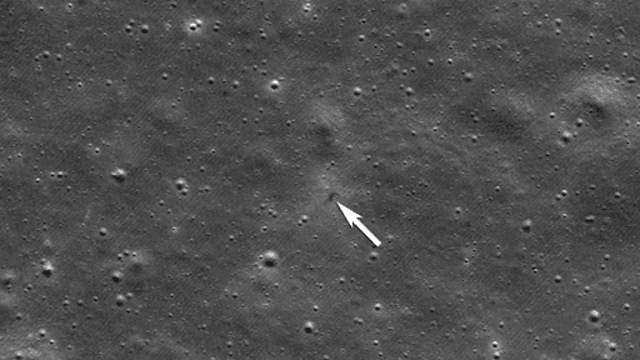
NASA shared a photo showing where the Resilience moon lander crashed. The image was taken by the Lunar Reconnaissance Orbiter Camera on June 11, 2025, and clearly marks the spot where the lander hit the moon’s surface. AP Photo
A NASA spacecraft has captured clear images of the crash site of a Japanese lunar lander. The spacecraft, which circles the moon, photographed the area where the lander, named Resilience, hit the lunar surface.
Photos Reveal Crash Impact
NASA shared the images on Friday, about two weeks after the crash happened. The pictures show a dark spot on the surface of the moon. This mark lies in a region called Mare Frigoris, also known as the Sea of Cold. It is a volcanic area in the moon’s far northern region.
Along with the dark spot, there’s also a faint, lighter ring around it. Experts say this halo formed when dust and dirt flew outwards from the lander's impact.
NASA’s Lunar Reconnaissance Orbiter took the images earlier last week.
Second Failure for ispace
The lander belonged to a Tokyo-based company called ispace. The company named the lander “Resilience” and launched it in January from Cape Canaveral. It was meant to land on the moon and deploy a small rover.
Unfortunately, the mission failed, and the lander crashed instead. This is ispace’s second failed landing attempt in two years.
The company plans to hold a press conference next week to explain what went wrong during the mission.
What Went Wrong?
So far, the company hasn’t given full details about the cause of the crash. However, they are studying the data collected before and during the attempt. This information could help ispace avoid the same mistakes in future missions.
Lunar landings are difficult, and only a few countries and companies have successfully done them. ispace is one of several private companies aiming to build a future in space exploration.
NASA's Help in Investigation
NASA’s role in the investigation has been helpful. By using its high-powered orbiter, the space agency quickly spotted the crash site. This kind of support gives important clues about how hard the landing was and where exactly it happened.
Photos like these help scientists and engineers learn more about landing failures. That can lead to better designs and safer missions in the future.
Future of Private Moon Missions
Private companies continue to aim for the moon, despite setbacks like this one. Each failed mission brings lessons that may lead to future success. ispace still plans more lunar missions and hopes to become one of the first private companies to operate regularly on the moon.
As technology improves and space agencies offer support, the dream of moon landings by private firms is still alive.