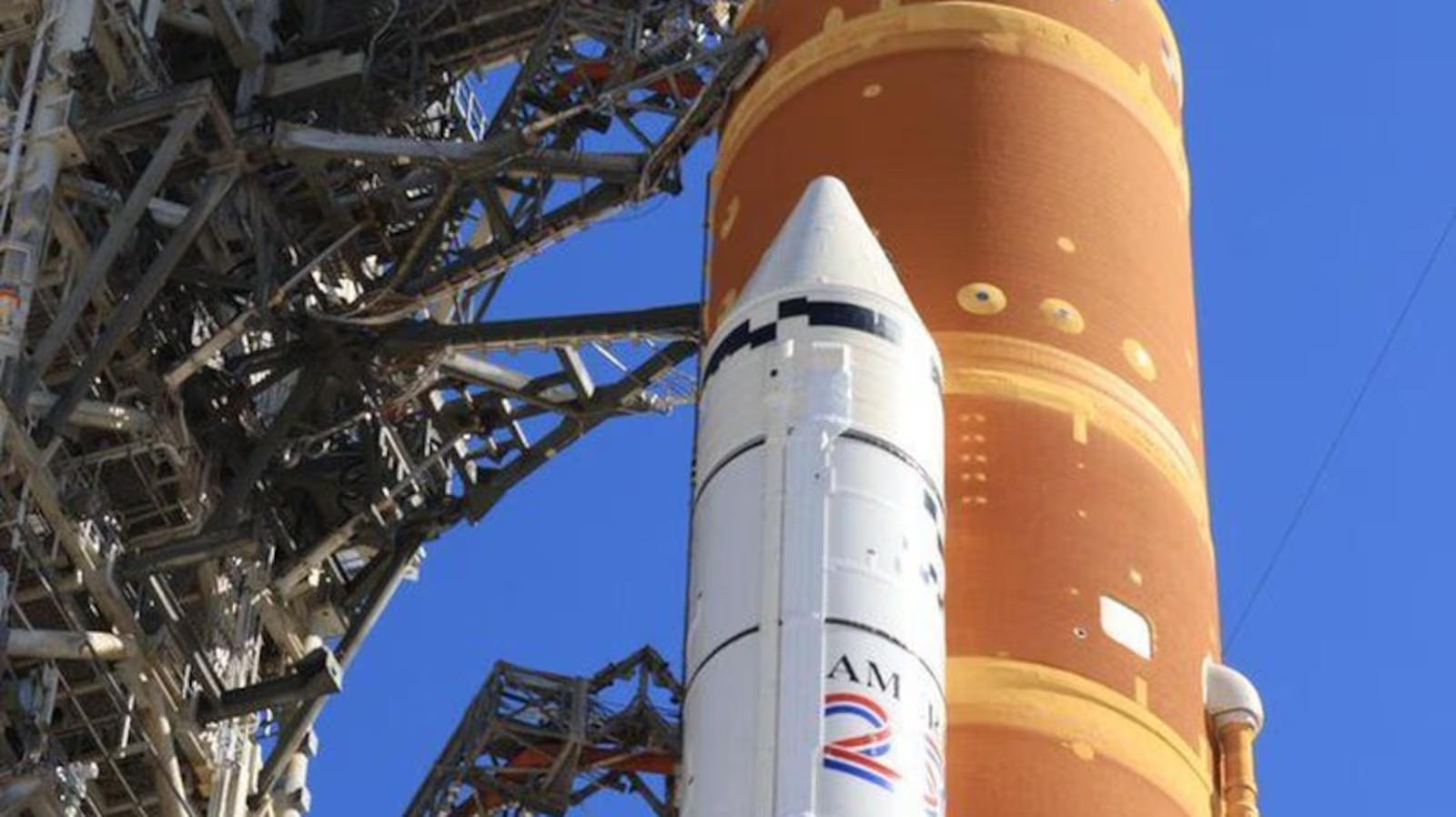
A photo released by NASA shows the agency’s moon rocket standing on the launch pad at Kennedy Space Center in Florida on Thursday, Feb. 19, 2026. NASA
NASA has decided to move its powerful Artemis moon rocket back to the hangar for further repairs, delaying the first crewed mission to the moon in more than 50 years.
The space agency announced Sunday that it plans to transport the rocket on Tuesday, weather permitting. The slow journey will cover about four miles (6.4 kilometres) across the Kennedy Space Center in Florida.
New Problem Emerges After Fuel Test
Engineers recently completed a repeat fueling test to confirm they had fixed hydrogen fuel leaks that had caused earlier delays. Those leaks involved highly flammable liquid hydrogen, making the issue a serious safety concern.
Just after resolving that problem and setting a tentative March 6 launch date, another issue surfaced.
This time, a malfunction affected the rocket’s helium system. Helium plays a critical role during launch. It helps clear fuel lines and pressurize the rocket’s tanks before liftoff.
The disruption to helium flow prevented proper operation of the rocket’s upper stage systems.
“Returning to the Vehicle Assembly Building at Kennedy is required to determine the cause of the issue and fix it,” NASA said in a statement.
April Launch Now Targeted
NASA had already pushed back the mission by about a month. The latest setback means the rocket will remain grounded until at least April.
Officials explained that moving the rocket back indoors allows teams to inspect the system carefully and make necessary repairs.
The agency stressed that an April launch attempt remains possible, depending on how quickly engineers complete the work.
Launch windows for lunar missions remain limited. Each month, NASA has only a few days when conditions align properly for sending a crew around the moon and safely returning to Earth.
Artemis II Crew Waits
The mission, known as Artemis II, will carry four astronauts — three Americans and one Canadian — on a trip around the moon and back. The crew currently remains in Houston, awaiting updates.
Once launched, Artemis II will mark the first time humans travel toward the moon since the Apollo missions ended in 1972.
NASA sent 24 astronauts to the moon between 1968 and 1972. The Artemis program aims to build on that history and lay the groundwork for future lunar landings.
Unlike the earlier Apollo flights, Artemis II will not land on the moon. Instead, the crew will orbit it before returning home.
Ensuring Safety First
NASA officials emphasized that safety remains the top priority.
The hydrogen leaks and helium malfunction both involve critical systems that support the rocket’s engines and fuel tanks. Engineers want to ensure every component functions properly before astronauts board.
The rocket stands as the most powerful NASA has ever built. Moving it back to the Vehicle Assembly Building allows technicians to work in a controlled indoor environment.
The upcoming repairs will determine the new launch schedule. If teams complete the fixes successfully, NASA could attempt liftoff in April.
For now, the mission remains on hold while engineers work to resolve the technical concerns.