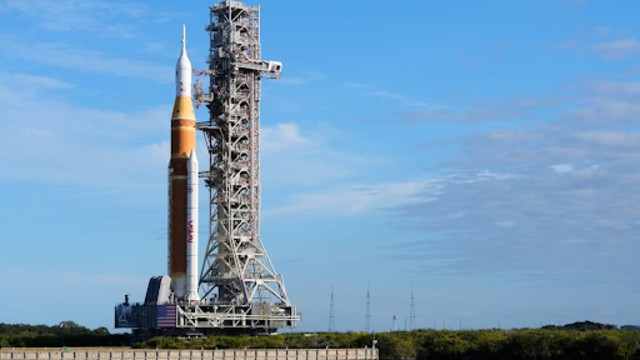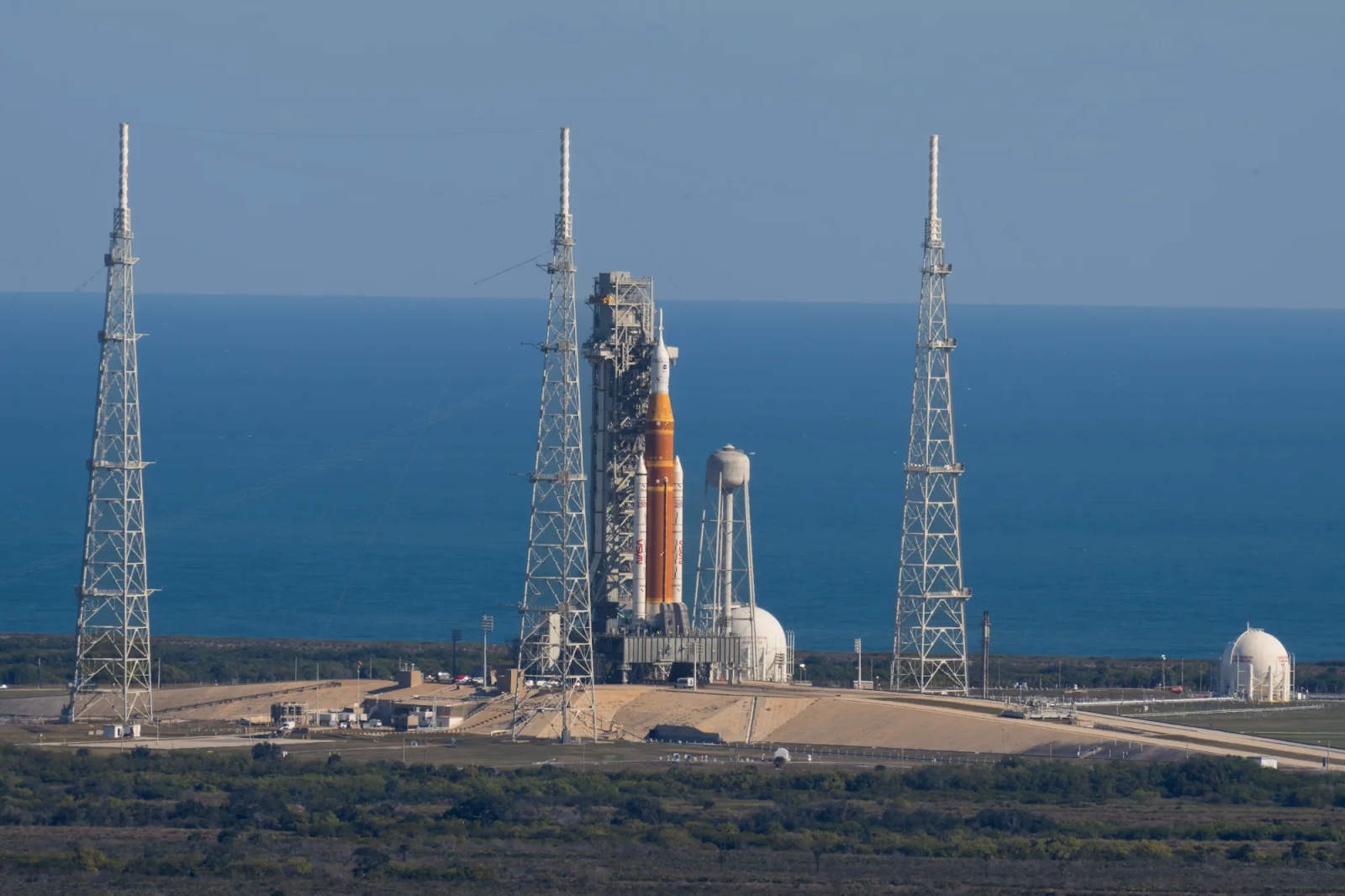
NASA’s Artemis II rocket stands on its mobile launch platform at Kennedy Space Center in Florida on Jan. 29, 2026, with the Orion spacecraft mounted on top. The upcoming test flight will carry four astronauts — Reid Wiseman, Victor Glover, Christina Koch, and Canadian astronaut Jeremy Hansen — on a journey around the Moon before returning safely to Earth. NASA
NASA has moved the timeline for a key Artemis II test because of severe winter weather in Florida. The agency now plans to begin fueling the rocket for the wet dress rehearsal on Monday, Feb. 2, at the Kennedy Space Center. As a result, the earliest possible launch opportunity will come no sooner than Sunday, Feb. 8.
Engineers tracked cold temperatures and strong winds over several days as an unusual Arctic weather system pushed into the state. Managers reviewed how the conditions could affect equipment at the launch pad and decided to adjust the schedule to protect the mission.
Teams Stay Ready at the Launch Pad
Although the test moved, NASA teams remain fully prepared. Crews have kept all systems ready at the launch pad while waiting for safer conditions. Officials said the expected weather later this week would not meet launch safety limits, making the delay necessary.
NASA will not confirm a launch date until teams study the results of the wet dress rehearsal. With the new timeline, Friday, Feb. 6, and Saturday, Feb. 7, no longer work as possible launch days. Any further delays would push the schedule back one day at a time.
Crew and Countdown Plans
The Artemis II crew remains in quarantine in Houston as required before flight. Mission managers continue to review when the astronauts will travel to Florida.
The wet dress rehearsal will include a simulated launch window that opens at 9 p.m. Eastern time on Feb. 2. The countdown will begin about 49 hours earlier. During this test, teams will practise loading fuel and running through launch procedures without lifting off.
Spacecraft Protected From Cold
Engineers have taken extra steps to protect the spacecraft and rocket from the cold weather. They have kept the Orion spacecraft powered on and adjusted its heaters to handle lower temperatures.
Teams also set up special air flow systems, known as purges, to keep sensitive areas of the rocket and boosters in safe condition. These systems help control moisture and temperature during extreme weather.
Public Viewing Continues
NASA continues to offer a live video stream of the rocket standing on the launch pad, running around the clock. The agency also plans to provide a separate video feed during wet dress rehearsal activities. Real-time written updates will follow the fueling process as it happens.
Officials said they will keep watching weather conditions closely and share updates as the mission moves forward. Artemis II remains a major step in NASA’s plan to return astronauts to deep space missions beyond Earth orbit.