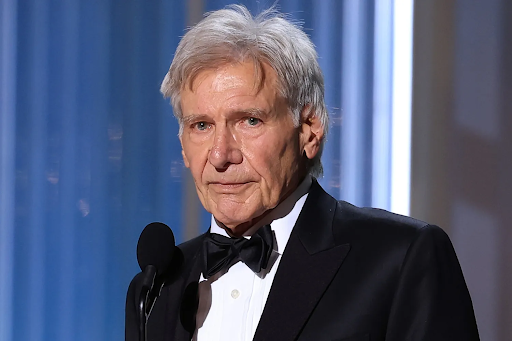
Recording artist Neil Sedaka poses for a portrait Tuesday, Jan. 26, 2010 in New York. (AP Photo/Jeff Christensen, File) AP2010
Neil Sedaka, the melodic craftsman whose voice and piano defined an era of American pop, has died at 86. The singer-songwriter, celebrated for classics such as “Breaking Up Is Hard to Do” and “Laughter in the Rain,” passed away Friday, according to a statement from his family. While further details were not immediately released, tributes quickly poured in for an artist whose music bridged generations.
In their statement, Sedaka’s family remembered him not only as a rock and roll legend but as a devoted husband, father and grandfather. For millions, he was a soundtrack to first loves and teenage dreams. For those closest to him, he was simply Neil.
From Brooklyn Roots to Brill Building Fame
Long before global recognition, Sedaka was a gifted child growing up in Brooklyn’s Brighton Beach neighborhood. Raised in a crowded apartment shared with extended family, he found refuge and identity through music. Encouraged by a perceptive second-grade teacher, his mother worked tirelessly to buy him a secondhand piano, setting him on a path that would reshape American pop.
As a teenager, Sedaka studied classical piano and won a citywide competition judged by Arthur Rubinstein. Yet even as he honed his classical technique, he was drawn to the rising pulse of rock ‘n’ roll. Alongside lyricist Howard Greenfield, his high school friend and neighbor, he began writing songs that captured youthful innocence with catchy hooks.
Their partnership flourished at New York’s famed Brill Building, where Sedaka became one of its standout hitmakers. Between the late 1950s and early 1960s, he delivered a string of chart successes including “Calendar Girl,” “Happy Birthday Sweet Sixteen” and “Oh! Carol,” reportedly inspired by future songwriter Carole King. His bright tenor and buoyant melodies made him a staple on television programs like “American Bandstand,” cementing his place in early rock history.
Weathering the British Invasion
However, the mid-1960s brought dramatic shifts in popular music. As the British Invasion led by The Beatles transformed the charts, the polished Brill Building sound faded from prominence. Sedaka later described this period as years “in the wilderness,” when commercial success proved elusive.
Despite the downturn, he never stopped writing or performing. His resilience would soon be rewarded in an unexpected way.
A Remarkable Comeback in the 1970s
Sedaka’s revival began after relocating to England, where his music still resonated strongly. There, he formed a friendship with Elton John, who signed him to Rocket Records in the United States. The resulting album, “Sedaka’s Back,” marked a triumphant return.
With new collaborator Philip Cody, Sedaka scored major hits including “Bad Blood” and “Laughter in the Rain.” He also achieved a rare chart milestone by reimagining “Breaking Up Is Hard to Do.” Originally a 1962 upbeat No. 1 single, he transformed it into a slow ballad in 1975—and once again reached the top of the charts.
His songwriting influence extended beyond his own recordings. Connie Francis found success with his compositions “Stupid Cupid” and “Where the Boys Are,” while Captain & Tennille turned “Love Will Keep Us Together” into a Grammy-winning smash, famously shouting “Sedaka’s back!” at the song’s conclusion.
A Lifelong Performer
Even in his later years, Sedaka maintained a busy touring schedule, performing dozens of concerts annually well into his 80s. He often expressed gratitude that his voice retained its clarity and range. For him, the thrill of a standing ovation never faded.
Inducted into the Songwriters Hall of Fame, Sedaka earned enduring respect from peers and fans alike, though the Rock & Roll Hall of Fame induction remained out of reach. Still, his body of work spoke for itself, with millions of records sold worldwide and covers recorded by artists ranging from Elvis Presley to Frank Sinatra.
Sedaka is survived by his wife, Leba, whom he married in 1962, and their two children. As the music world reflects on his passing, one truth remains clear: Neil Sedaka’s melodies continue to echo, reminding listeners that great songs never truly fade.