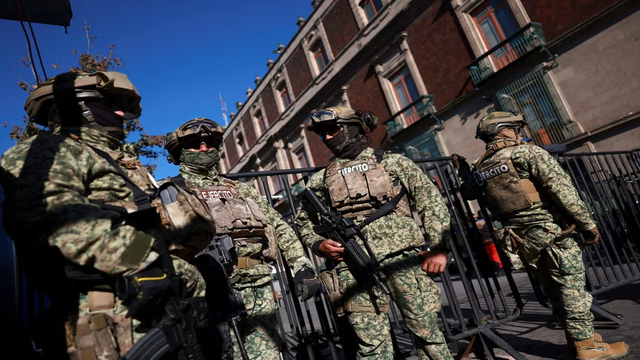
Military personnel patrol the Palacio Nacional in Mexico City following the killing of drug lord "El Mencho" in a military operation on Sunday. (Reuters)
The death of Nemesio Oseguera, the elusive head of the Jalisco New Generation Cartel (CJNG), has sent shockwaves through Mexico’s criminal underworld, raising urgent questions about who will inherit one of the world’s most powerful drug empires — and how violent that transition will be.
Security analysts warn that the immediate aftermath could bring a surge in turf wars, internal bloodshed, and a renewed wave of narco-terror tactics as rival groups and ambitious lieutenants attempt to seize control.
A Power Vacuum Inside CJNG
For years, El Mencho ruled CJNG with unmatched authority, turning it into a multibillion-dollar criminal network spanning drug trafficking, fuel theft, human smuggling, and financial crimes. With his death, that centralized command has vanished overnight.
The cartel’s traditional line of succession is badly fractured. His son, Rubén Oseguera, is imprisoned in the United States. His wife faces legal trouble in Mexico, and other close relatives are also behind bars. That leaves only a handful of senior commanders — none with the same unquestioned dominance — to compete for control.
According to Mexico-based security experts, at least four powerful figures could now enter a high-stakes struggle for leadership. While a negotiated transition is possible, the history of organized crime in Latin America suggests that violence is the more likely outcome.
A man riding a bicycle takes a photo of a burned truck, allegedly set on fire by organised crime groups on a highway near Acatlan de Juarez, Jalisco state, Mexico, on February 22, 2026. (Getty Images)
A Rival Ready to Exploit Weakness
CJNG’s main adversary, the Sinaloa Cartel, is itself weakened by internal conflict following the arrests of Joaquín “El Chapo” Guzmán and Ismael “El Mayo” Zambada. Yet despite its divisions, it remains a formidable force with deep global networks.
Both groups have long battled for control of the lucrative U.S. drug market, particularly fentanyl routes. They are also increasingly competing over migrant smuggling corridors — a business that has become nearly as profitable as narcotics.
Early signs of instability have already emerged. In border regions such as Mexicali, cartel factions erected roadblocks soon after El Mencho’s death, signaling how quickly the balance of power can shift on the ground.
Risk of Narco-Terrorism
One of the most alarming scenarios is the return of large-scale narco-terrorism — a strategy associated with Pablo Escobar in 1980s Colombia.
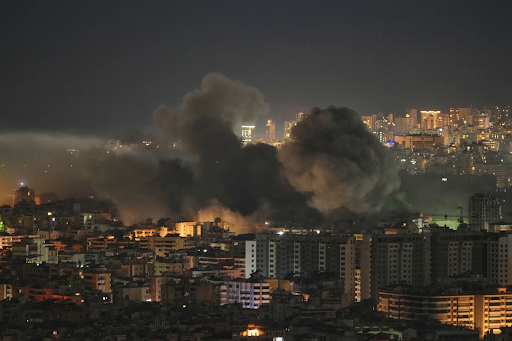
CJNG has previously shown a willingness to confront the state directly. In 2020, the cartel carried out a brazen assassination attempt against Mexico City’s police chief, killing bodyguards and a civilian. Since El Mencho’s death, coordinated arson attacks, blockades, and assaults on businesses have already been reported in multiple regions.
Analysts believe such actions are designed to paralyze economic life, undermine public confidence, and send a message that the cartel — even without its historic leader — remains capable of inflicting nationwide chaos.
Security forces secure the scene after the body of a man was found along the highway linking Culiacan to the municipality of Navolato, Mexico, on January 12, 2026. (Getty Images)
A Nationwide Security Challenge
CJNG operates in more than 20 Mexican states, meaning any internal split could produce localized wars across vast areas. Splinter factions — like the Mezcales in Colima, which once broke away after rumors of El Mencho’s illness — have previously triggered weeks of violence.
For the Mexican government, this creates a dangerous paradox. High-profile operations against cartel leaders can weaken criminal organizations, but they can also unleash short-term violence as factions fight to fill the void.
Security forces are now focused on restoring order after widespread roadblocks and attacks on commercial property disrupted daily life in several regions.
A Strategic Opportunity for the State?
Despite the risks, some analysts see a rare opening for authorities. A fragmented cartel is more vulnerable to targeted operations, financial disruption, and intelligence-driven arrests.
U.S. officials have also signaled support for sustained pressure, arguing that the current instability could be used to dismantle key command structures before a new leader consolidates power.
What Comes Next
Whether Mexico faces a prolonged cartel war will depend largely on how the CJNG transition unfolds. A negotiated succession could contain the violence. A contested one could ignite battles across strategic drug corridors and border crossings.
For now, the country stands at a volatile crossroads. The fall of its most feared cartel leader has not ended the threat — it has simply opened a new and unpredictable chapter.