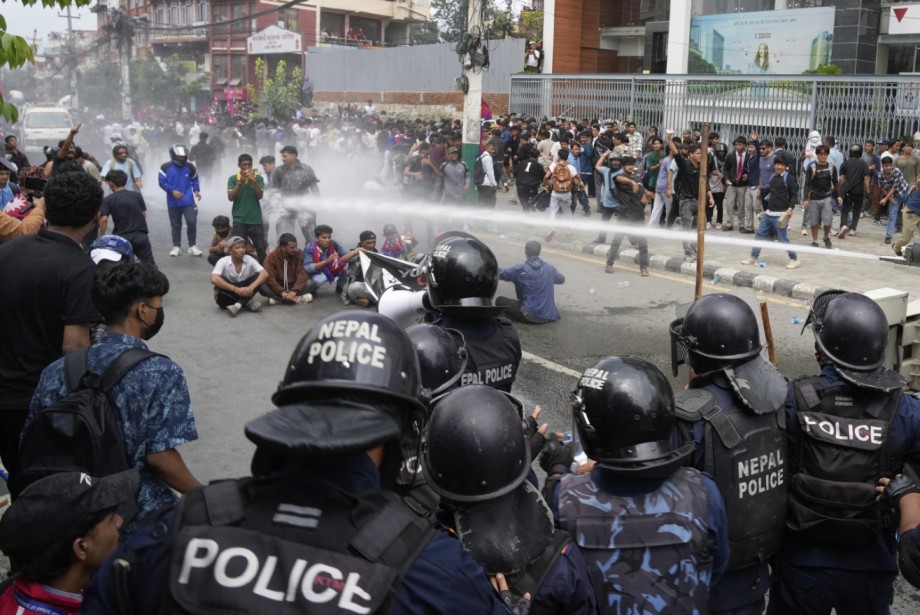
Tens of thousands of people protested in Nepal’s capital Monday after authorities decided to block most social media platforms including Facebook, X and YouTube, saying that the companies had failed to register and submit to government oversight.
Nepal’s government has lifted its controversial ban on social media platforms just a day after mass protests erupted, leaving at least 19 people dead. The move comes amid growing outrage over restrictions on digital freedom and the violent police crackdown that followed.
Streets Filled With Protesters
The protests began after the government ordered social networks like Facebook, X (formerly Twitter), and YouTube to shut down in Nepal. The platforms had been blocked last week for failing to comply with a new rule requiring registration and government oversight.
Crowds quickly swelled into tens of thousands in Kathmandu. Demonstrators surrounded the Parliament building, waving national flags and chanting slogans such as, “Stop the ban on social media. Stop corruption, not social media.”
What started as peaceful rallies escalated into one of the deadliest protests in recent years, often referred to as the “protest of Gen Z,” representing Nepal’s younger generation born between 1995 and 2010.
Police Open Fire
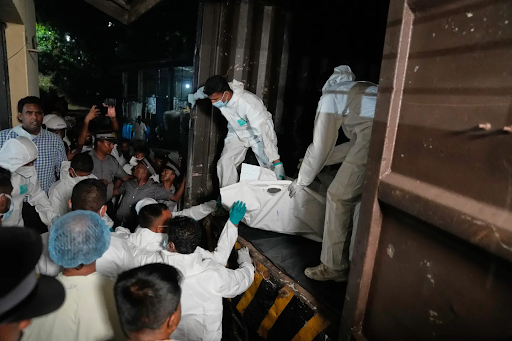
The situation turned tragic when police opened fire on demonstrators. According to Nepal’s National Trauma Center, seven people were confirmed dead at the hospital, while dozens of others were being treated for severe gunshot wounds.
“Many victims were shot in the head and chest. Their condition is critical,” said Dr. Badri Risa of the Trauma Center. Families anxiously waited for updates, while hundreds lined up to donate blood for the injured.
Curfew and School Closures
In response to the unrest, the government announced an indefinite curfew in Kathmandu. Schools were closed, and similar restrictions were enforced in two other major cities.
Despite the curfew, the scale of the demonstrations highlighted widespread frustration with the government’s tightening grip on online platforms.
Government Reaction and Resignation
Prime Minister Khadga Prasad Oli released a statement announcing the formation of an investigation committee. The committee is expected to submit its findings within 15 days. Oli also promised compensation for families of those killed and free medical treatment for the wounded.
Meanwhile, Home Minister Ramesh Lekhak resigned during an emergency Cabinet meeting held late Monday, adding further pressure on the government.
Push for Social Media Regulation
The protests unfolded against the backdrop of Nepal’s attempt to introduce stricter laws governing social media. Officials have argued that the bill is designed to ensure platforms are “responsible and accountable.”
However, critics and rights groups say the proposal is nothing more than a tool for censorship. They argue it threatens freedom of expression by punishing citizens who criticize the government online.
The regulation required more than two dozen popular networks to register in Nepal and appoint a liaison office. While platforms like TikTok, Viber, and three others complied, global giants like Meta (Facebook, Instagram, WhatsApp), YouTube, and X did not.
Neither Google, Meta, nor X issued any immediate response to Nepal’s restrictions.
Previous TikTok Ban
This is not Nepal’s first clash with social media. In 2023, TikTok was banned for allegedly disrupting “social harmony” and spreading “indecent material.” The ban was lifted after TikTok executives promised to follow Nepal’s strict digital laws.
Similarly, the country has already banned pornographic websites under a 2018 law.
Concerns Over Freedom of Expression
Human rights organizations remain deeply concerned about the government’s push to regulate online speech. Many see it as an attempt to suppress dissent and weaken fundamental rights in Nepal.
With the social media ban now lifted, questions remain over how the government will balance regulation with the democratic right to free expression. For Nepal’s younger, digitally active generation, this struggle is far from over.