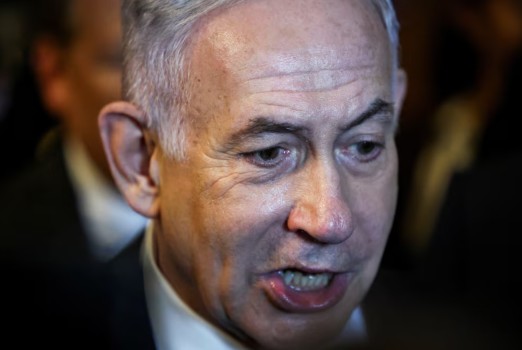
Israeli Prime Minister Benjamin Netanyahu visited Capitol Hill in Washington, D.C., on July 9, 2025. During his visit, he met with Senate Republican Leader John Thune of South Dakota and several other U.S. senators. The meeting took place as part of his official trip to the United States. (Photo:Reuters)
On Friday, Israeli Prime Minister Benjamin Netanyahu and former U.S. President Donald Trump both said Hamas had no real interest in reaching a ceasefire agreement. They now seem ready to walk away from talks.
Netanyahu stated that Israel is now looking at other ways to meet its goals—freeing hostages and removing Hamas from power in Gaza. He said Hamas had no real will to make peace.
Trump echoed that, saying, “Hamas really didn’t want to make a deal. I think they want to die. And it’s very bad. And it got to be to a point where you're going to have to finish the job.”
Humanitarian crisis grows
The situation in Gaza is getting worse. Hunger is spreading fast, and thousands of people have no homes. France decided to recognize an independent Palestinian state. Britain and Germany haven’t gone that far, but they also called for an immediate ceasefire.
Trump dismissed France’s move, saying the decision “doesn’t carry weight.”
Ceasefire talks on hold
Israel and the U.S. left the talks in Qatar on Thursday. That happened after Hamas replied to the most recent truce proposal. At first, some believed this was only a pause. But Netanyahu’s Friday comments show Israel may be done negotiating.
A U.S. envoy blamed Hamas. Netanyahu agreed and said the American view was right.
Hamas official Basem Naim said talks were moving forward. He claimed Hamas had offered ideas that could lead to peace—if Israel truly wanted it.
Qatar and Egypt, who are helping with the talks, said they still plan to keep trying. They said pauses in talks are normal and not the end.
What was in the ceasefire deal?
The proposal would have stopped fighting for 60 days. During that time, more aid would reach Gaza. Some of the remaining 50 hostages would go free, and in return, Israel would release Palestinian prisoners.
The plan stalled due to disagreement on whether Israel should pull back its troops. It also lacked a clear plan for what would happen after the 60 days.
A far-right member of Netanyahu’s government, Itamar Ben-Gvir, praised the end of talks. He called for Gaza to be taken over completely, all aid to stop, and new Jewish settlements to begin.
Food crisis deepens
Aid groups say Gaza’s 2.2 million people are now facing full-scale hunger. Israel shut off supplies in March and reopened in May, but only with limits. Israel has now allowed some aid to arrive by air. Hamas says this is not enough and calls it a show.
Nine more people died from hunger in 24 hours. Dozens have died in recent weeks.
Israel says it sends enough food, but the U.N. fails to distribute it. The U.N. says Israeli restrictions are the real problem.
U.N. groups also say they are running out of special food to treat starving children.
More strikes, more deaths
Israel continues bombing Gaza during the talks. On Friday, at least 21 Palestinians were killed. Five died in a strike on a school shelter.
A journalist, Adam Abu Harbid, died in a strike on tents. Other reporters say journalists are being targeted. Israel denies this.
This war began when Hamas fighters entered Israel on October 7, 2023. They killed 1,200 people and took 251 hostages. Since then, Gaza health officials say Israeli attacks have killed nearly 60,000 people and destroyed much of the area.